Many developments
Different phases, audiences and creative directions.
How a large real estate developer is building a connected AI-assisted production environment across 10+ developments — bringing creative direction, multi-format output, review decisions and project memory into one place. A real enterprise engagement, presented anonymously. The 2,500-deliverable figure represents the agreed monthly production scope the system is designed to support.
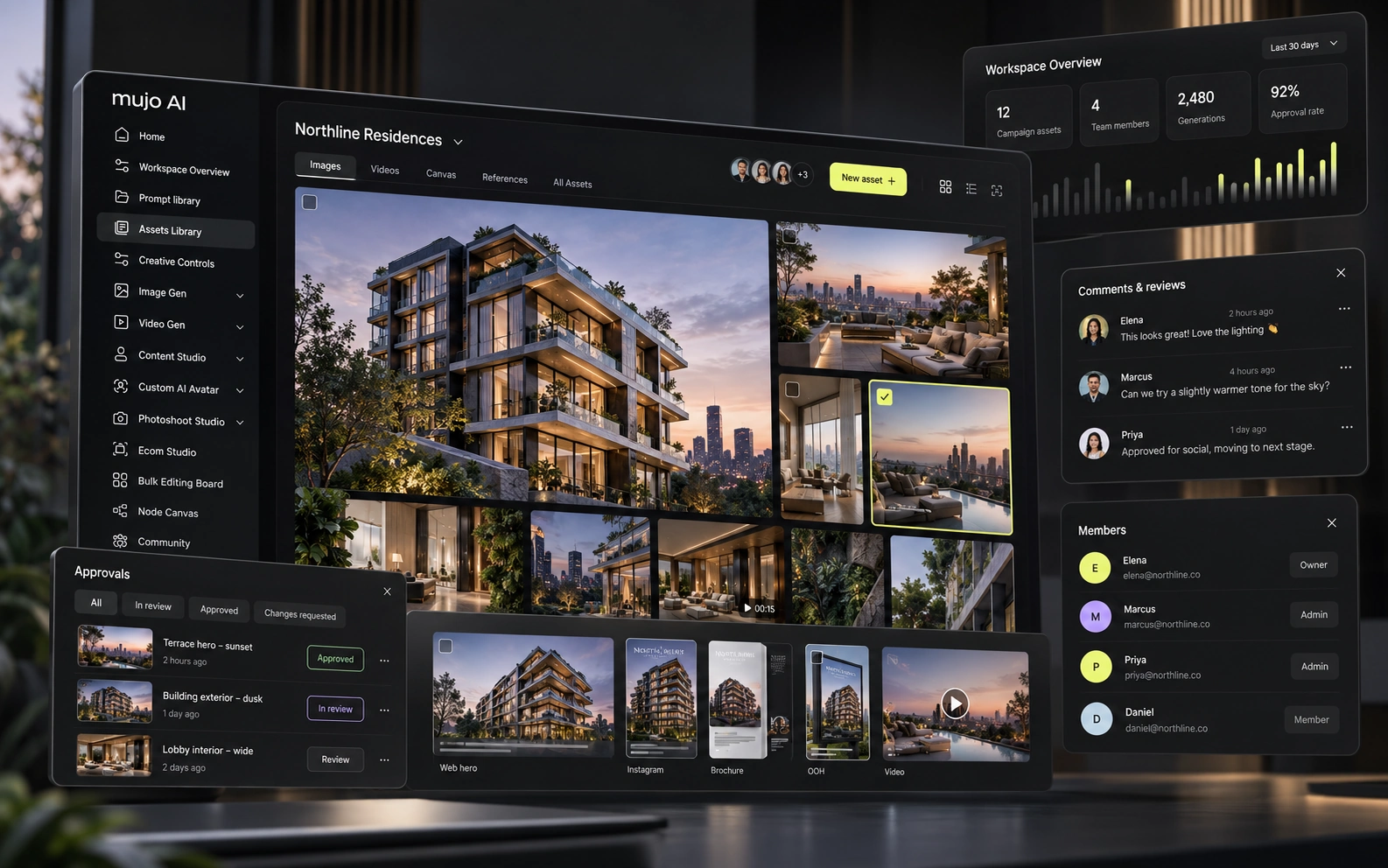
A large property developer manages multiple developments, each with its own positioning, visual direction, launch phases and media requirements. In a conventional setup, the context behind the work is scattered across design files, agency handoffs, comments and individual team members. When a designer or agency changes, the team has to reconstruct not only the assets, but why a concept was approved, rejected or revised.
Different phases, audiences and creative directions.
Files and decisions spread across production teams.
New channels, formats and campaign requirements.
The reasoning behind past approvals is difficult to recover.
Each development accumulates a body of creative knowledge: briefs, approved directions, references, rejected approaches, revisions and feedback. Mujo keeps this context connected to the project, so subsequent production cycles can work from what the team has already established. A decision is more than a status — the comment explaining why an image was accepted or declined becomes part of the project's retained creative context.
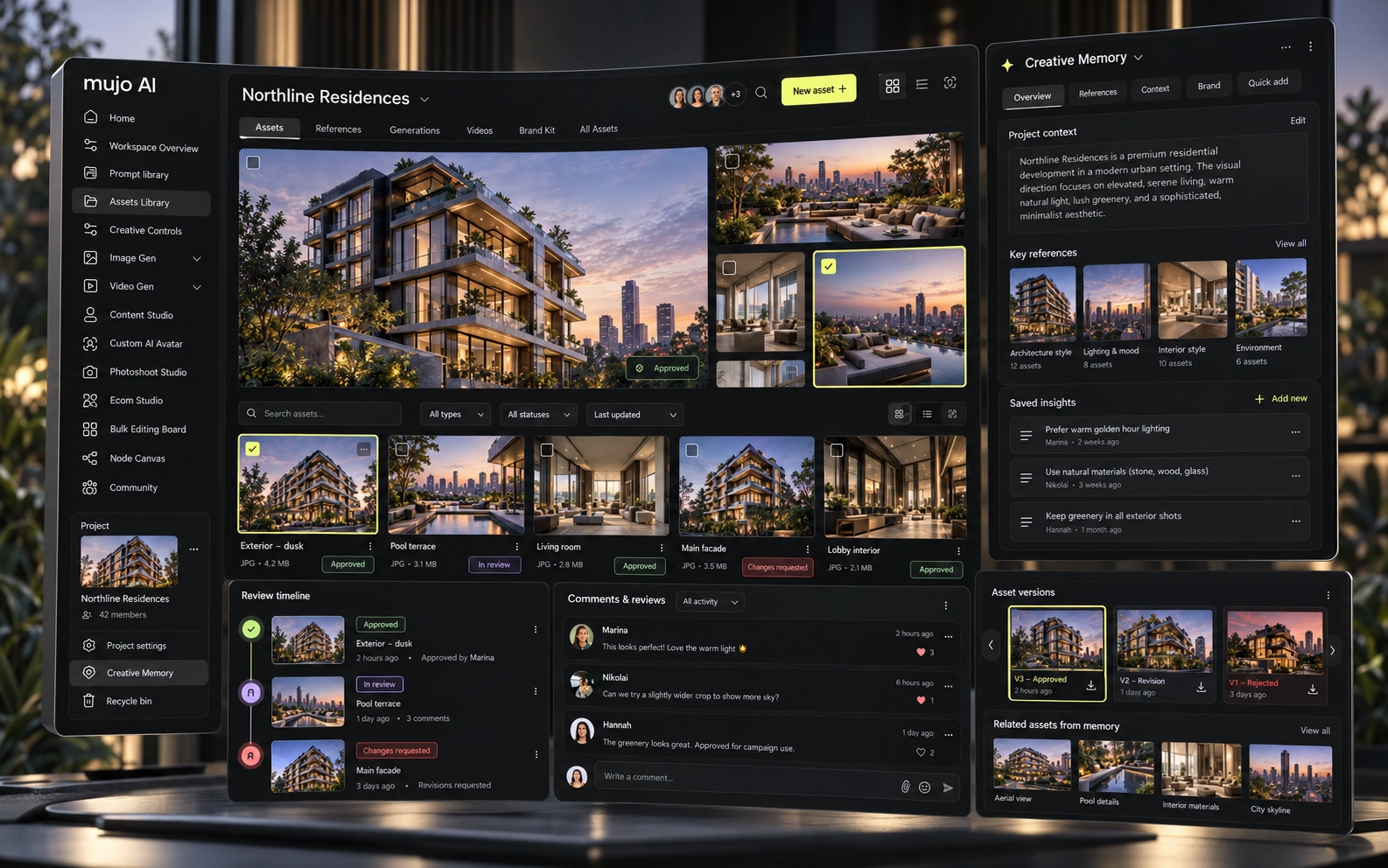
References, creative inputs and project history stay together.
Approved and declined assets carry their review context.
Future creative work can build on preserved project knowledge.
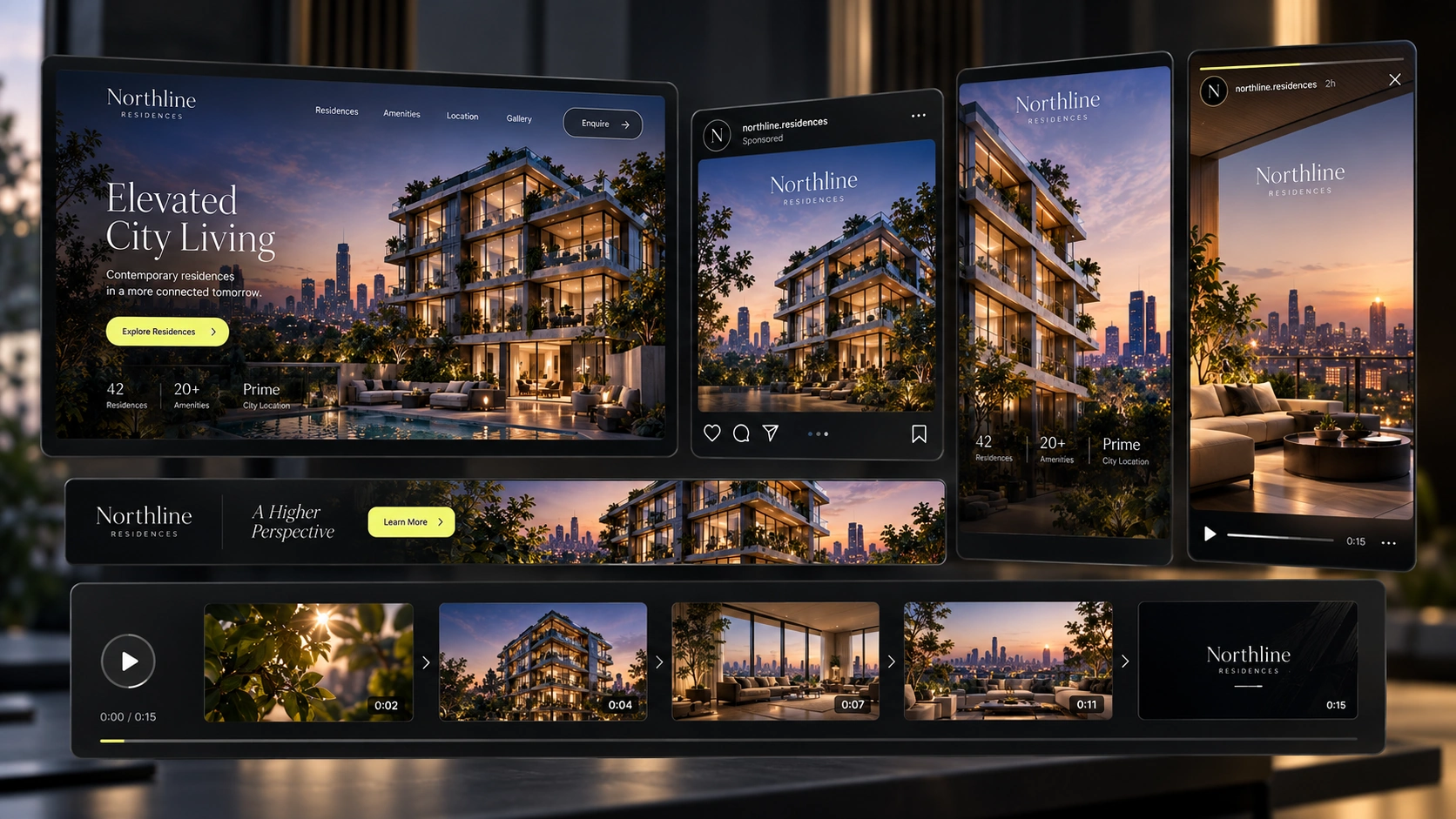
The agreed scope extends well beyond resizing finished banners. It covers creative development and the production of static, motion and video materials for multiple developments and their evolving media plans.
Explore design directions and prepare selected concepts for stakeholder review.
Develop additional views, lifestyle context and improved visuals from architectural source material.
Prepare campaign imagery for the dimensions, compositions and safe areas each placement requires.
Carry approved ideas into static or animated display production, where the format requires it.
Develop scenes and video directions, then adapt for different audiences, messages and screen formats.
The format mix varies by development and media plan. This case study does not claim a fixed output distribution.
Mujo connects the tools involved in creative development, variation, collaboration and review within a shared production environment. Most stages of this engagement operate inside Mujo, with human creative judgment and external specialist tools used where appropriate.
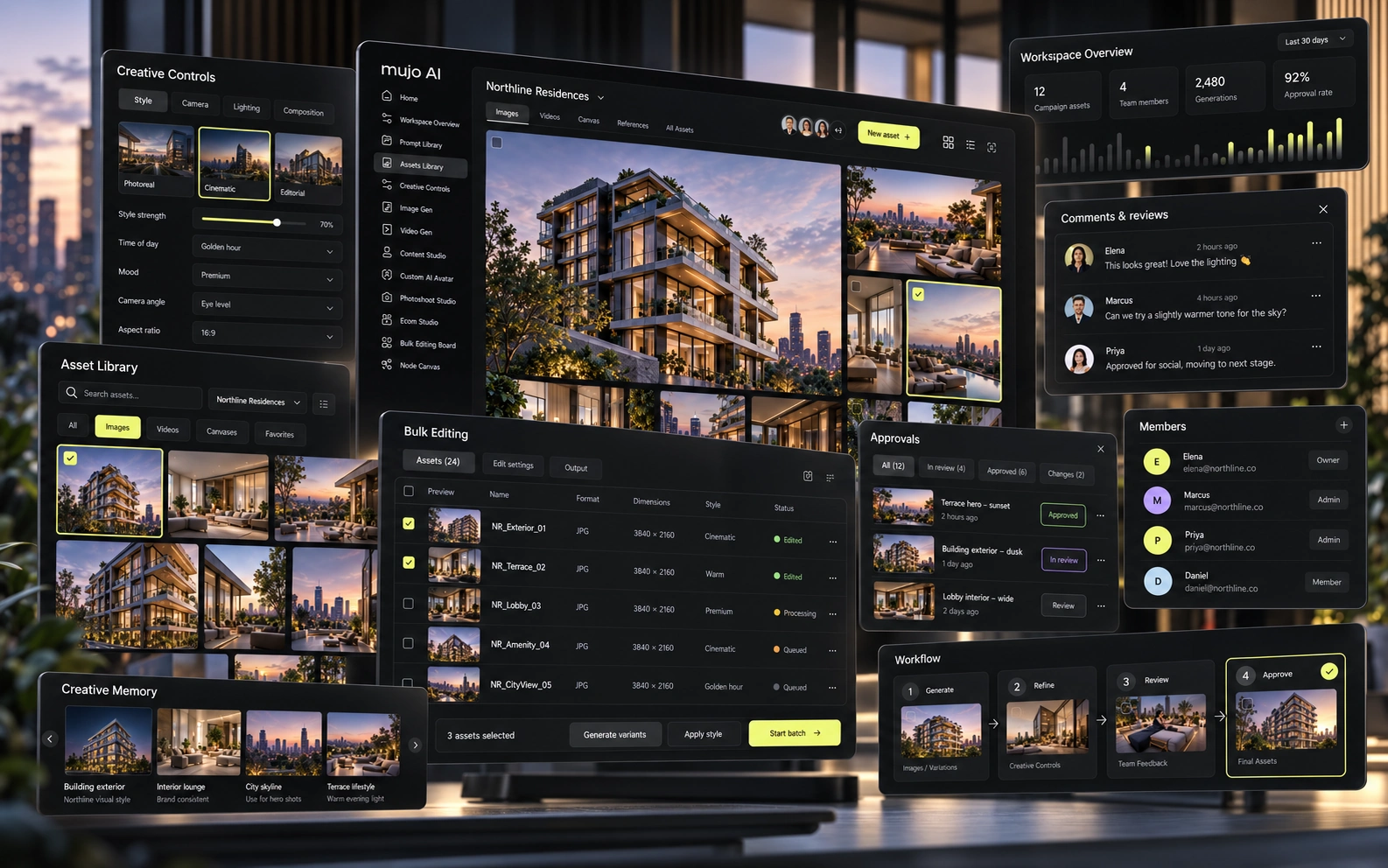
Reusable, multi-step creative workflows.
Structured production of variations and adaptations.
Repeatable direction for framing, lighting and style.
Production of new views, creative imagery and scenes.
Shared project references and approved materials.
Team access, permissions and production visibility.
Decisions and comments kept beside the work.
Project knowledge retained across production cycles.
An approved asset records the direction the team wants to preserve. A rejected concept and its revision comments capture the changes stakeholders asked for. In Mujo, these review decisions and comments contribute to the creative history retained around the project — and that history remains accessible beyond an individual round of production.
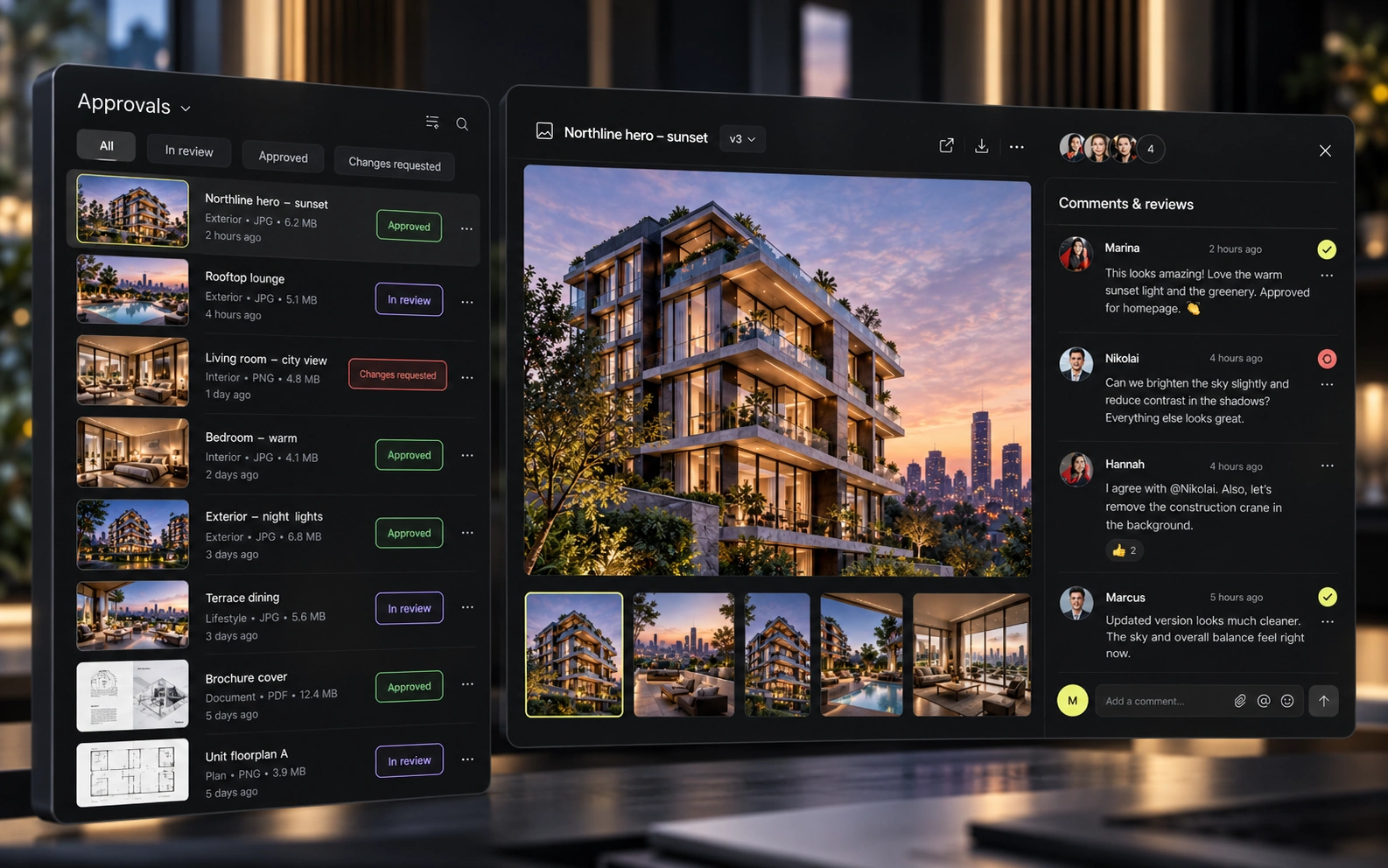
Property campaigns do not end after one launch. New phases introduce different messages, placements, design requirements and sometimes entirely different production teams. By preserving project assets, creative decisions, review context and reusable setups, Mujo provides continuity between those cycles.
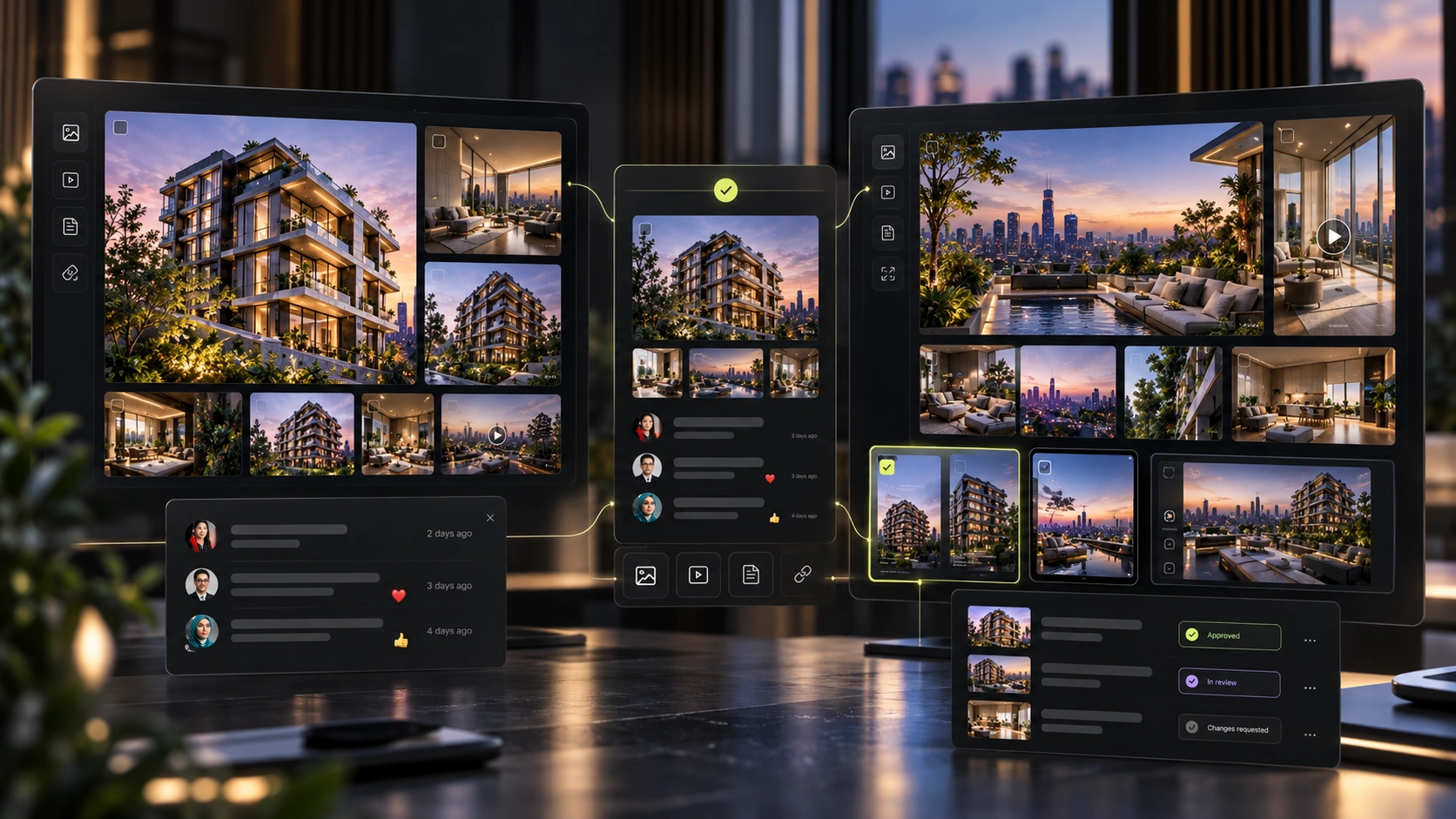
Assets, approved directions and the feedback behind them.
References, decisions and reusable setups stay with the development.
New contributors start from the retained history rather than an empty brief.
The engagement brings a large planned production scope into a more connected environment. Its significance is not a claimed percentage improvement; it is the ability to organize creative work, decisions and formats as an ongoing system.
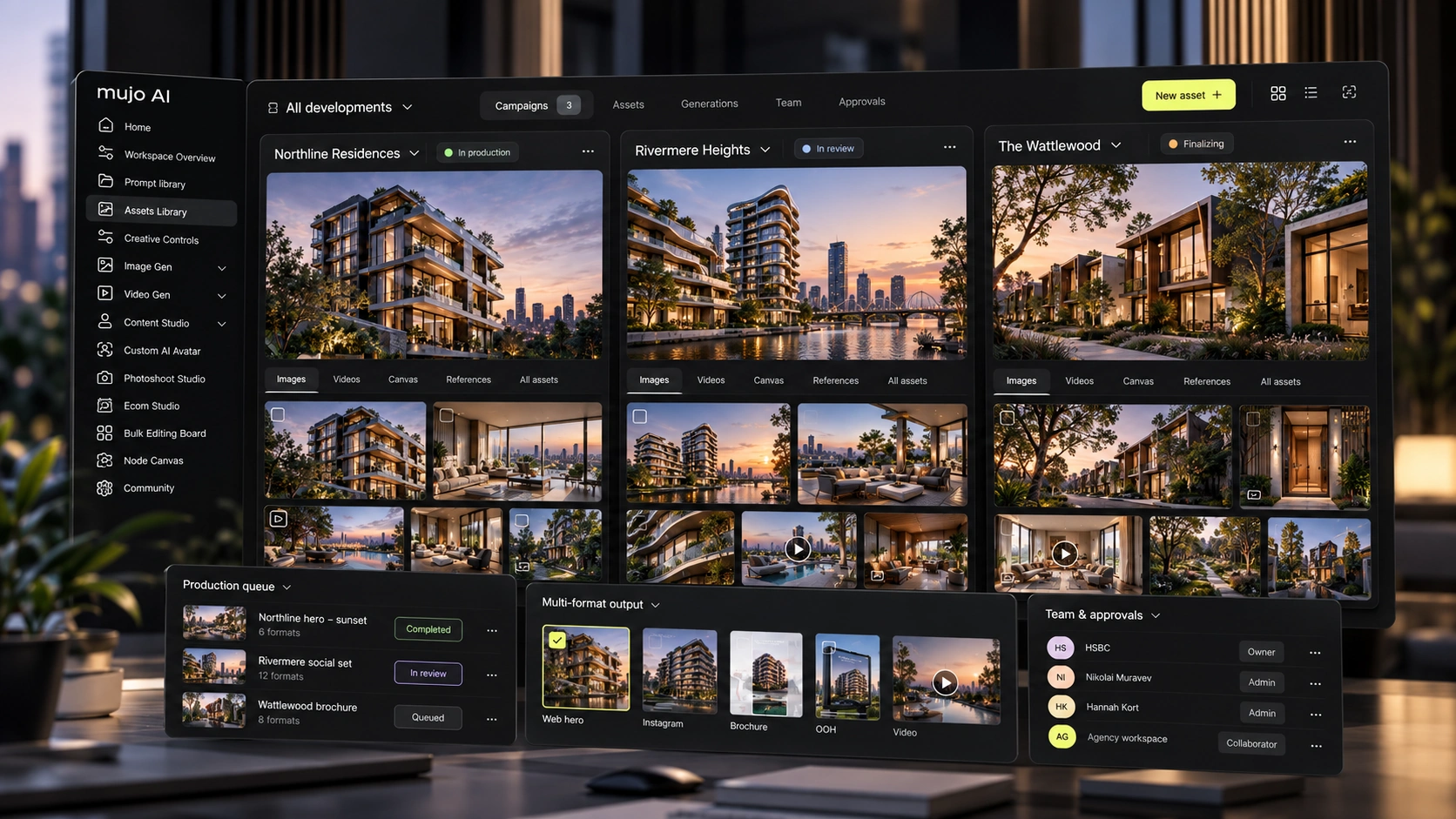
One place for references and history, rather than isolated files.
Workflows and controls that do not need rebuilding each cycle.
Decisions and feedback preserved beside the work.
Knowledge survives as campaigns and teams change.
Development-specific media plans and output formats.
2,500 per month is an agreed production scope, not a report of delivered volume. Illustrative visuals and anonymized project details; original client materials are not shown.
The same challenges appear wherever marketing teams manage multiple brands, products, campaigns and stakeholders: repeated adaptation, handoffs, and creative decisions that need to survive the next project cycle.
Most tools produce an asset and stop there. This engagement is about the production system around the asset: the brief, the approved direction, the review comments and the reusable setup all stay connected to the development they belong to.
Most stages of this engagement run inside Mujo, with human creative judgment and external specialist tools used where appropriate. Workflows are built around the steps a team already repeats rather than replacing them wholesale.
Each development in this engagement carries its own positioning, visual direction and media plan, and they run side by side in one environment. The same structure applies to multiple brands, markets or product lines.
Assets, decisions, review context and reusable setups stay with the project. A new designer, agency or team member starts from that retained history rather than reconstructing it.
Access, model permissions and usage limits are controlled per workspace and per role. Specific security, retention and data-region arrangements are agreed as part of an enterprise conversation.
A short conversation about the work your team repeats, the formats you ship and the review path it goes through. From there we map which parts become reusable workflows.
Talk to Mujo about building a connected creative production environment for your team — from reusable workflows and multi-format production to review and project memory.