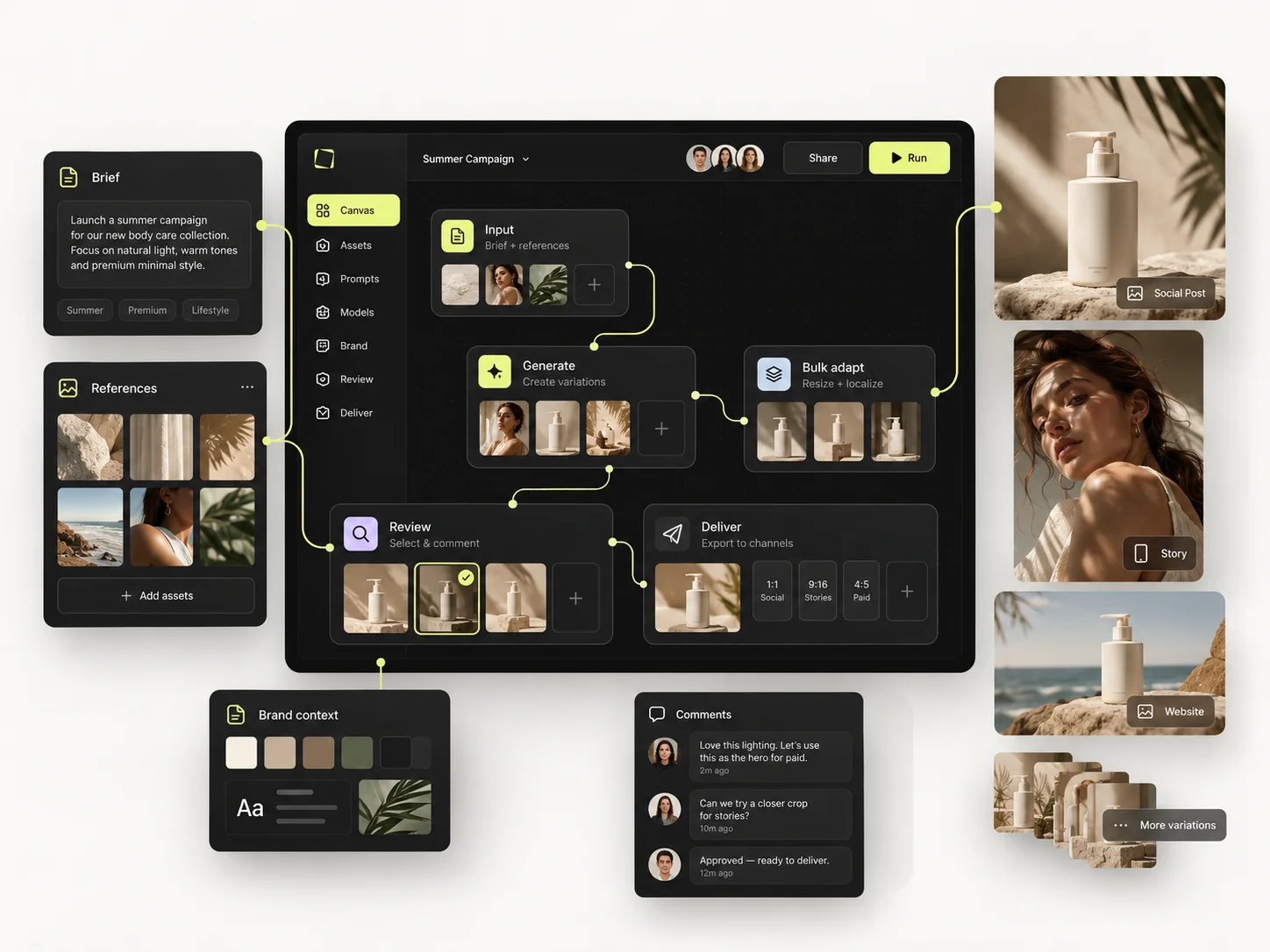
A film tool
No shot-level motion control, no VFX pipeline. For that, Runway is the better answer.
Runway is a video suite. Mujo is a production system in which video is one output among product images, listings, ads and social cuts. Teams comparing them are usually not comparing two video tools — they are deciding whether video is the centre of their work or one deliverable inside a campaign that also needs forty stills.

Three things this platform does not do, stated before the arguments in its favour. If one of them is what you came for, Runway is the better answer and this page will not change that.
No shot-level motion control, no VFX pipeline. For that, Runway is the better answer.
Depth in one medium is not the trade Mujo makes. Breadth held together is.
Timeline work, sound design and grading happen elsewhere.
Where a video suite and a campaign production system actually differ.
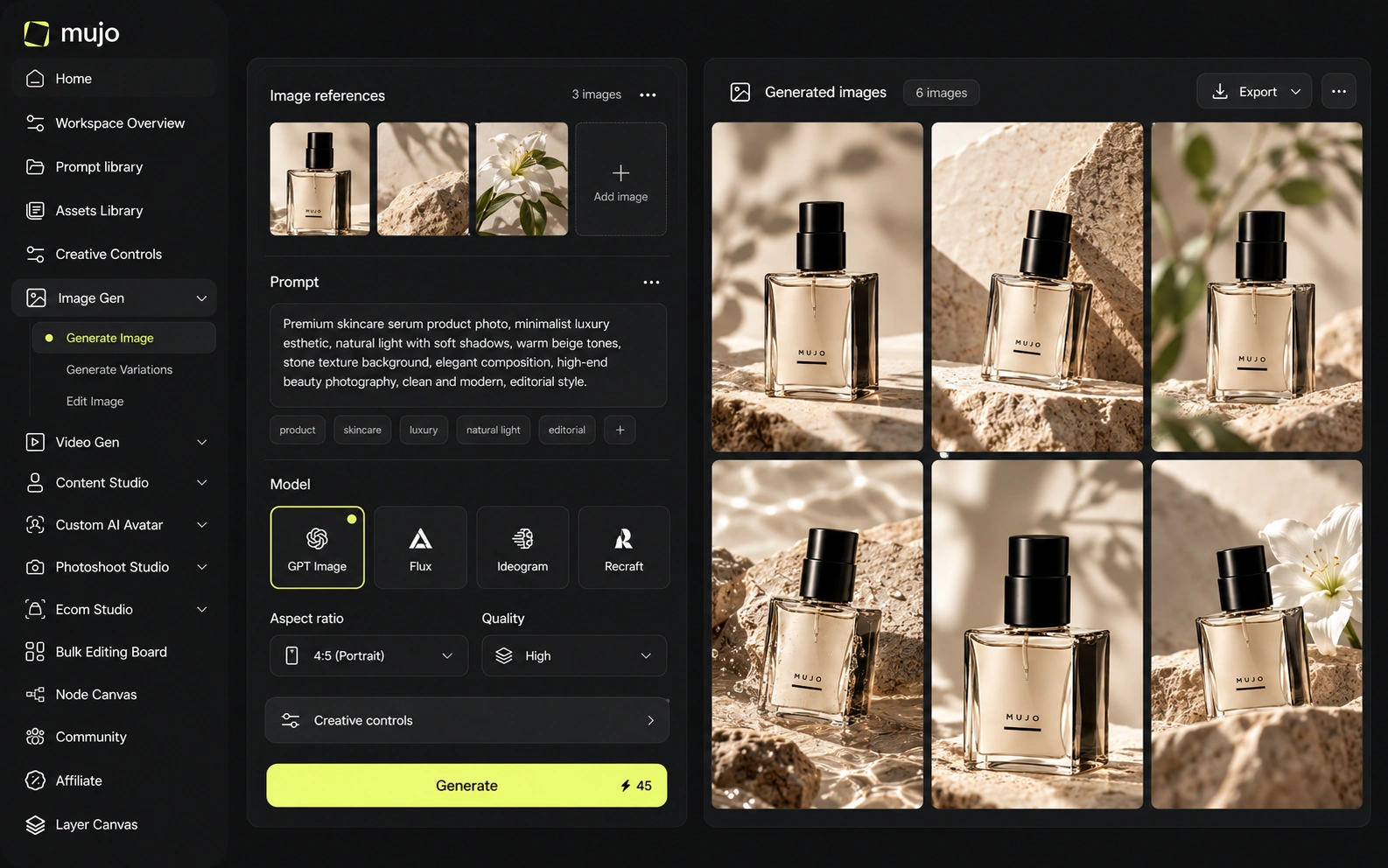

Runway is built around moving-image production. Its current plans include access to Runway's own Gen-4.5 family plus third-party image/video models, agent functionality, audio, projects, Brand Kits and professional export capabilities at higher tiers. Mujo treats video as one media layer inside a broader content workflow. That difference changes how each platform feels after the first generation.
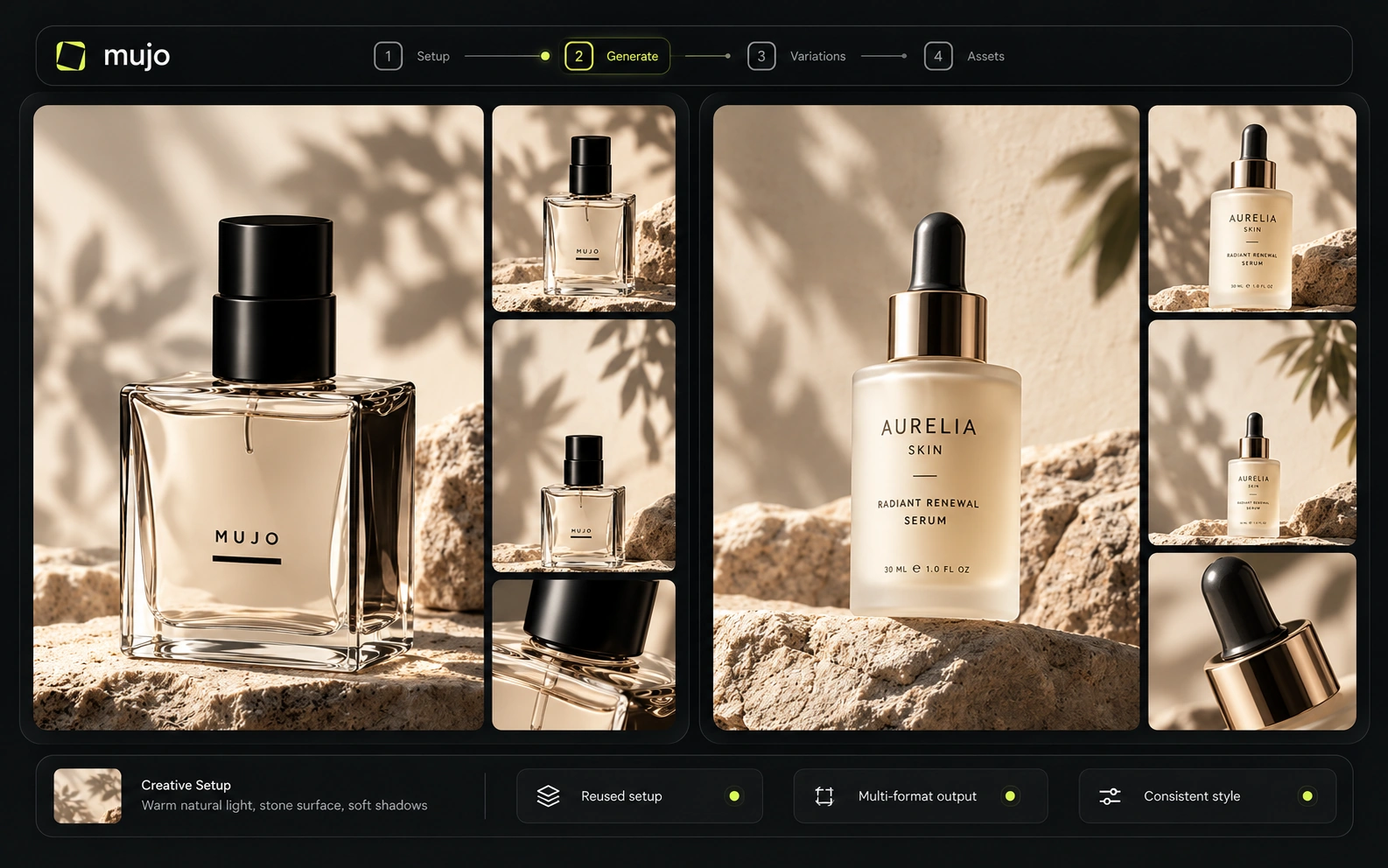
Mujo sits over multiple models instead of shipping its own. Video runs on Veo 3.0 and Veo Fast, Kling 3.0, Seedance 2.5 and Seedance 2.0; images run on Nano Banana Lite, Nano Banana 2 and Nano Banana Pro, GPT Image 2, Midjourney, Seedream 5.0 Lite and Seedream 5.0 Pro, Grok Imagine and Kling 3.0 Image. Runway's strength is depth in one medium with its own research behind it. Mujo's is breadth held together: the same brief, references and Creative Controls feeding stills and motion without leaving the workspace. A good clip and a good campaign are different deliverables. Runway is organised around the clip. Mujo is organised around the campaign the clip belongs to.
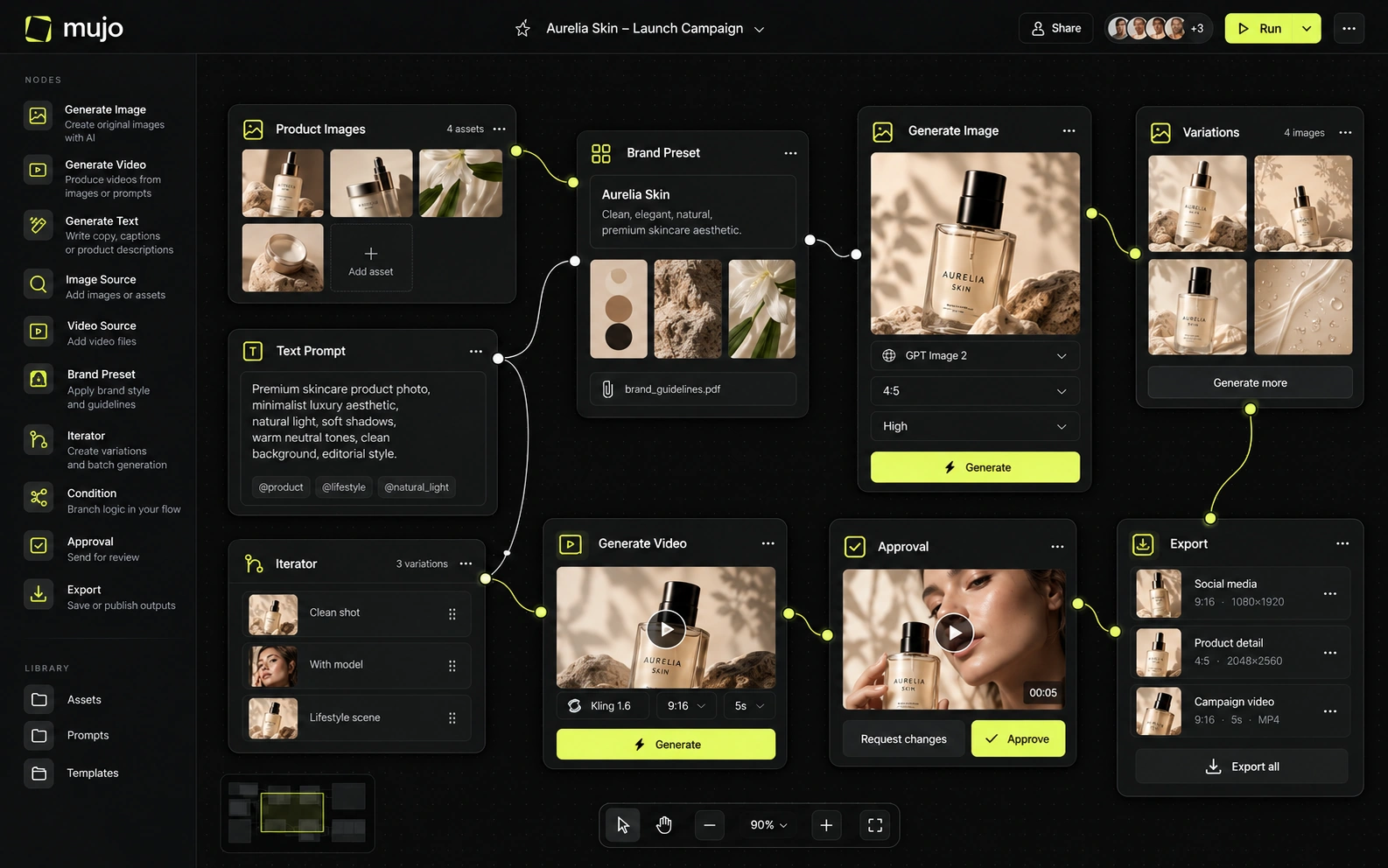
Runway's advantage is not merely model quantity; it owns important proprietary models and can integrate them tightly with editing and production features. Current pricing materials list Gen-4.5 and other advanced video routes alongside third-party models such as Kling and current image models. Mujo aggregates external leaders rather than competing through a flagship proprietary video model. The benefit is model choice; the tradeoff is that Runway can offer deeper integration around its own stack.
For motion, the question is whether you need a specific model's behaviour or a shortlist you can compare. Mujo exposes several video engines against the same prompt and references, so choosing is a side-by-side rather than a subscription decision. Runway's advantage runs the other way: one deeply developed model family with controls built for it. Separate two questions. Does the platform have the engine you want this month, and does the setup survive when a better one ships? Video models turn over faster than any other category.
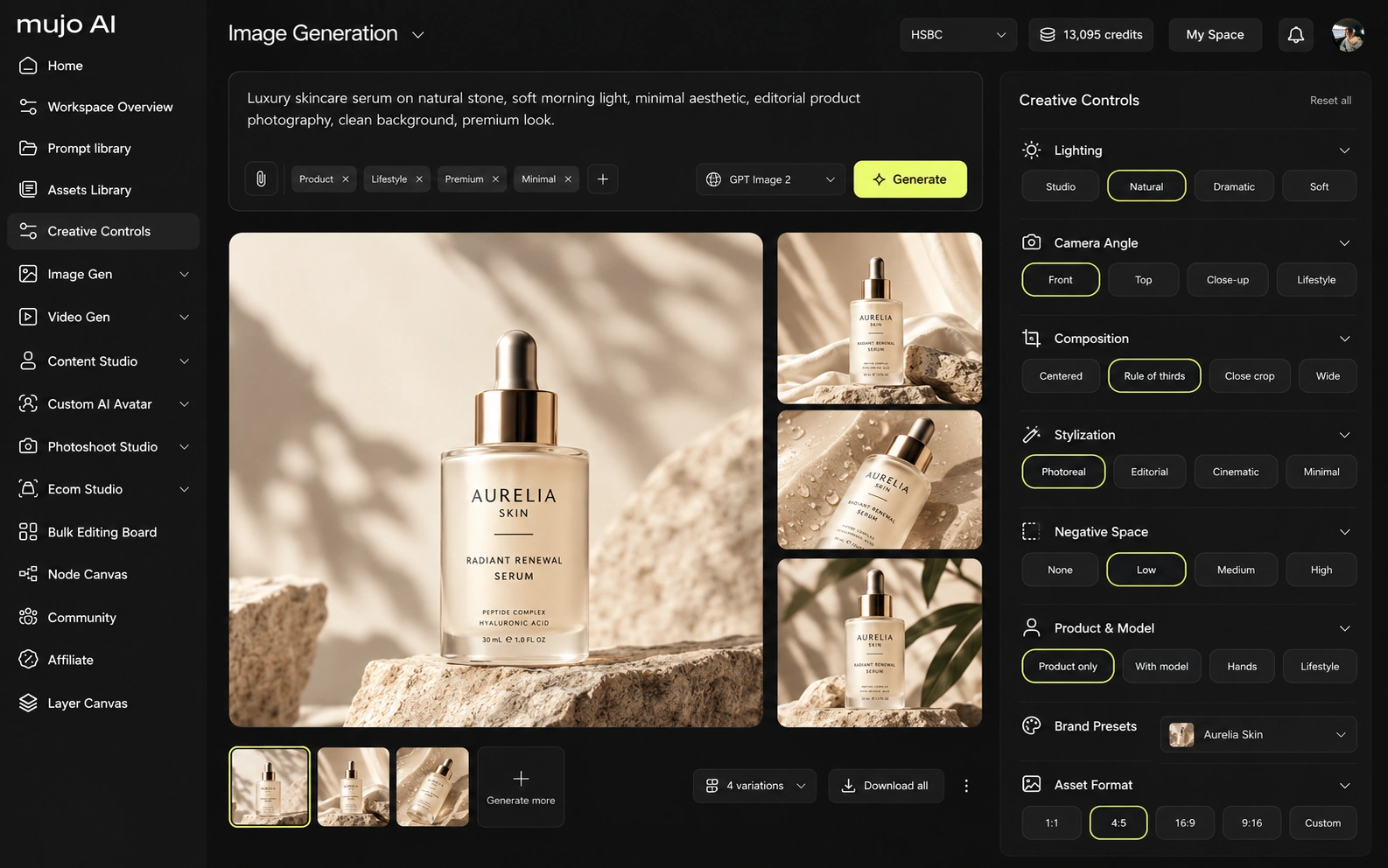
Runway excels at video-specific generation and transformation, including model-specific controls, project organization, professional output options and agent-assisted creation. Mujo's Creative Controls is more cross-task and marketing-oriented. It is designed to make lighting, pose, style, camera direction and related creative decisions reusable even when the user switches the underlying model.
Runway's controls are cinematographic: camera moves, motion brushes, shot-level direction. That is the right vocabulary for filmmaking. Mujo's Creative Controls are campaign vocabulary — lighting, pose, expression, camera angle, location, style — saved as named parameters so a direction can be reapplied to the next product rather than the next shot. The distinction is scope. Runway helps one person get a scene right. Mujo helps five people get sixty assets consistent, which is a coordination problem before it is a craft problem.
Runway and Mujo both participate in the fast-moving multi-model video market, but they use video differently. Runway's specialized value is professional AI video: proprietary generation, editing/transformation, audio, custom voices, Brand Kits and high-end output modes such as HDR/ProRes/image sequences on Max. Mujo's specialized value is repeatable commercial content: product galleries, listings, photoshoots, Prompt Library, social creative, prompt reuse and portfolio/preset distribution.
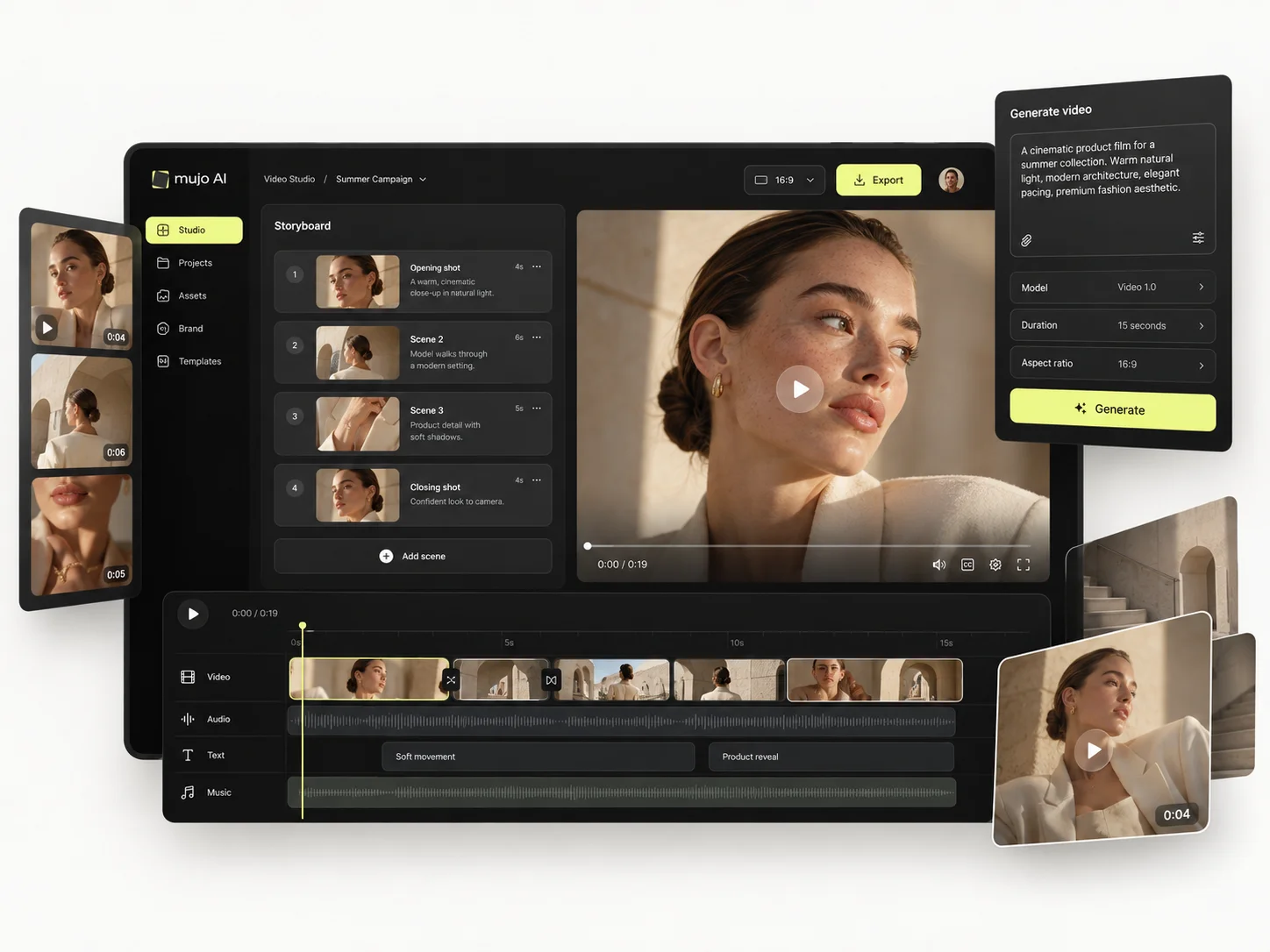
Mujo does text-to-video and image-to-video in the same place as stills, which is what makes a vertical cut from an approved hero image a two-step job. It is not a substitute for Runway on work where the video is the product — narrative, VFX, anything that needs frame-level control.
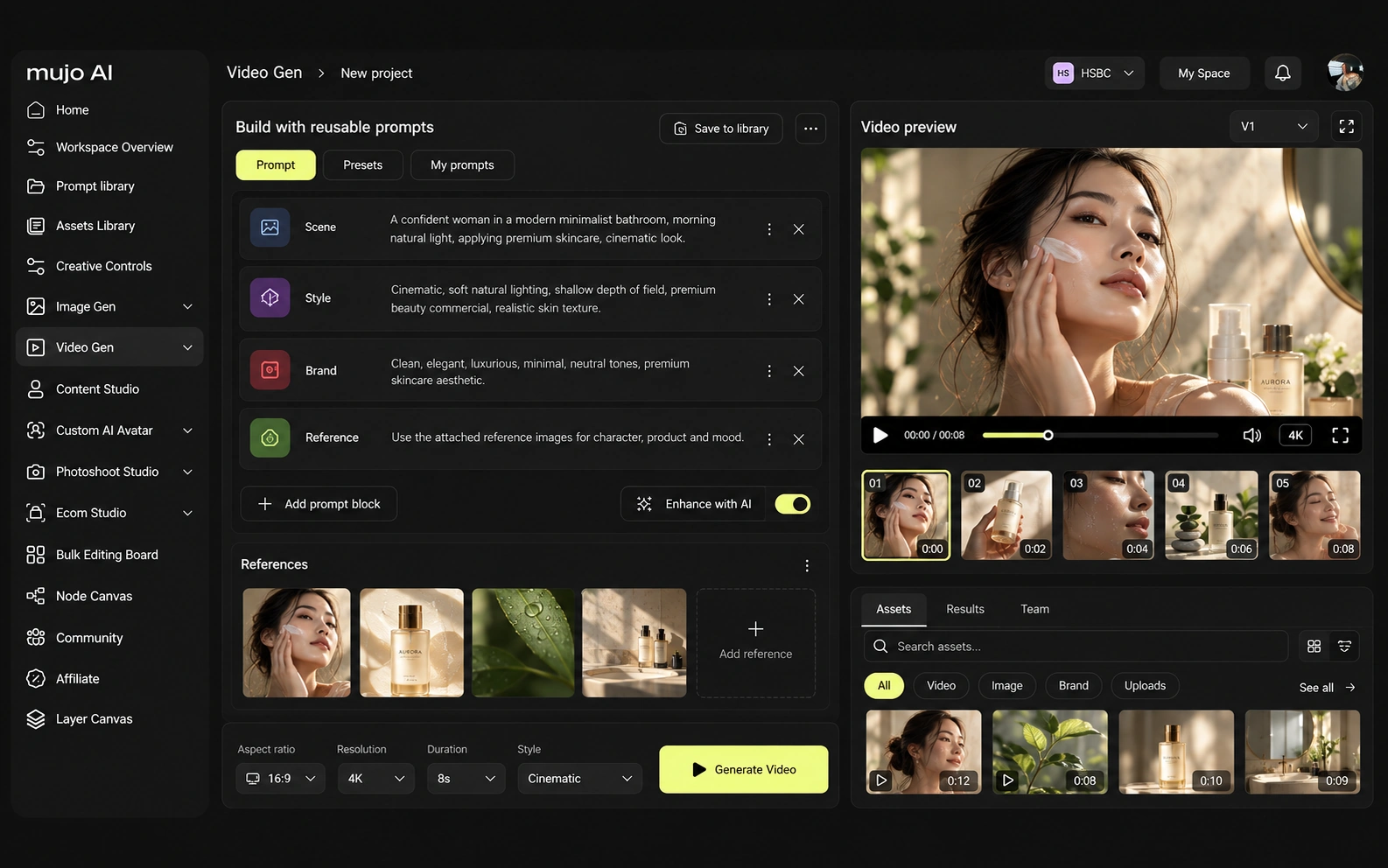
Consistency splits into four problems: the same person, the same product, the same look, the same process. Runway invests heavily in the first three inside a scene. Mujo targets the fourth across a campaign.
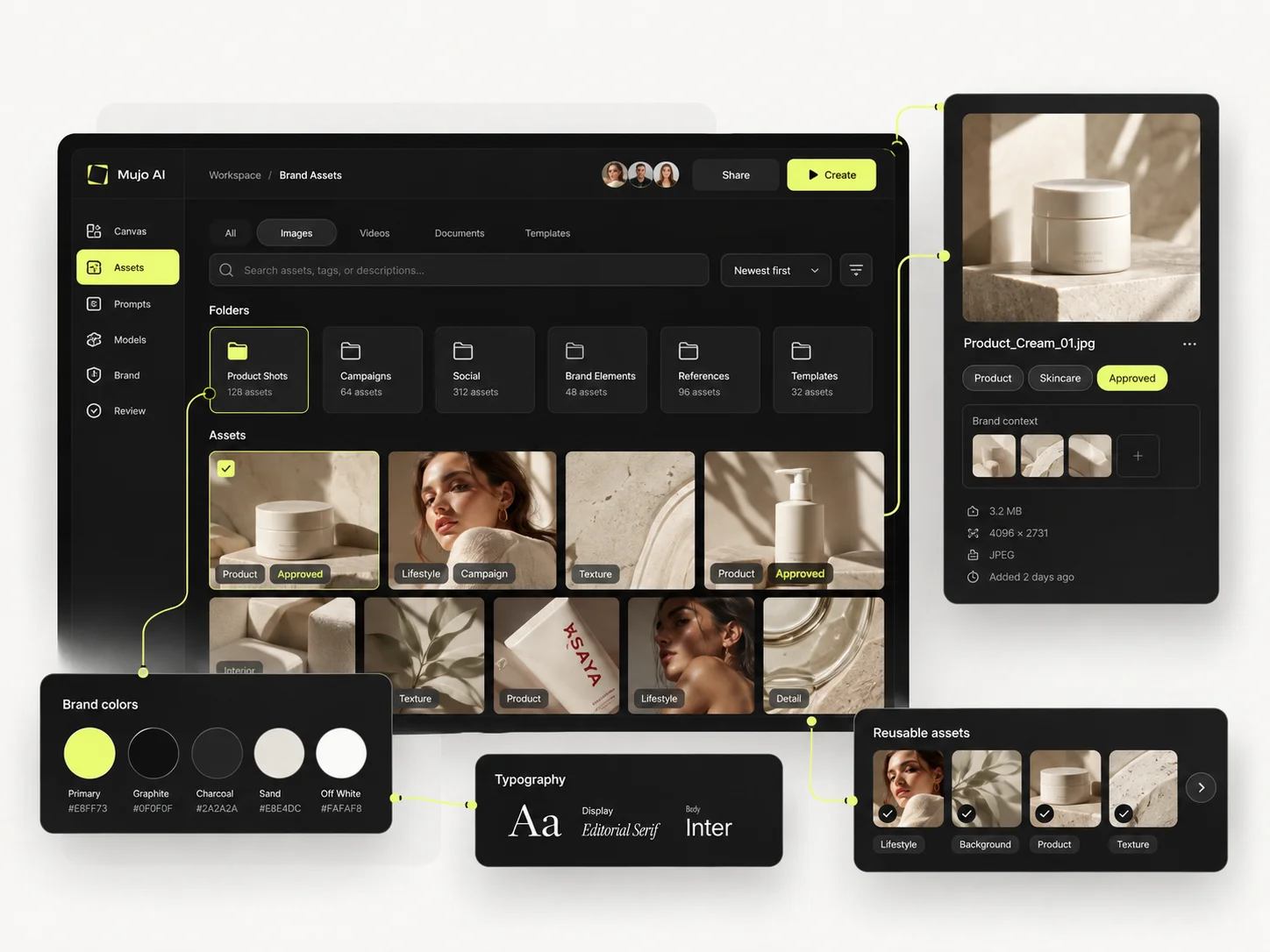
What Mujo stores is the route: reference images, Creative Controls parameters, saved prompts, model choices, workspace history, reusable flows. A colleague reopens the setup rather than the output. For Runway, the consistency model is different. Runway excels at video-specific generation and transformation, including model-specific controls, project organization, professional output options and agent-assisted creation. Mujo's Creative Controls is more cross-task and marketing-oriented. It is designed to make lighting, pose, style, camera direction and related creative decisions reusable even when the user switches the underlying model. If the recurring object is a film scene, Runway's tools are the natural home. If it is a product campaign that has to come back next quarter in eight formats, Mujo's abstraction outlives it.
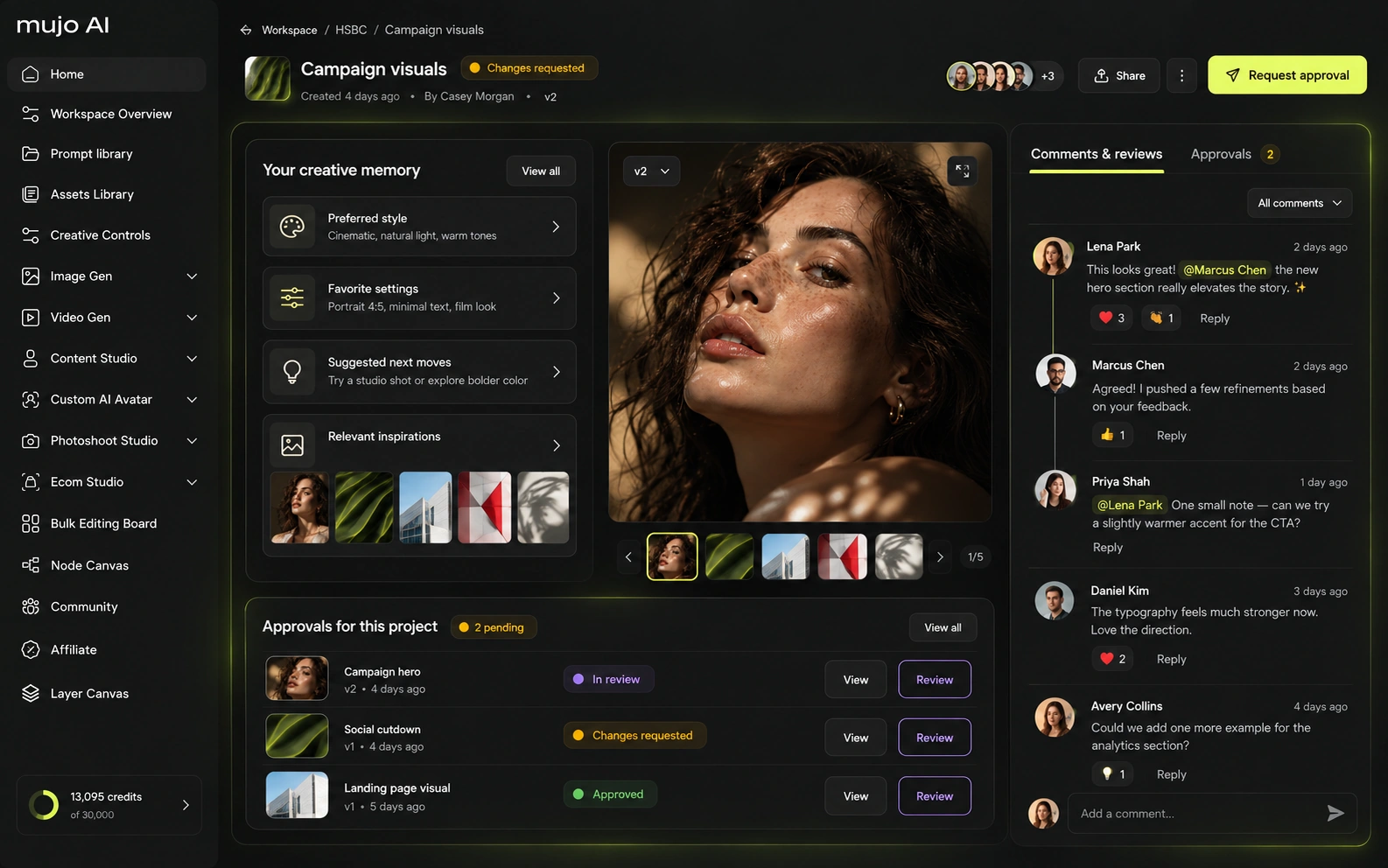
How each platform fits commercial work that repeats
Runway can produce excellent product films and social ads, especially when motion quality is the critical constraint. Mujo is stronger before and around the film: generating and organizing product stills, listing content, visual variations, prompts and reusable campaign systems, then using video models inside the same broader workflow.
Mujo's commercial side is built out as use cases: Product Photos, Listing Images, Product Catalog Production, AI Photoshoots, Campaign Creatives, Creative Variations, Social Media Content and Social Video Ads. Storyboards connect the still and motion halves so a video starts from an approved frame rather than a blank prompt.
Commerce is not a prompt category here. Product inputs, listing crops, campaign directions and the video cut come from one setup, which is the only way the numbers work at SKU scale.
The product shot, its listing crops, its ad variants and its social cuts come out of the same approved direction. Volume is what makes commercial work expensive, not generation speed — and it is the part a Runway comparison usually leaves out.

Prompts in Mujo are production assets. They get refined with structured controls, compared across models and saved to the Prompt Library so the team can reuse them. Selected workflows can be published — see Creative Portfolio Examples — rather than living in one person's history. Runway takes a different route. Runway handles the vertical video portion of the product-launch test exceptionally well and can keep work organized in projects and Brand Kits. Mujo reduces context switching across the full asset set: image concepts, product gallery, social variants, copy and video prompts can remain connected to the same reusable creative direction. If the campaign's bottleneck is 'make a better film', Runway is the stronger specialist. If the bottleneck is 'repeat this content system every week', Mujo solves a different problem.
Saved setups live in the Prompt Library where the next person can find them, instead of in the generation history of whoever happened to get it right. Whatever you keep from a Runway session, it is usually the output rather than the reasoning behind it.
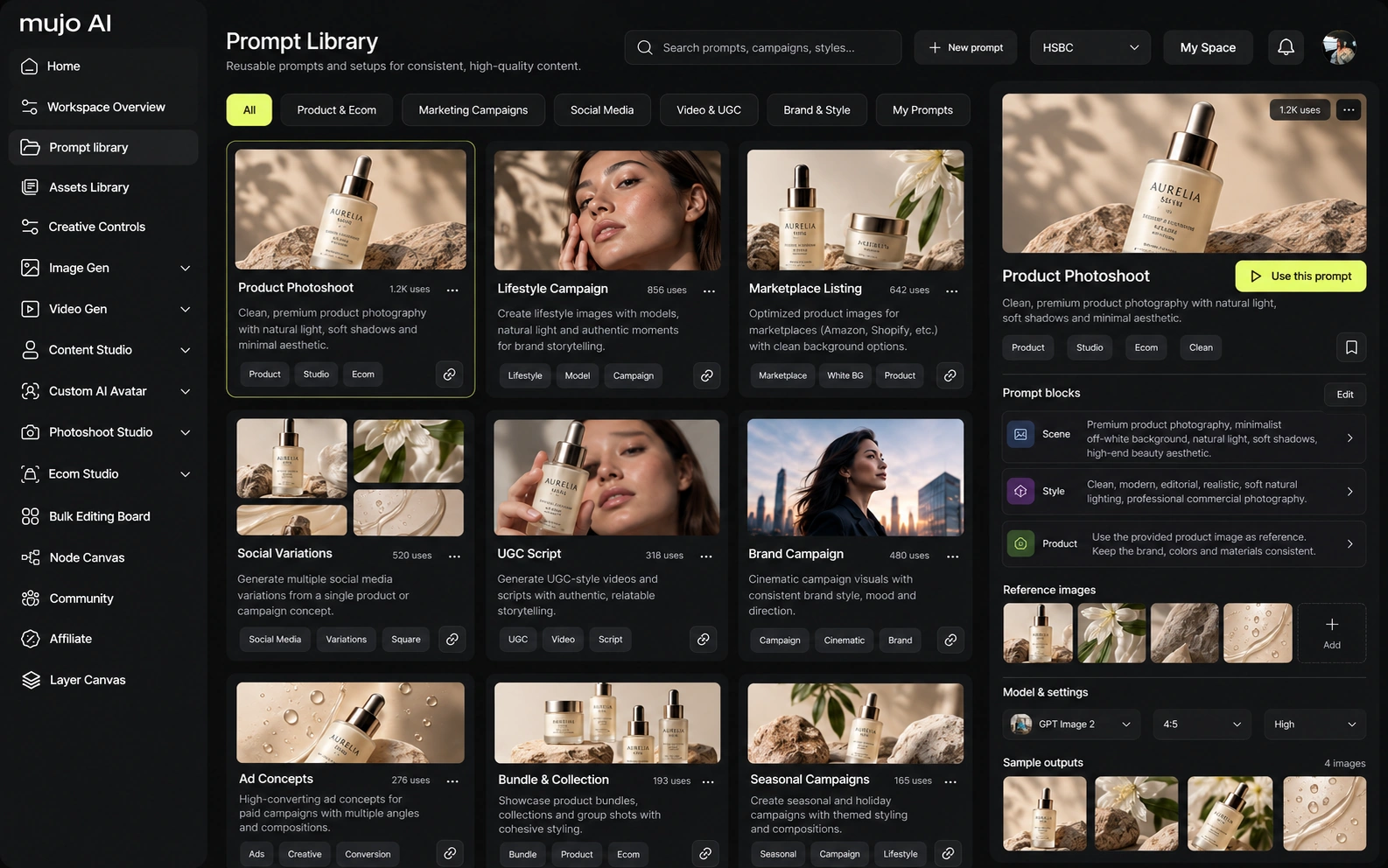
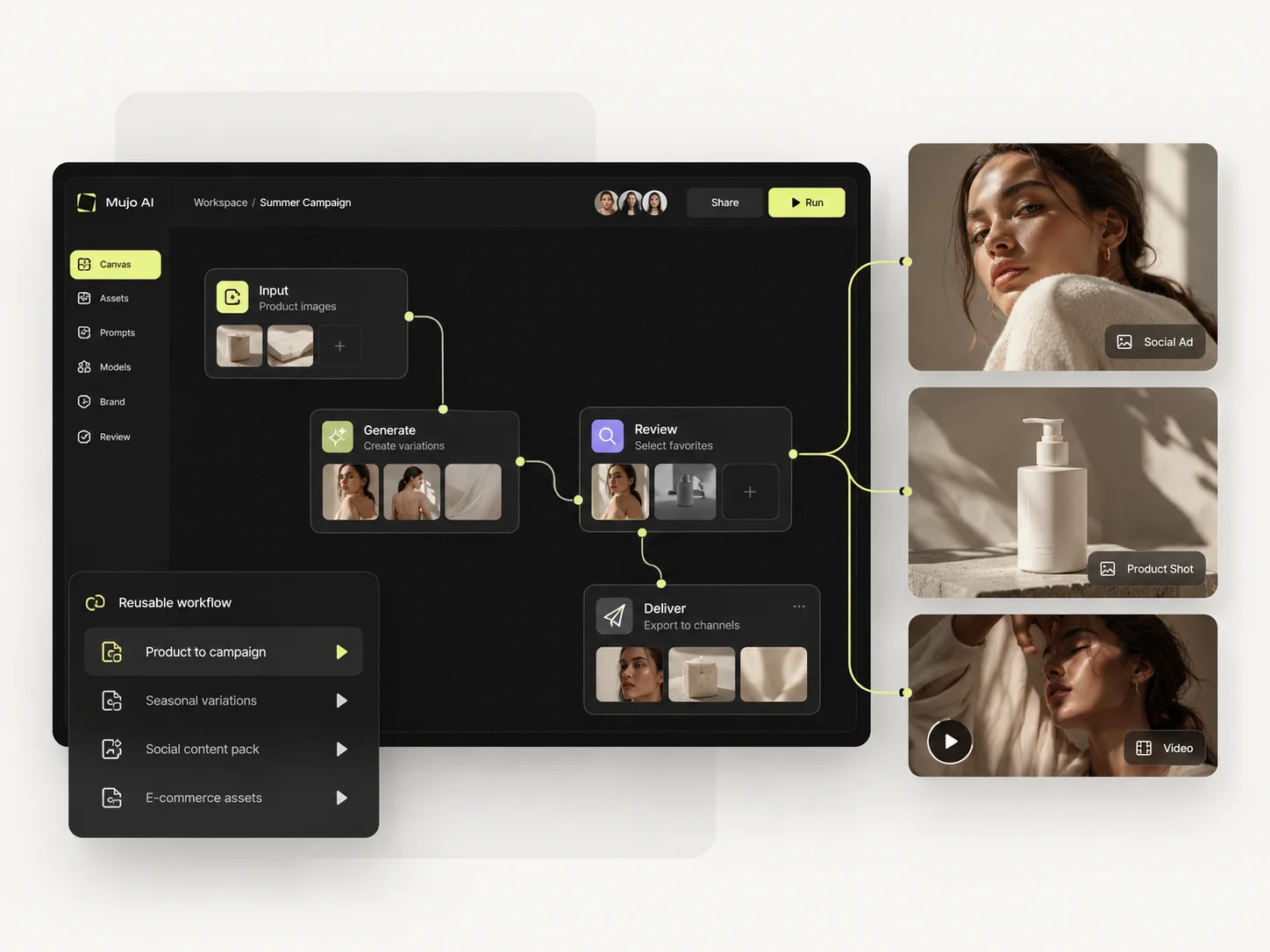
The Bulk production table is where a campaign stops being a series of renders. Rows are assets, columns are the variables, and one approved direction runs down a product list. A video suite has no equivalent, because a film is one thing and a catalogue is four hundred.
Per-asset work scales linearly: forty products means forty sessions. A saved direction run in bulk does not. That is the line where a Runway workflow and a Mujo workflow stop costing the same.
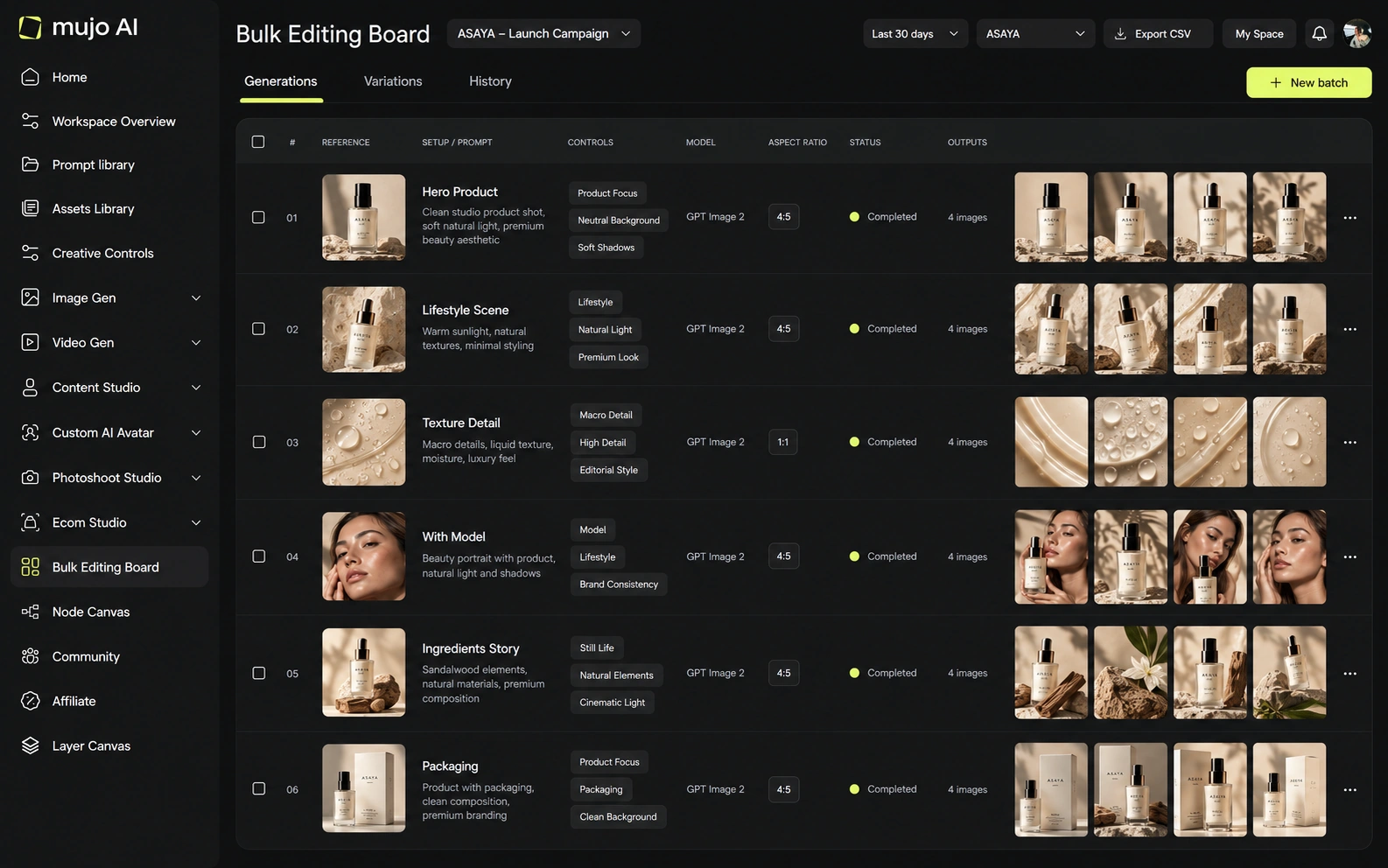
Run the same brief through both: one product image in, one hero still, three square social variants and one vertical motion ad out — then the same direction on a second SKU a week later. Runway will usually win the single clip. Watch what happens in week two.
Start from one source product image and one launch brief.
Produce the hero still, three square cuts and one vertical motion ad.
Save the direction: prompts, references, controls and the video model behind it.
Rerun the whole set on a second SKU without rebuilding it.
Runway clears the first round comfortably, as does almost anything else worth evaluating. The second round is where the difference appears, and it is the round nobody gets to during a two-week trial.
Runway plans increase concurrency, project counts, Brand Kits, storage and professional output features. Pro currently includes MCP, while Max expands production limits. Runway also has enterprise offerings. Mujo Enterprise emphasizes Node Editor, reusable team workflows, brand context, traceability and asset organization. Runway is the more mature video-production environment; Mujo is the more explicit reusable content-workflow environment.
Mujo Enterprise covers connected flows in the Node Editor, brand context, shared prompt and asset libraries, approval traceability, onboarding, admin and security review. Runway has its own team and enterprise tier built around video production; compare them on what each one governs, not on seat count. If an API matters, verify models, concurrency, authentication and pricing on both sides. If the work happens in the interface, shared setups matter more.

Runway's old Unlimited offer is being phased out, with Max now the main high-volume plan. Standard and Pro monthly credits do not roll over; Max rolls credits for one month, while purchased top-up credits do not expire. Runway also publishes model-specific credit rates—for example, current pricing lists Gen-4.5 at 60 credits for a five-second generation. This makes Runway relatively transparent for workload modeling. Mujo should be compared only on an identical model/mode where both sides publish the necessary rate.
125 one-time credits
625 credits/month
2,250 credits/month
9,500 credits/month; one-month rollover
Plans Start $9, Basic $19, Pro $34, Creator $84, Business $121 (5 seats); 200-credit packs from $2.60 with no use-by deadline
Mujo's plans run from $9 to $121 a month, with up to 40% off on annual billing. Pay-as-you-go packs start at 200 credits for $2.60, credits carry no use-by deadline, and new accounts start with 20 free. Video costs more per output than stills on any platform, so compare at the same model, resolution and duration or not at all.
Runway is designed for professional creative work and offers enterprise controls. Exact rights can depend on plan and model/provider terms, so teams should review the current terms for the selected workflow. Mujo gives users ownership of their generated outputs and commercial-use rights subject to law and third-party rights, with explicit no-training commitments.
Specifically, on Mujo's side: users keep ownership of what they upload and of AI-generated outputs and may use those outputs commercially, subject to applicable law and third-party rights; inputs and outputs are not used to train foundation models without opt-in, and the enterprise terms extend that to the third-party models in the stack. Commercial-use permission is not rights clearance. Trademark, publicity rights and model-provider terms still apply, so client work needs human review before it ships.
What Runway does better, and what Mujo does better. A comparison page that only fills in one side is not a comparison.
Worth reading before a trial rather than after one.
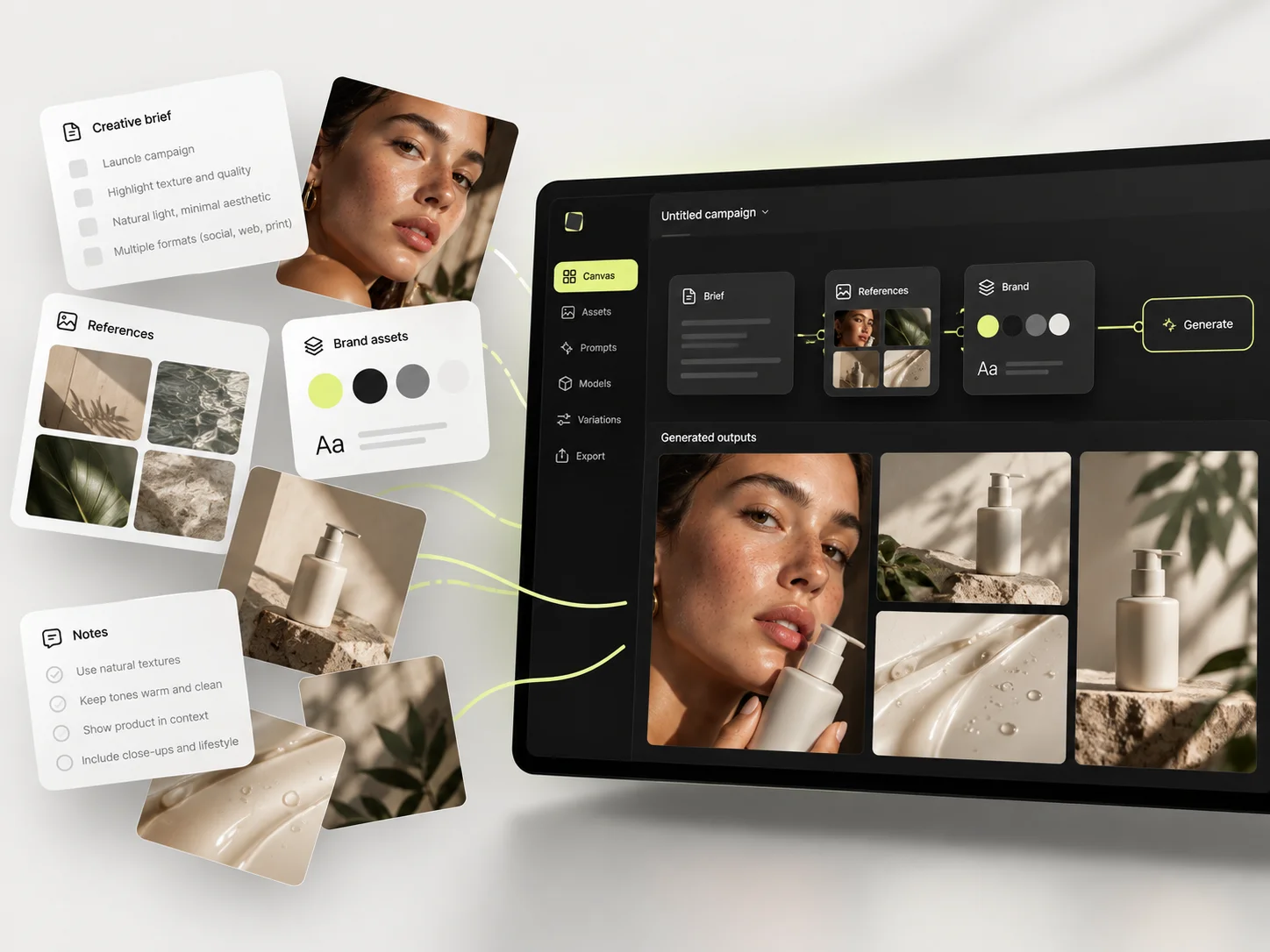
Runway is a specialist with a high ceiling in AI video; Mujo is an operational layer for repeatable AI content. They overlap in generation, but not in product philosophy. A video studio will usually value Runway's depth. A commerce or social team may get more leverage from Mujo's ability to preserve and reuse the creative recipe across many asset types.
Choose Runway when the primary deliverable is high-end AI video, professional video transformation, or a film-centric creative project.
Choose Mujo when you need one repeatable system spanning product imagery, listings, social content and video tests rather than a video-first production suite.
The practical split: Runway for the hero film, Mujo for everything the film has to match — the stills, the cutdowns, the listing images, the variants. Teams reach for it when the film is fine and the other sixty assets are the bottleneck.
If your recurring deliverable is a video, compare motion quality and control, and Runway is the serious answer. If video is one of eight things a campaign needs, compare how much of the campaign setup survives between campaigns.
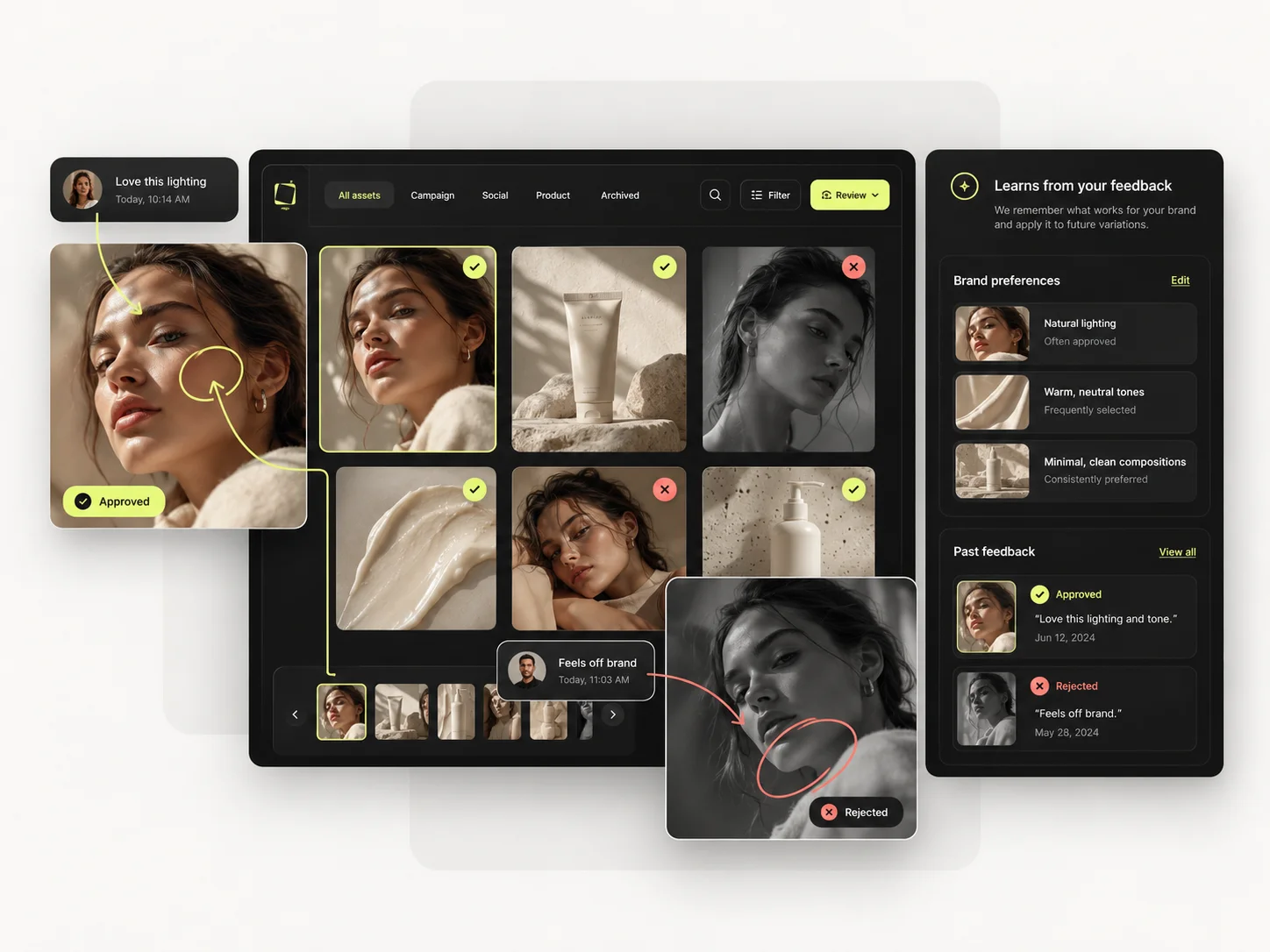
Short answers about Runway, about Mujo, and about the parts that are easy to get wrong.
Runway is phasing out its Unlimited plan and has positioned Max as the current high-volume individual plan. Legacy timing should be checked against the account's migration notice.
Runway's current pricing page lists Gen-4.5 at 60 credits for a five-second generation.
Runway has deeper proprietary video technology and professional production features. Mujo is better framed as a broader multi-model content workflow that includes video.
Standard and Pro subscription credits do not roll over. Max currently allows one month of rollover; purchased top-ups do not expire.
Yes. Mujo's public video workflow supports multiple models and is designed to compare outputs while keeping prompts and references organized.
A comparison against Runway stays abstract until you look at the work it is about. These are the production workflows Mujo is built around, plus the neighbouring comparisons if you are still shortlisting.
Take a brief to a full set of campaign assets in one workspace.
Turn one approved creative into controlled versions across formats and markets.
Run an approved product direction across a whole SKU list.
The asset library, compared against a reusable workflow.
Fine-tuned models against a reusable process.
The realtime lab against a production floor.
If video lives in one tool, stills in another and the approved direction in a chat thread, Mujo is where those become a single setup. 20 free credits. Take a campaign you already shipped and rebuild it end to end.