A model aggregator
Mujo's list is curated. Platforms built for breadth will list more engines.
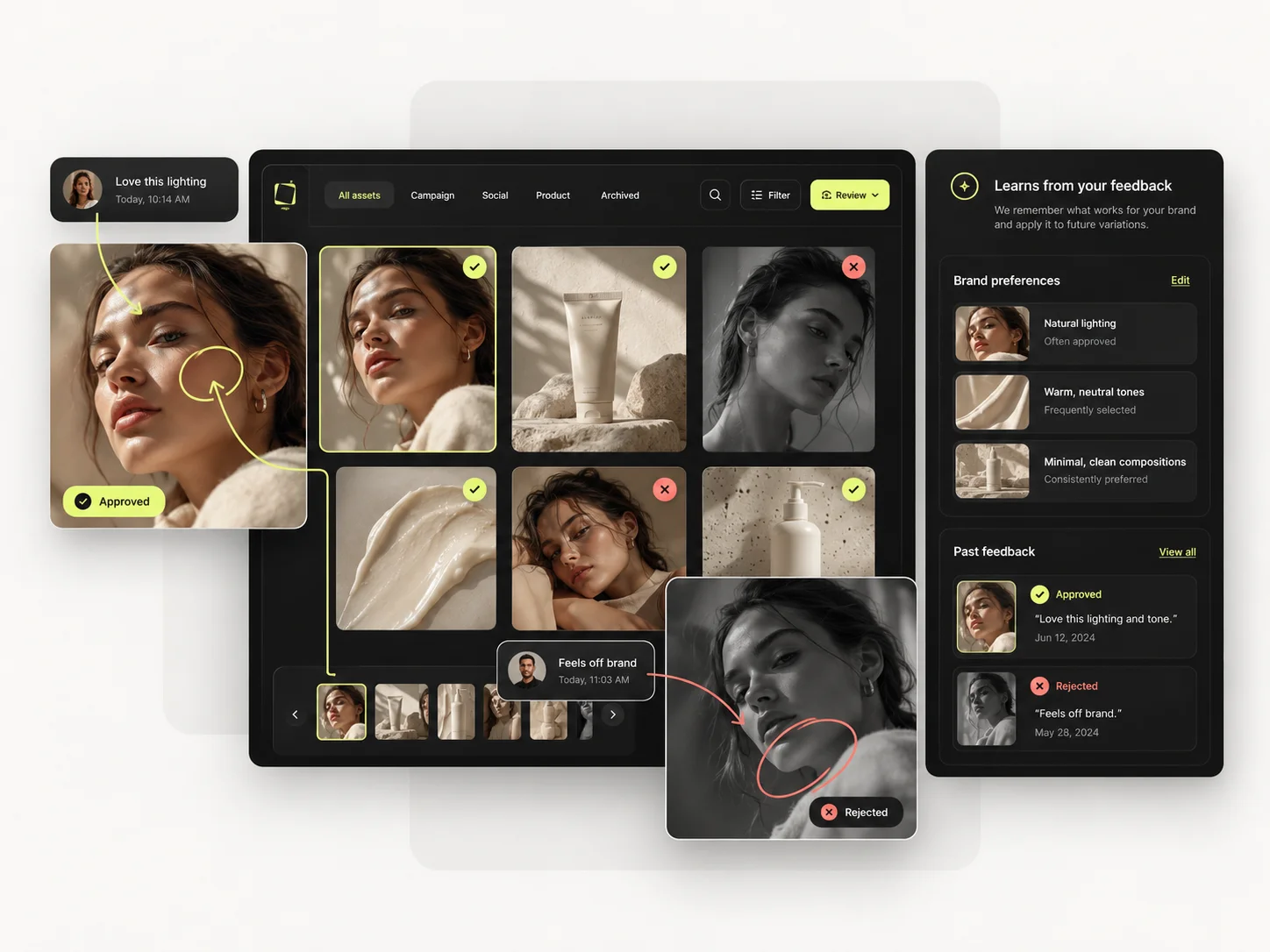
Pollo's proposition is reach: a long list of video models behind one login, so you never have to pick a subscription. Mujo exposes fewer engines and spends its effort on what happens around them. If the question is 'which model', Pollo has more answers. If it is 'how do we ship forty assets', the model list is not the bottleneck.
Three things this platform does not do, stated before the arguments in its favour. If one of them is what you came for, Pollo AI is the better answer and this page will not change that.
Mujo's list is curated. Platforms built for breadth will list more engines.
Video is one output among stills, listings and social.
The pitch is production structure, not access to everything.
Where a model aggregator and a production system actually differ.
Pollo has moved aggressively beyond a model aggregator. Its current product includes Marketing Studio, Commerce Studio, Creative Studio, Pollo Agent, URL-to-video advertising workflows, avatars, audio/effects, editing and a catalog that markets more than 70 leading video models plus many workflow apps. Mujo is less video-factory-oriented and more focused on reusable commercial content systems.
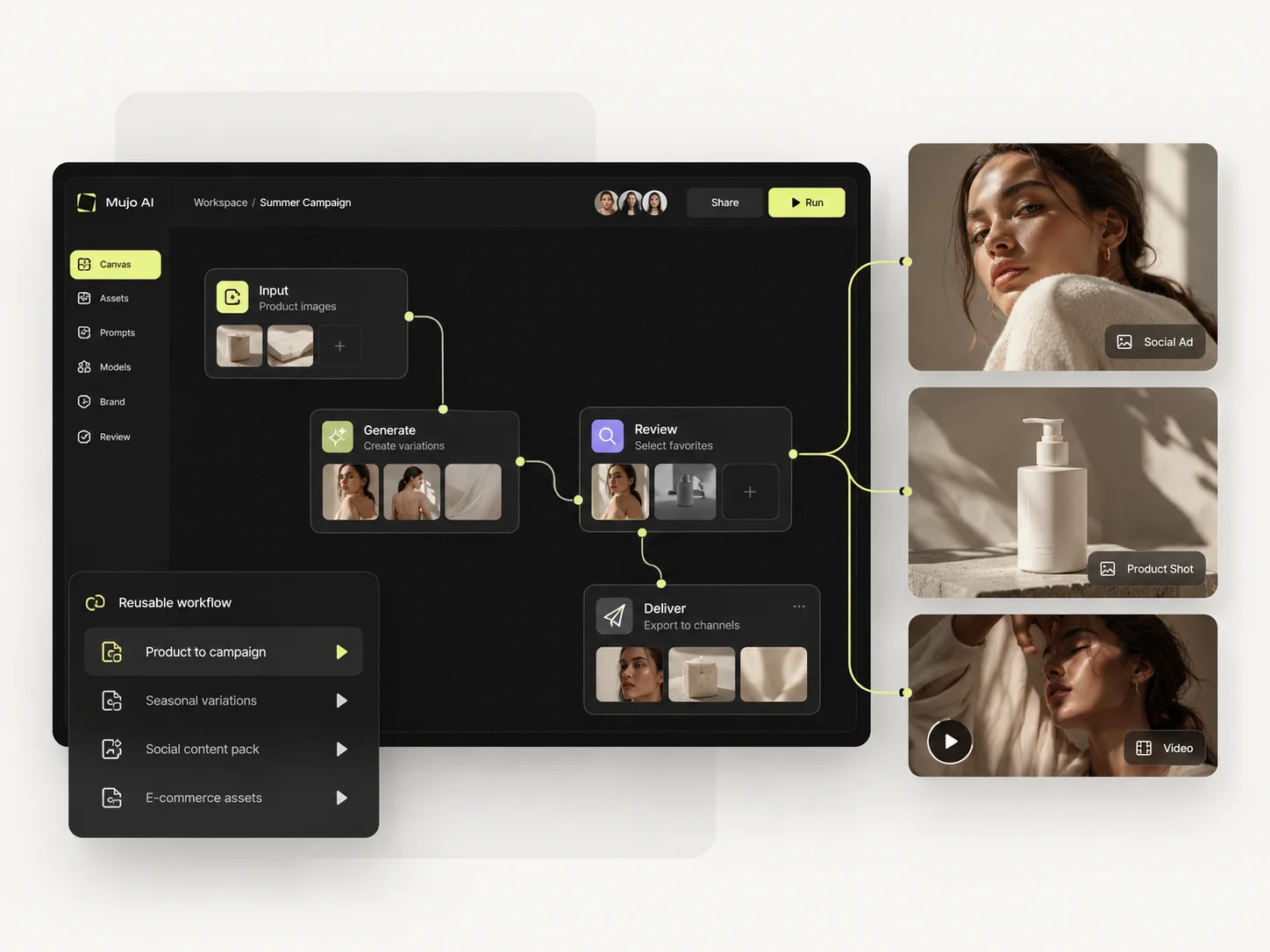
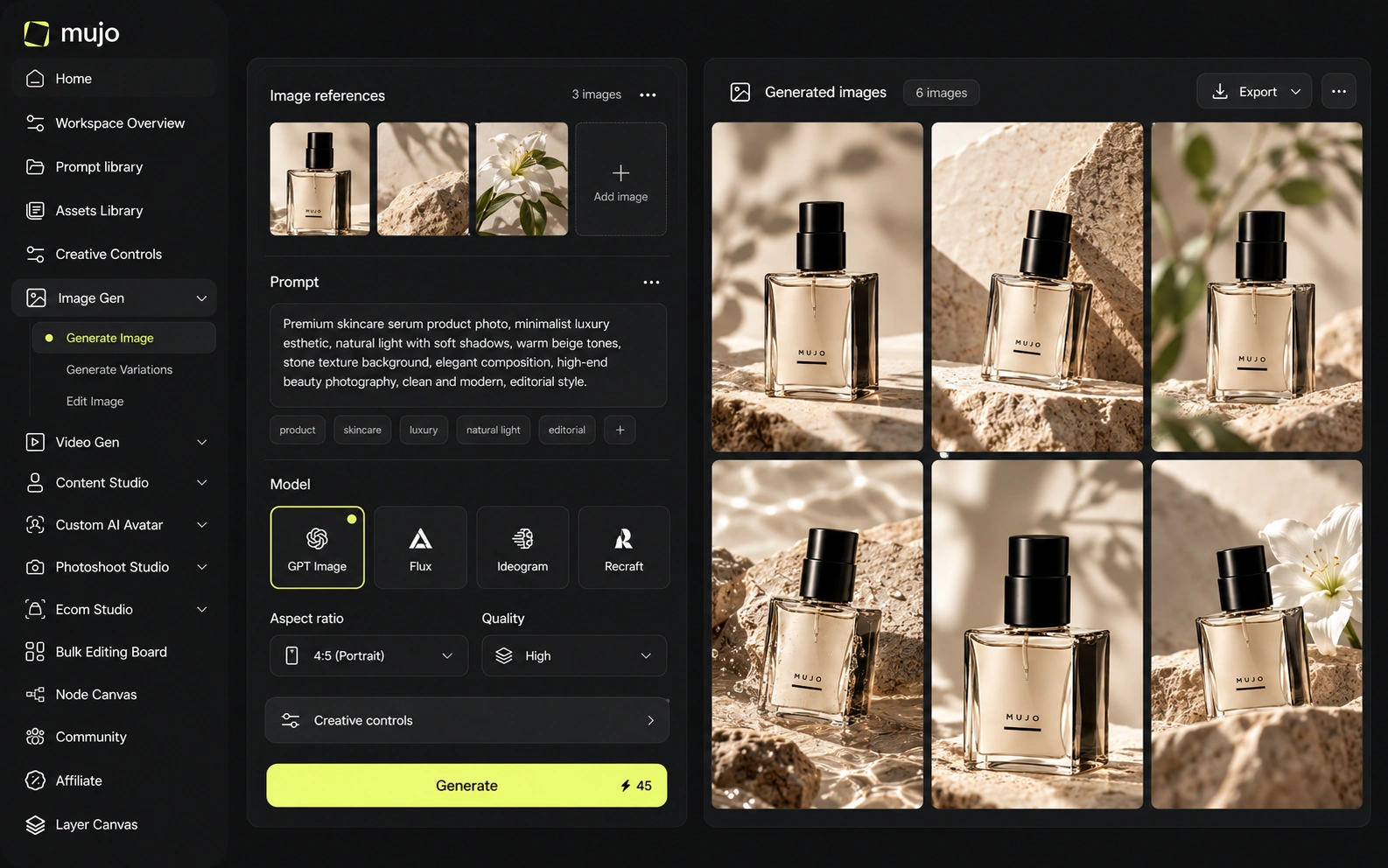
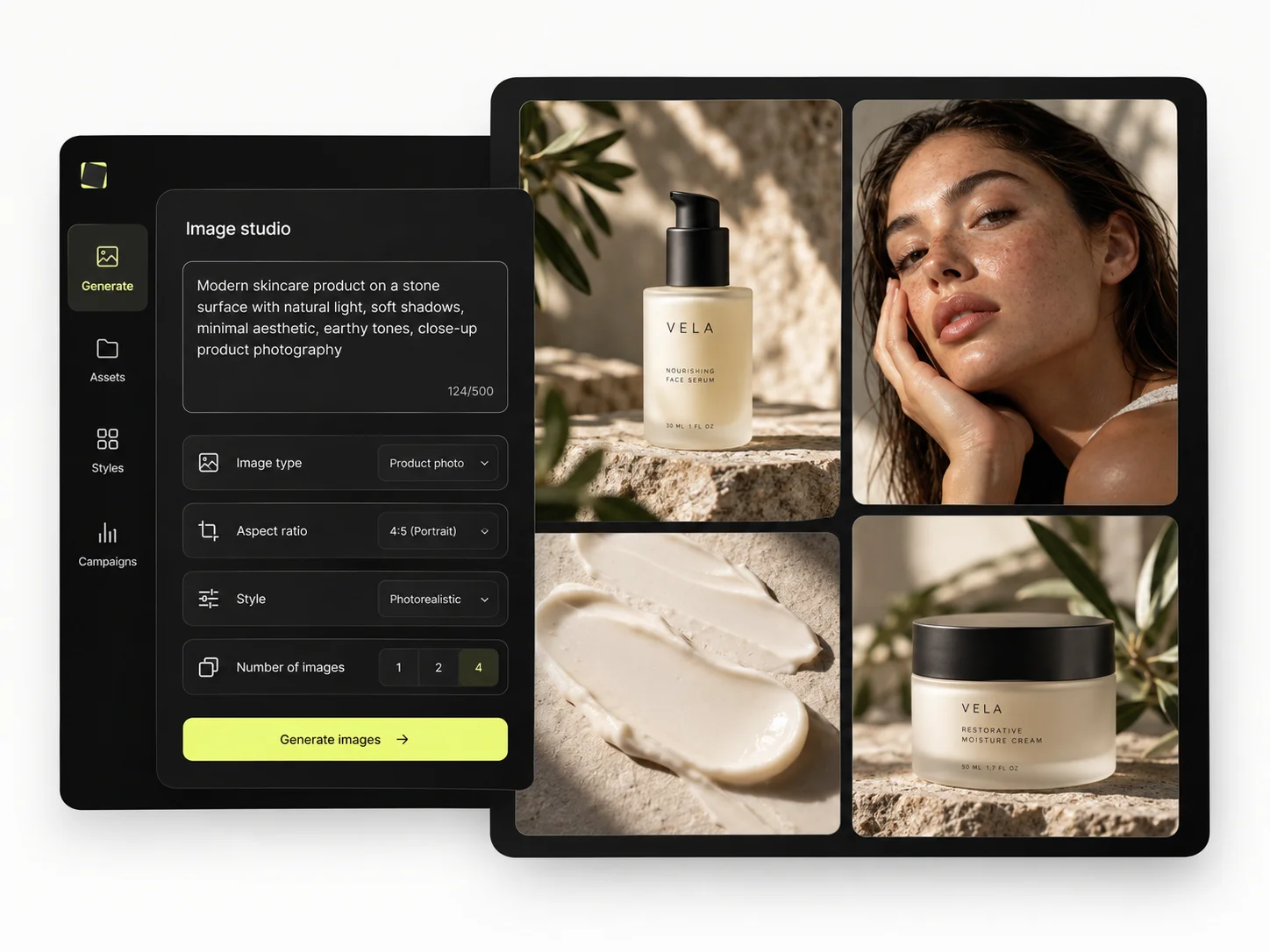
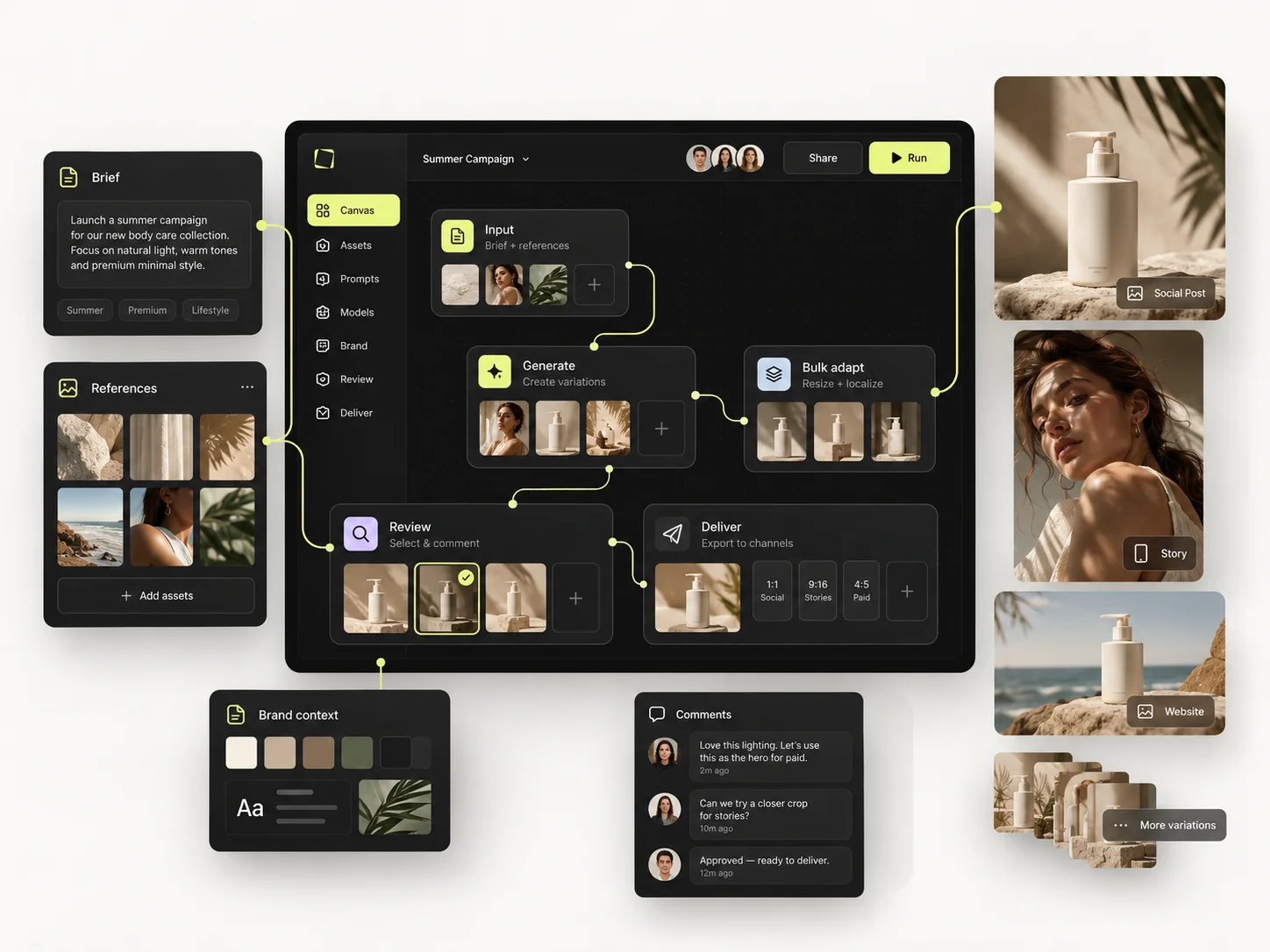
Mujo is a workflow layer rather than an aggregator, though it does aggregate: Veo 3.0 and Veo Fast, Kling 3.0, Seedance 2.5 and Seedance 2.0 for motion and Nano Banana Lite, Nano Banana 2 and Nano Banana Pro, GPT Image 2, Midjourney, Seedream 5.0 Lite and Seedream 5.0 Pro, Grok Imagine and Kling 3.0 Image for stills, with Creative Controls, a shared Prompt Library, references, an Asset Library and a Node Editor around them. Pollo optimises the menu; Mujo optimises what you do after ordering. Access and production are different products. An aggregator removes the subscription problem. A production system removes the rebuilding problem, which is the one that recurs.
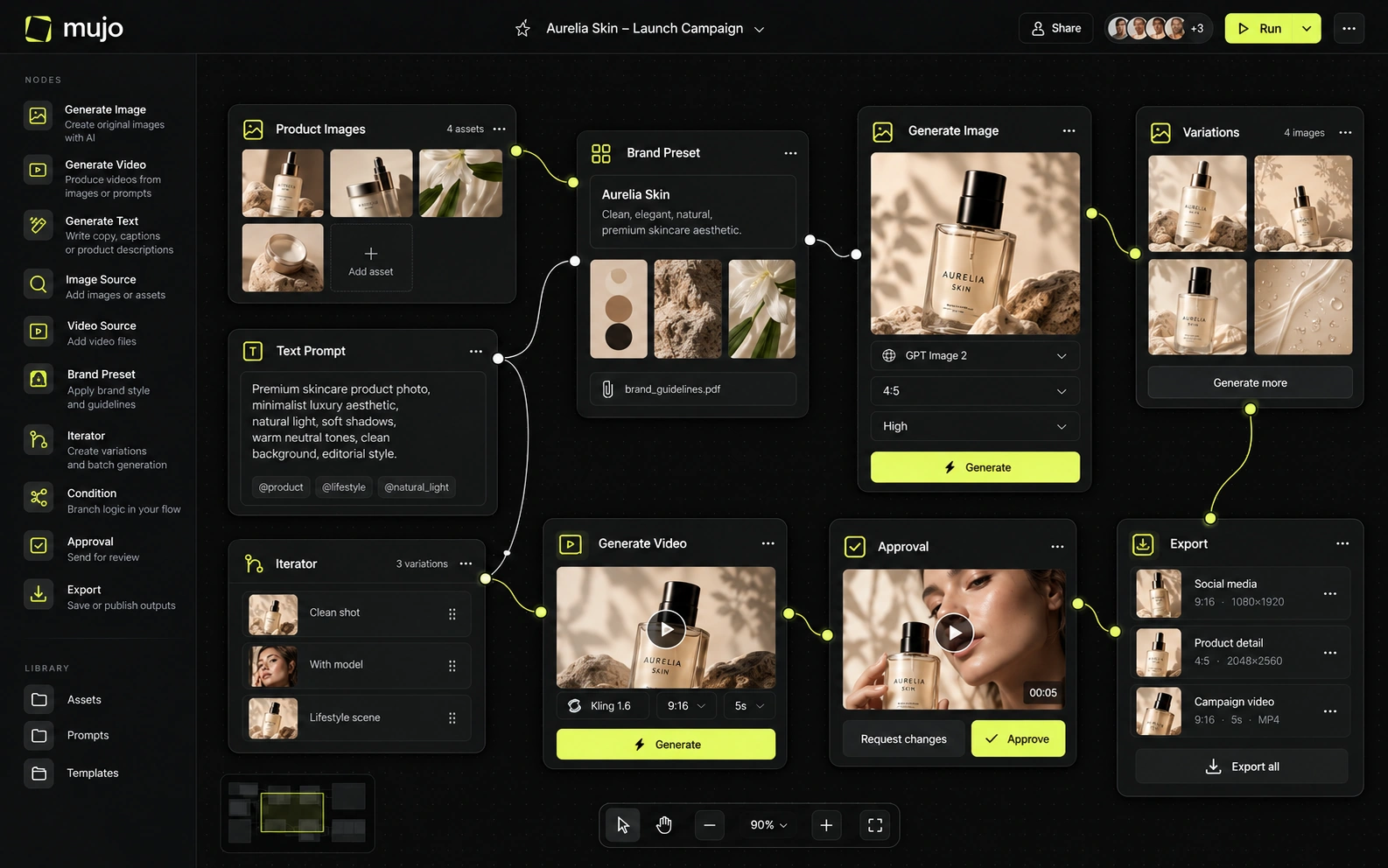
Pollo's breadth is a major selling point. It routes users across many third-party video and image models and packages them into task-specific workflows. Mujo also aggregates leading models but exposes a smaller curated set in its primary workspaces. Pollo is better for 'try every relevant video engine'; Mujo is better for 'preserve the campaign recipe while changing engines when needed'.
Pollo will almost certainly list more video engines, and that is a fair advantage to weigh. Mujo's counter is that its engines share one prompt, reference and control context with the image side, so a campaign's stills and motion come out of the same direction. Keep the questions apart: how many engines you can reach, and how much of your work is still there when you switch. Aggregators are built for the first.
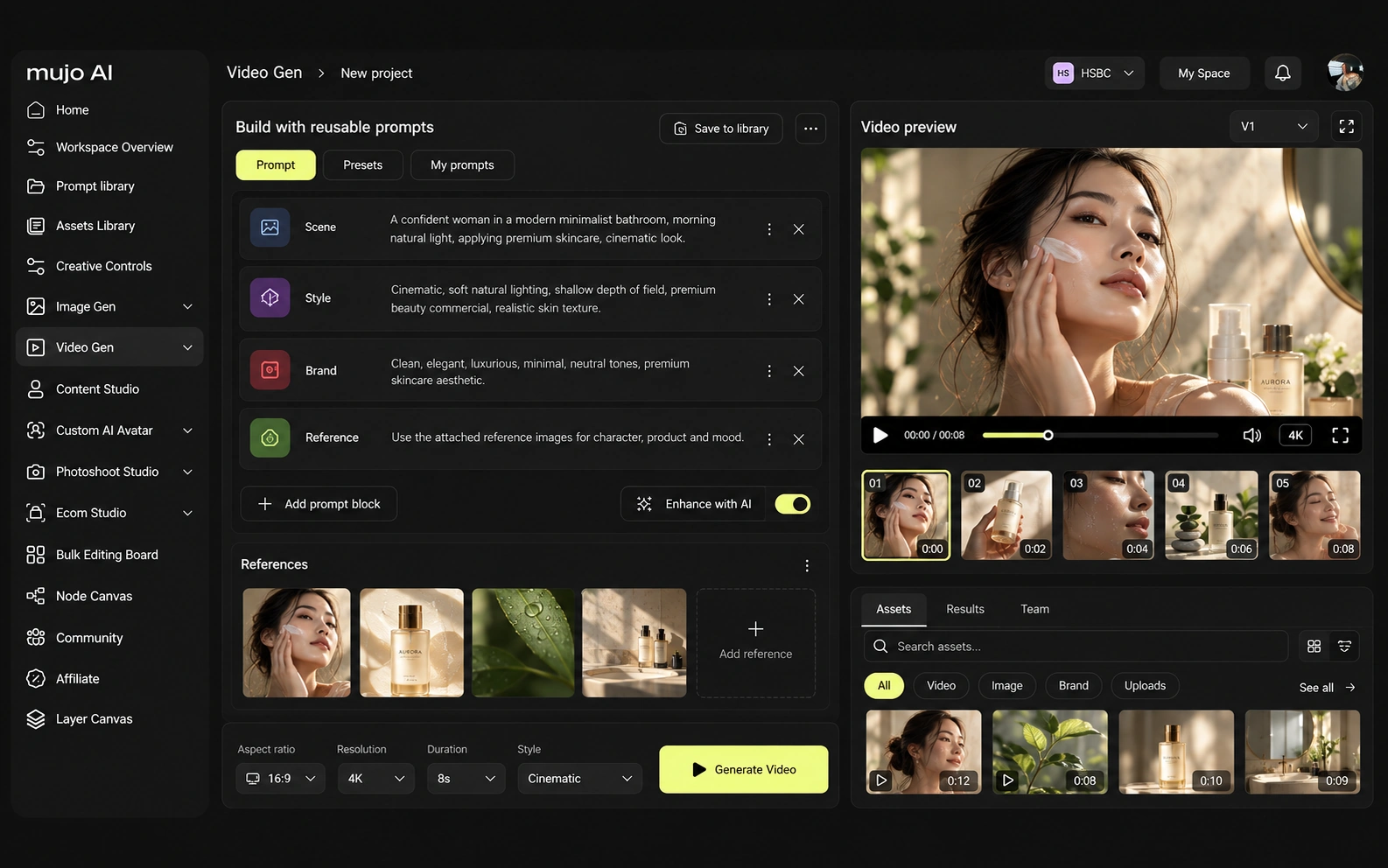
Pollo's control comes from model parameters, workflow templates, avatars and agentic task execution. Mujo's control comes from structured creative direction through Creative Controls, Prompt Library, saved prompts and references. Pollo's system is optimized to reach a finished clip or ad. Mujo's system is optimized to keep a reusable method around the asset.
In an aggregator, control is whatever each model exposes — you learn a different set of parameters per engine. Mujo's Creative Controls sit above that: lighting, pose, expression, camera angle, location and style as one named vocabulary, saved and reapplied regardless of which engine runs it. That abstraction costs some fidelity to each model's quirks and buys the ability to hand a direction to someone else. Which trade is right depends on whether one person or five are producing.
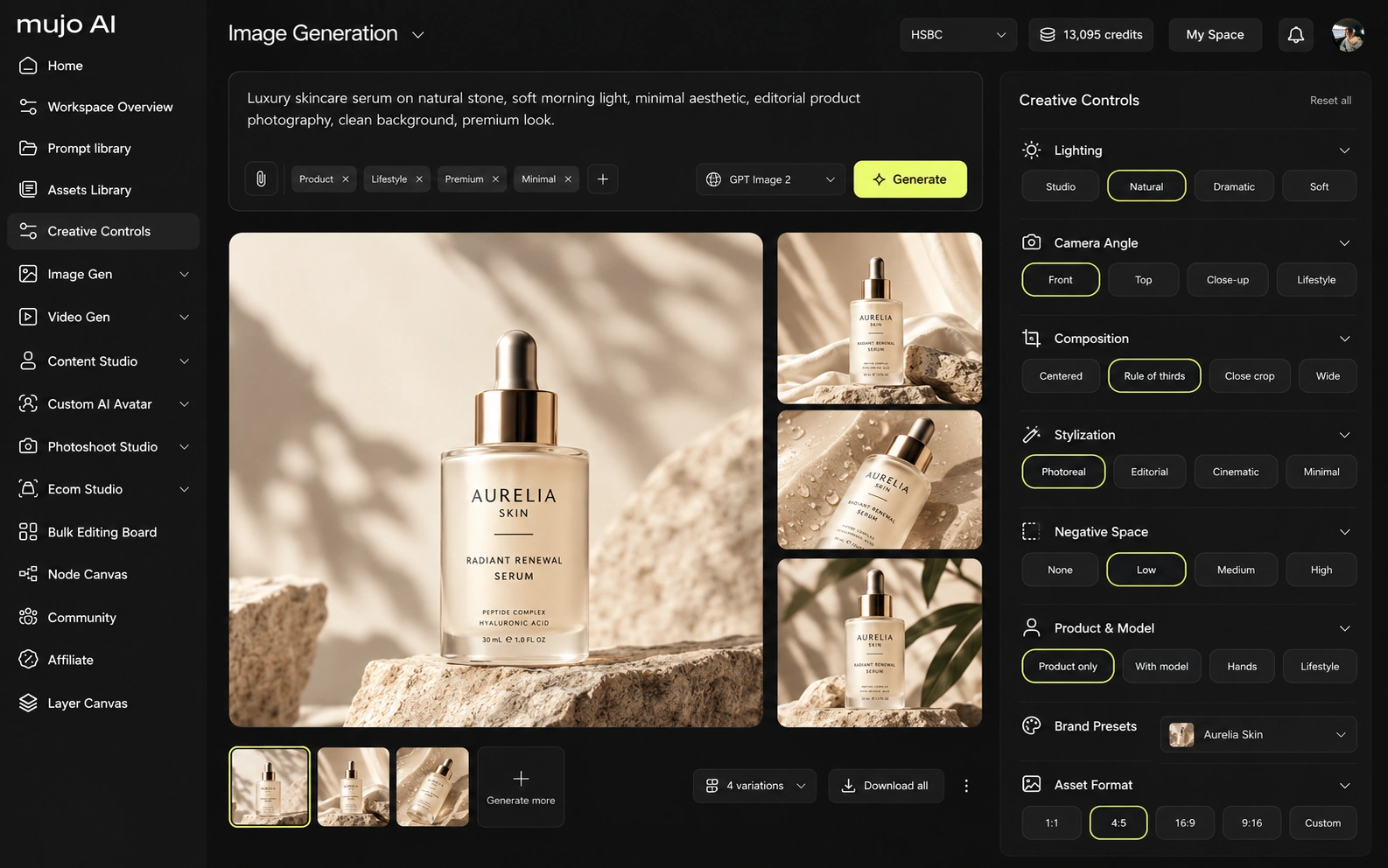
Pollo AI and Mujo both participate in the fast-moving multi-model video market, but they use video differently. Pollo offers URL-to-video, product-link advertising, avatars, audio, effects, Marketing Studio, Commerce Studio, Creative Studio, Agent and a large set of prebuilt workflows. Mujo offers product and listing imagery, social visuals, AI Photoshoots, a shared Prompt Library and published portfolio examples. Both address commerce, but Pollo leans toward automated video deliverables.
Mujo's video is text-to-video and image-to-video in the same workspace as stills, which is what turns an approved product frame into a vertical ad without a handoff. Storyboards connect the two halves so motion starts from a chosen frame.
Consistency is four problems: the same person, product, look or process. Access to many models does not address any of them directly; it widens the search space, which can make consistency harder.
Mujo stores the route: references, Creative Controls parameters, saved prompts, model choice, workspace history, reusable flows. The saved object is the method, which is what makes the fortieth asset cheap. For Pollo AI, the consistency model is different. Pollo's control comes from model parameters, workflow templates, avatars and agentic task execution. Mujo's control comes from structured creative direction through Creative Controls, Prompt Library, saved prompts and references. Pollo's system is optimized to reach a finished clip or ad. Mujo's system is optimized to keep a reusable method around the asset. If the recurring task is finding the model that handles a particular shot, an aggregator is the efficient tool. If it is producing a campaign every month, the structure matters more than the menu.
How each platform fits commercial output that repeats
Pollo's Commerce and Marketing Studios make it particularly strong for turning product links and product media into videos and performance-ad variants. Mujo is stronger when a product team also needs listing stills, gallery logic, reusable visual direction, copy, and cross-model image generation—not only ad videos.
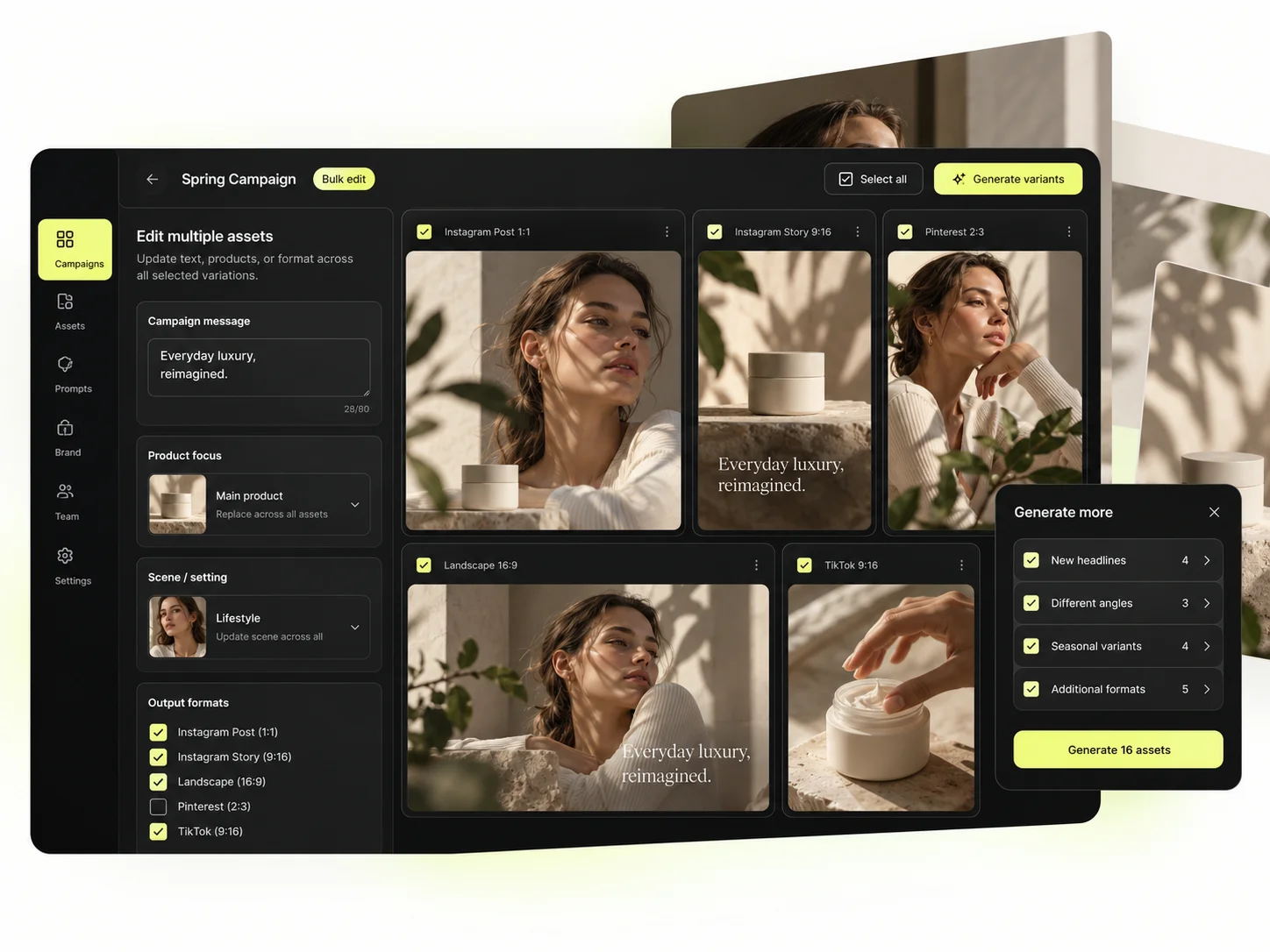
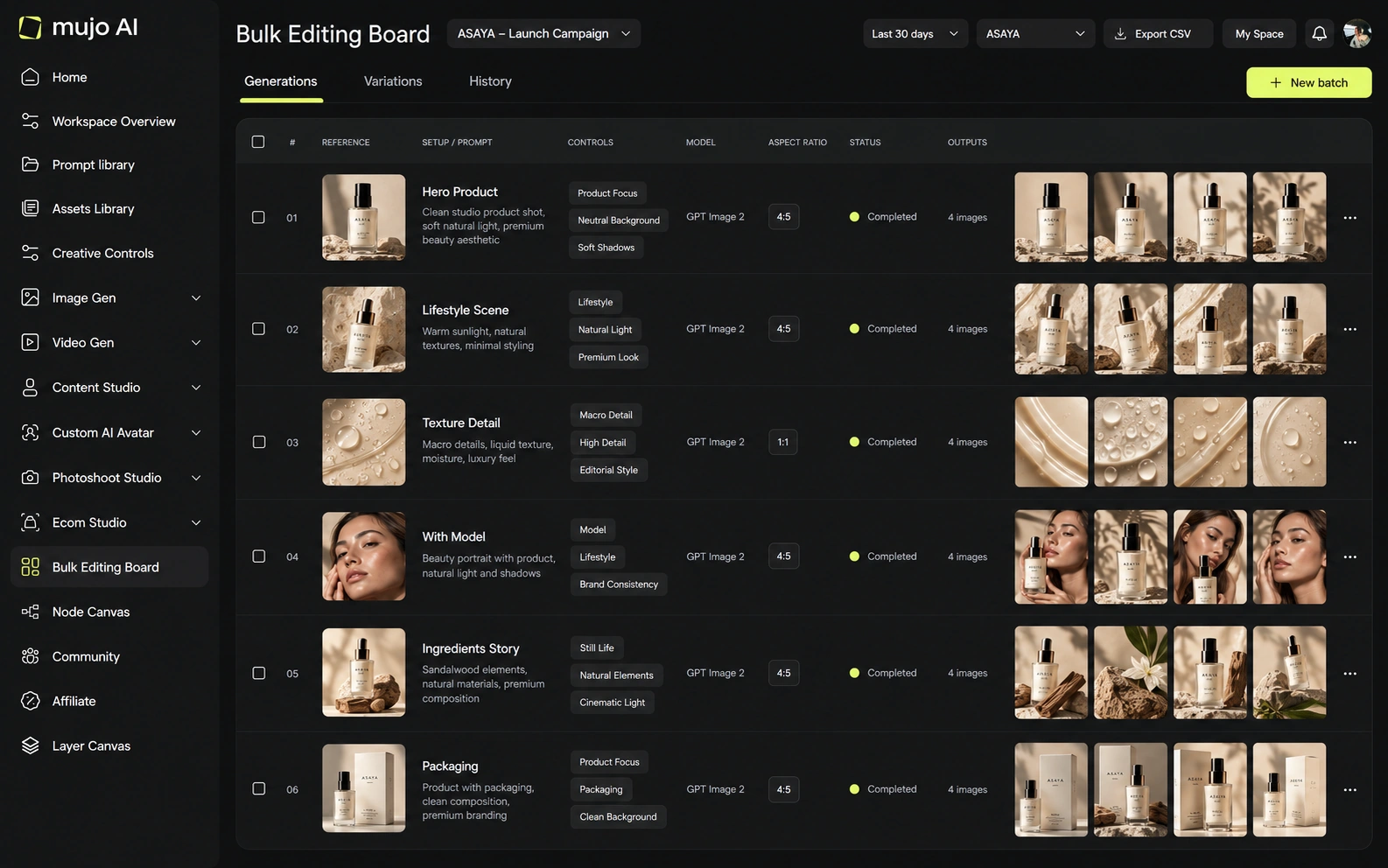
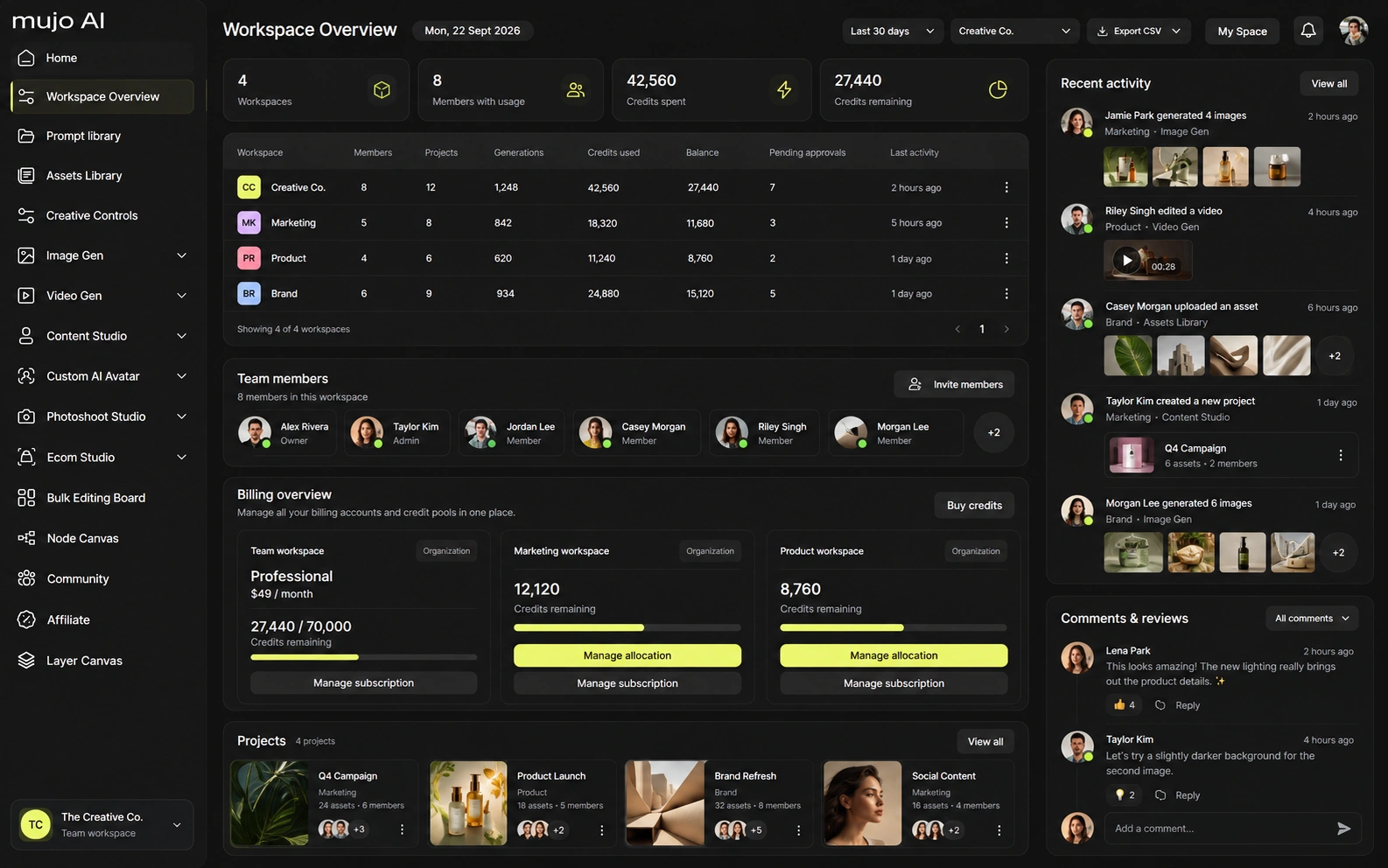
Mujo's commercial surface is built as use cases: Product Photos, Listing Images, Product Catalog Production, AI Photoshoots, Campaign Creatives, Creative Variations, Social Media Content and Social Video Ads, with the Bulk production table running one direction across a SKU list.
The product shot, its listing crops, its variants and its vertical cut come from one setup. That is a production concern rather than a model-access one.
The product shot, its listing crops, its ad variants and its social cuts come out of the same approved direction. Volume is what makes commercial work expensive, not generation speed — and it is the part a Pollo AI comparison usually leaves out.
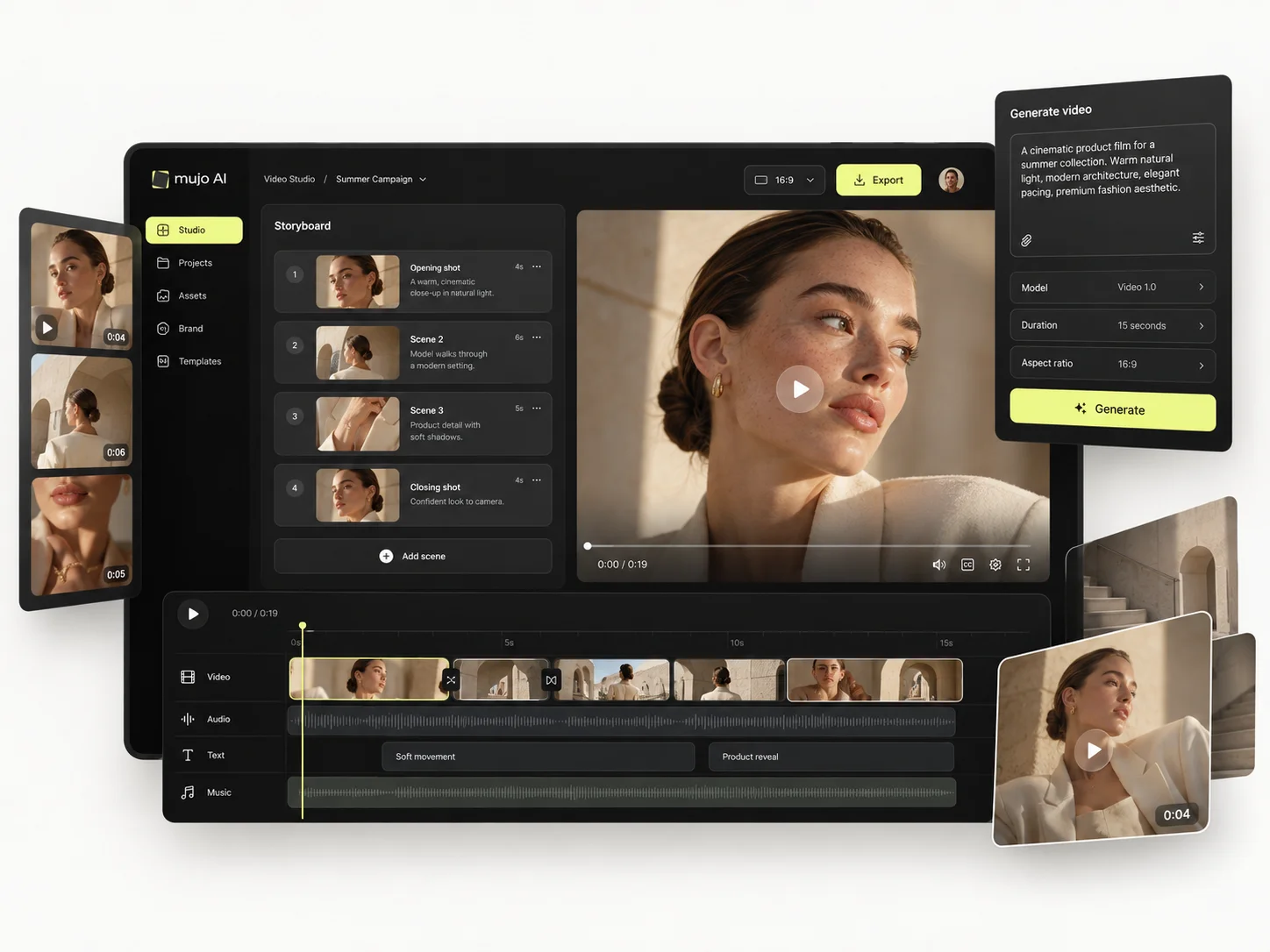
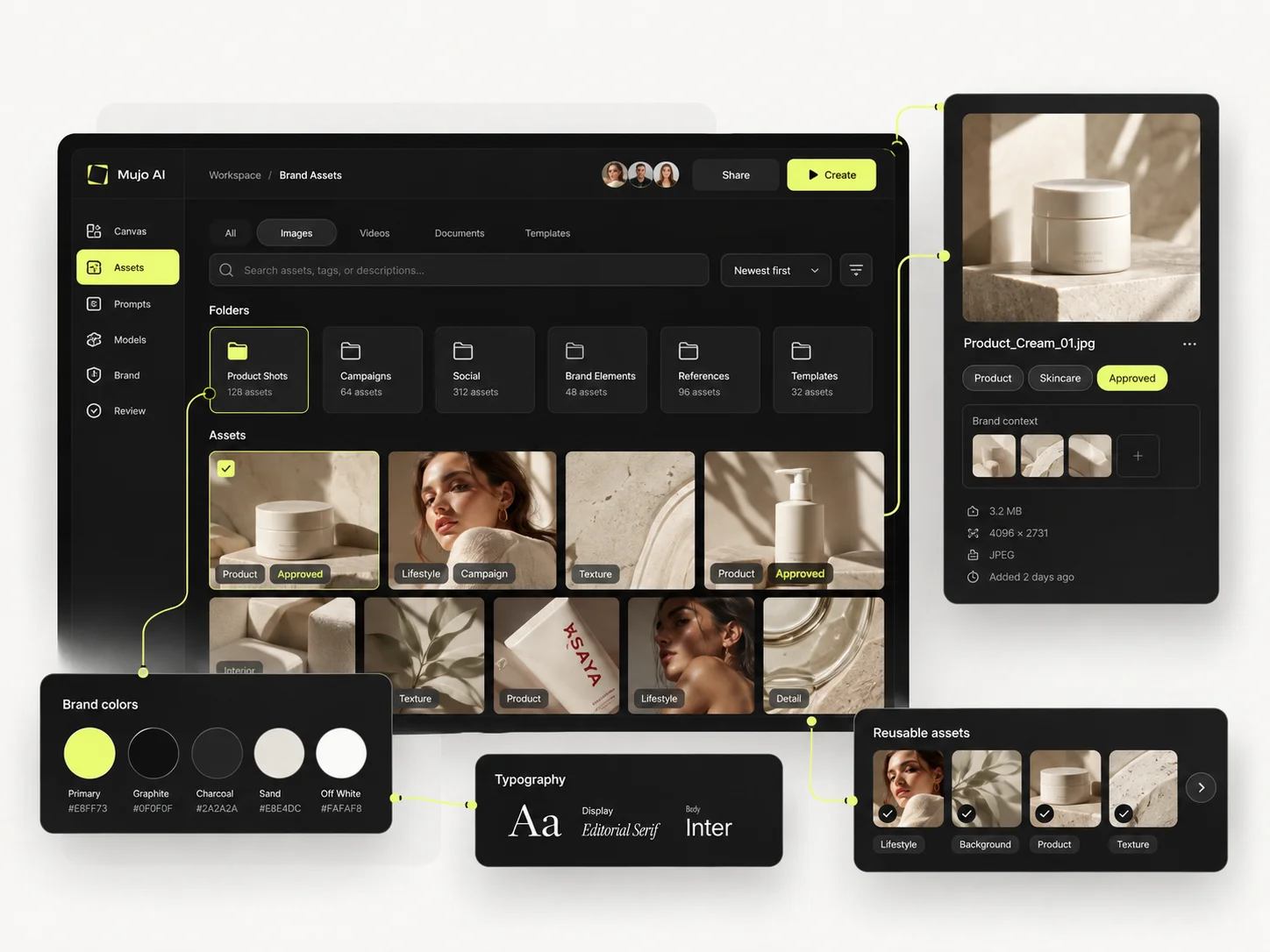
Prompts are production assets: refined with structured controls, compared across models, saved to the Prompt Library. Selected workflows can be published — see Creative Portfolio Examples — so good setups are reusable rather than rediscovered. Pollo AI takes a different route. For a launch campaign, Pollo can often get from a URL to multiple ad videos faster because much of the flow is pre-automated. Mujo takes a more modular approach: build a reusable direction, create stills/listing assets/social variants, then route the same concept into video. When the next SKU arrives, the Mujo recipe is meant to be reused. Pollo minimizes time to finished ad; Mujo minimizes the need to reinvent the creative system.
Saved setups live in the Prompt Library where the next person can find them, instead of in the generation history of whoever happened to get it right. Whatever you keep from a Pollo AI session, it is usually the output rather than the reasoning behind it.
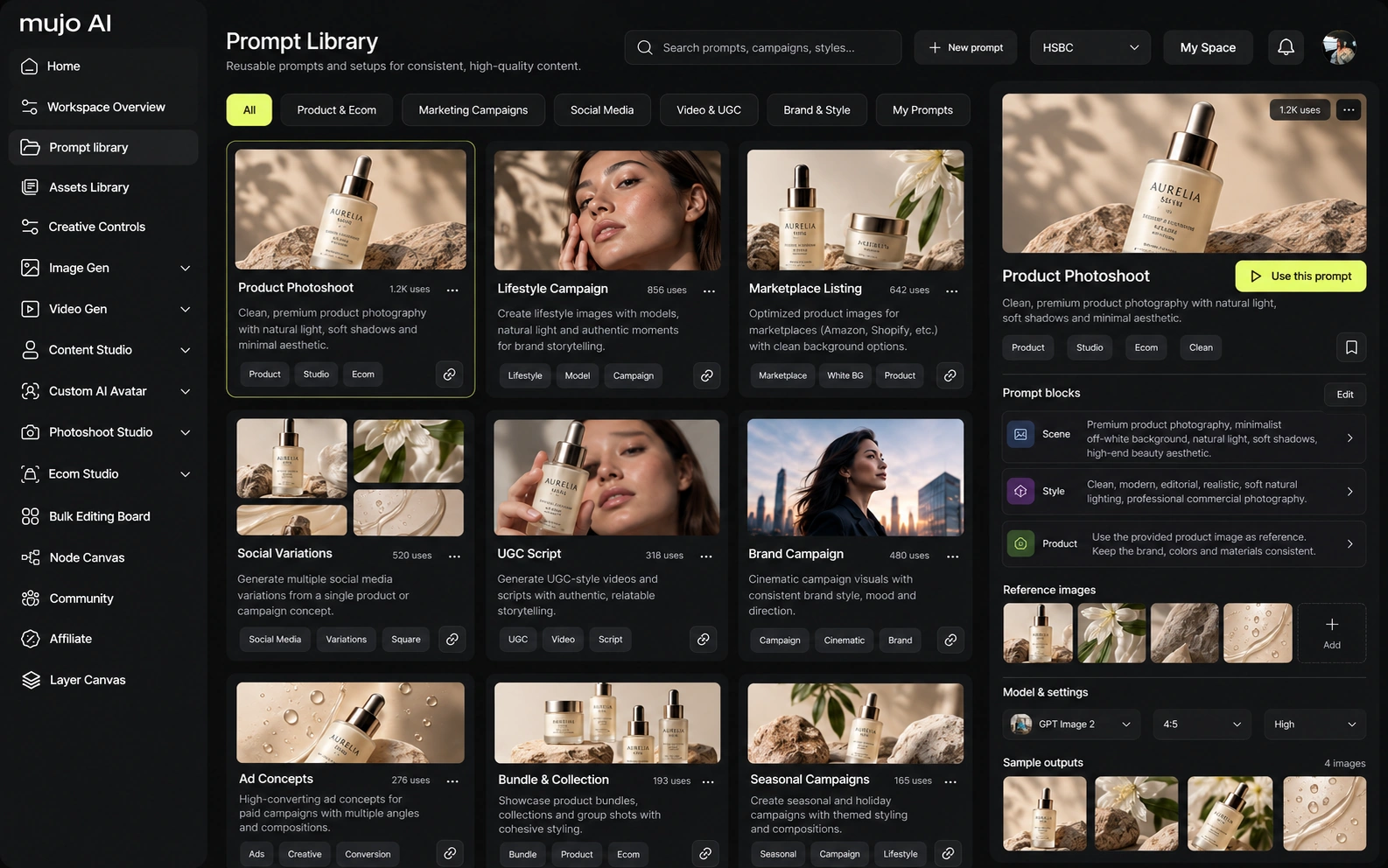
The Bulk production table is what a longer model menu does not give you. Rows are assets, columns are the variables, and one approved direction runs down a product list — the work that happens after the engine is chosen.
Per-asset work scales linearly: forty products means forty sessions. A saved direction run in bulk does not. That is the line where a Pollo AI workflow and a Mujo workflow stop costing the same.
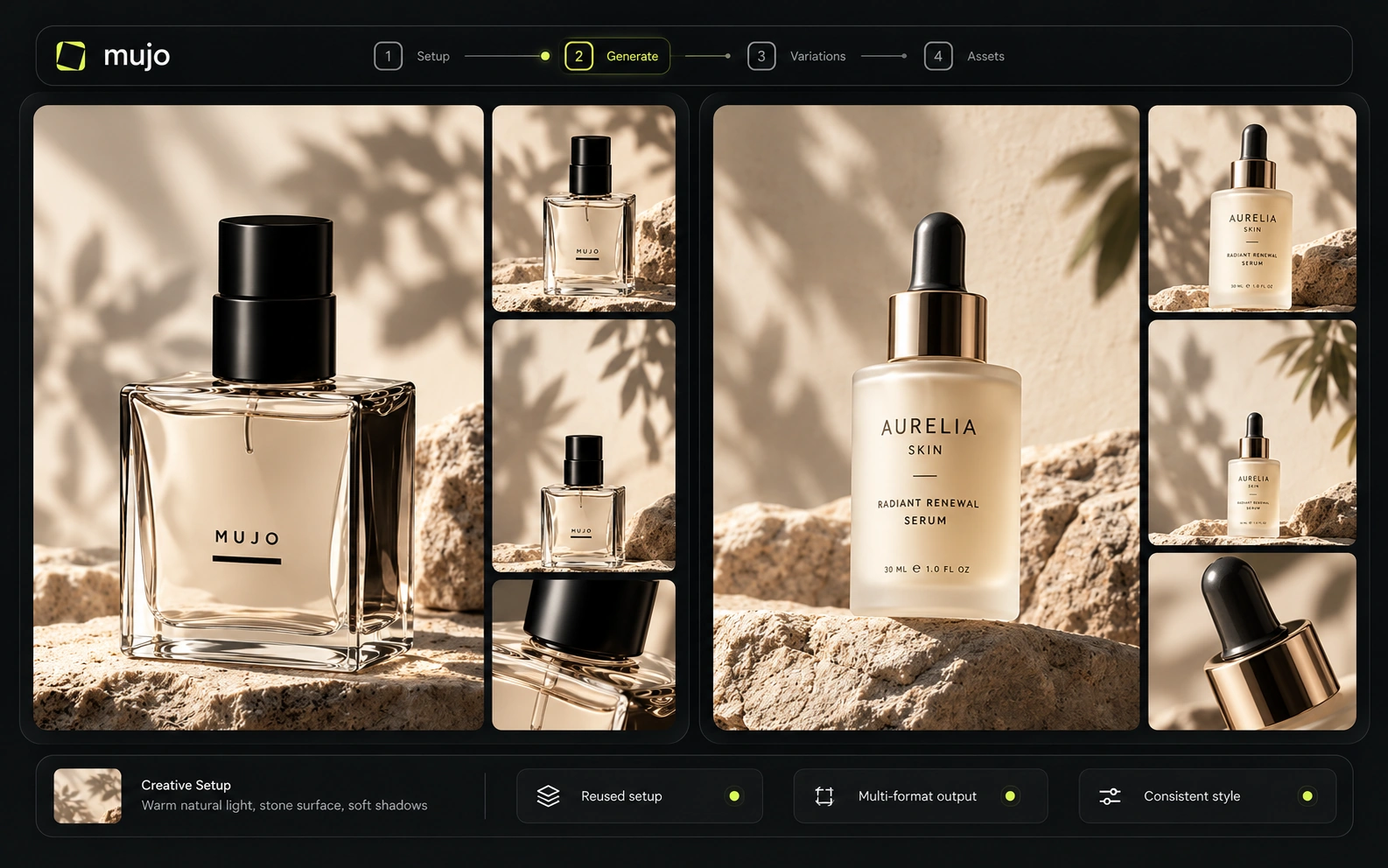
Same brief in both: one product image in, a hero visual, three square social variants and one vertical motion ad out, then the same direction on a second SKU a week later. A wide model menu helps in round one. Round two is about what you kept.
Start from one source product image and one launch brief.
Ship the hero visual, three square cuts and one vertical motion ad.
Save the direction once the engine is picked: prompts, references, controls.
Rerun the set on a second SKU without re-picking everything.
Pollo AI clears the first round comfortably, as does almost anything else worth evaluating. The second round is where the difference appears, and it is the round nobody gets to during a two-week trial.
Pollo exposes an API and agentic/studio surfaces for production automation. Public plan information emphasizes credits, parallel tasks and speed. Mujo's enterprise surface more explicitly describes brand context, asset management, review logic and no-training commitments. Organizations should compare role controls, procurement, API rate limits and security documentation before standardizing either platform.
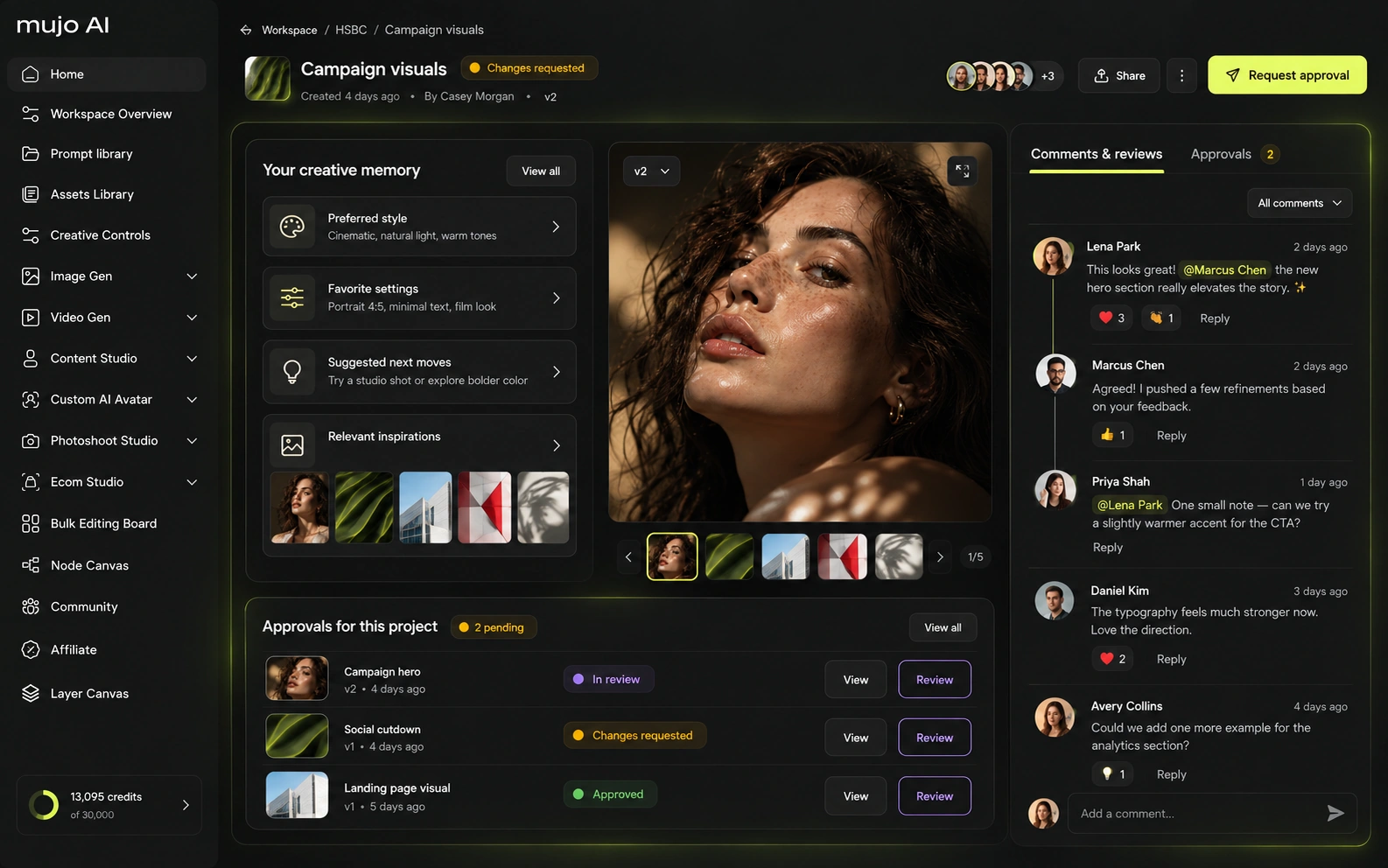
Mujo Enterprise covers Node Editor flows, brand context, shared prompt and asset libraries, approval traceability, onboarding, admin and security review. An aggregator's team features are usually access and billing, which is consistent with what it sells. If an API matters, verify models, concurrency and pricing on both sides. If the work is in the interface, compare what a shared setup actually carries between people.
Pollo's subscription credits do not roll over. Pro users can buy top-ups, and annual-plan add-on packs have separate validity rules; add-on credits do not behave exactly like monthly subscription credits. More importantly, video consumption varies dramatically by model, duration and quality. The number of Pollo credits cannot be compared to Mujo credits directly.
400 credits; 2 parallel tasks
800 credits; 3 parallel tasks
5,000 credits; 6 parallel tasks
Plans Start $9, Basic $19, Pro $34, Creator $84, Business $121 (5 seats); 200-credit packs from $2.60 with no use-by deadline
Mujo's plans run from $9 to $121 a month, with up to 40% off on annual billing. Pay-as-you-go packs start at 200 credits for $2.60, credits carry no use-by deadline, and new accounts start with 20 free. Aggregator credits often carry per-provider multipliers, so compare at matched model, resolution and duration.
Pollo is designed for commercial creative use, but teams should verify the exact rights of the specific third-party model and any avatar/voice assets used. Mujo's terms explicitly grant ownership of outputs to users and commercial use subject to applicable rights, with detailed no-training statements.
Specifically, on Mujo's side: users keep ownership of what they upload and of AI-generated outputs and may use those outputs commercially, subject to applicable law and third-party rights; inputs and outputs are not used to train foundation models without opt-in, and the enterprise terms extend that to the third-party models in the stack. Commercial-use permission is not rights clearance. Trademark, publicity rights and model-provider terms still apply, so client work needs human review before it ships.
What Pollo AI does better, and what Mujo does better. A comparison page that only fills in one side is not a comparison.

Worth reading before a trial rather than after one.
Pollo is a fast-moving video and advertising factory. Mujo is a reusable content-system layer. Performance teams producing large numbers of short-form clips may value Pollo's breadth and automation more. Commerce teams trying to standardize the creative recipe across the entire asset stack may find Mujo's abstraction more durable.
Choose Pollo when the main KPI is producing many video ads, avatar clips or model-specific video variations quickly.
Choose Mujo when product and campaign knowledge needs to survive across stills, listings, social variants and video—not just inside one finished ad workflow.
Some teams use an aggregator to audition engines and Mujo to produce once the choice is made. That works, and it is a reasonable reading of what each is good at.
If the recurring cost is subscriptions and model access, an aggregator removes it. If the recurring cost is rebuilding the same campaign, compare what each platform keeps.

Short answers about Pollo AI, about Mujo, and about the parts that are easy to get wrong.
Current Pollo materials market access to more than 70 leading video models across its creative platform.
Yes. Product-link and URL-to-video workflows are part of Pollo's current marketing/commerce stack.
Subscription credits do not roll over under current pricing terms.
Pollo has a stronger dedicated avatar/audio/video workflow stack.
Mujo is more directly designed around product galleries, listing content and reusable cross-format creative systems.
A comparison against Pollo AI stays abstract until you look at the work it is about. These are the production workflows Mujo is built around, plus the neighbouring comparisons if you are still shortlisting.
Take a brief to a full set of campaign assets in one workspace.
Turn one approved creative into controlled versions across formats and markets.
Run an approved product direction across a whole SKU list.
The single-model aesthetic engine, compared on workflow.
The video suite, compared as a production system.
The asset library, compared against a reusable workflow.
If model access is solved and the work is still slow, the bottleneck is usually everything around the generation. 20 free credits. Run a real campaign through it, not a test prompt.