A storytelling tool
Comics, panels and narrative sequences are OpenArt's field.
OpenArt is built around characters and stories — consistent people, comics, sequences, a community trading templates. Mujo is built around products and campaigns. Both talk about consistency and mean different things by it, which is where most of the confusion in this comparison comes from.
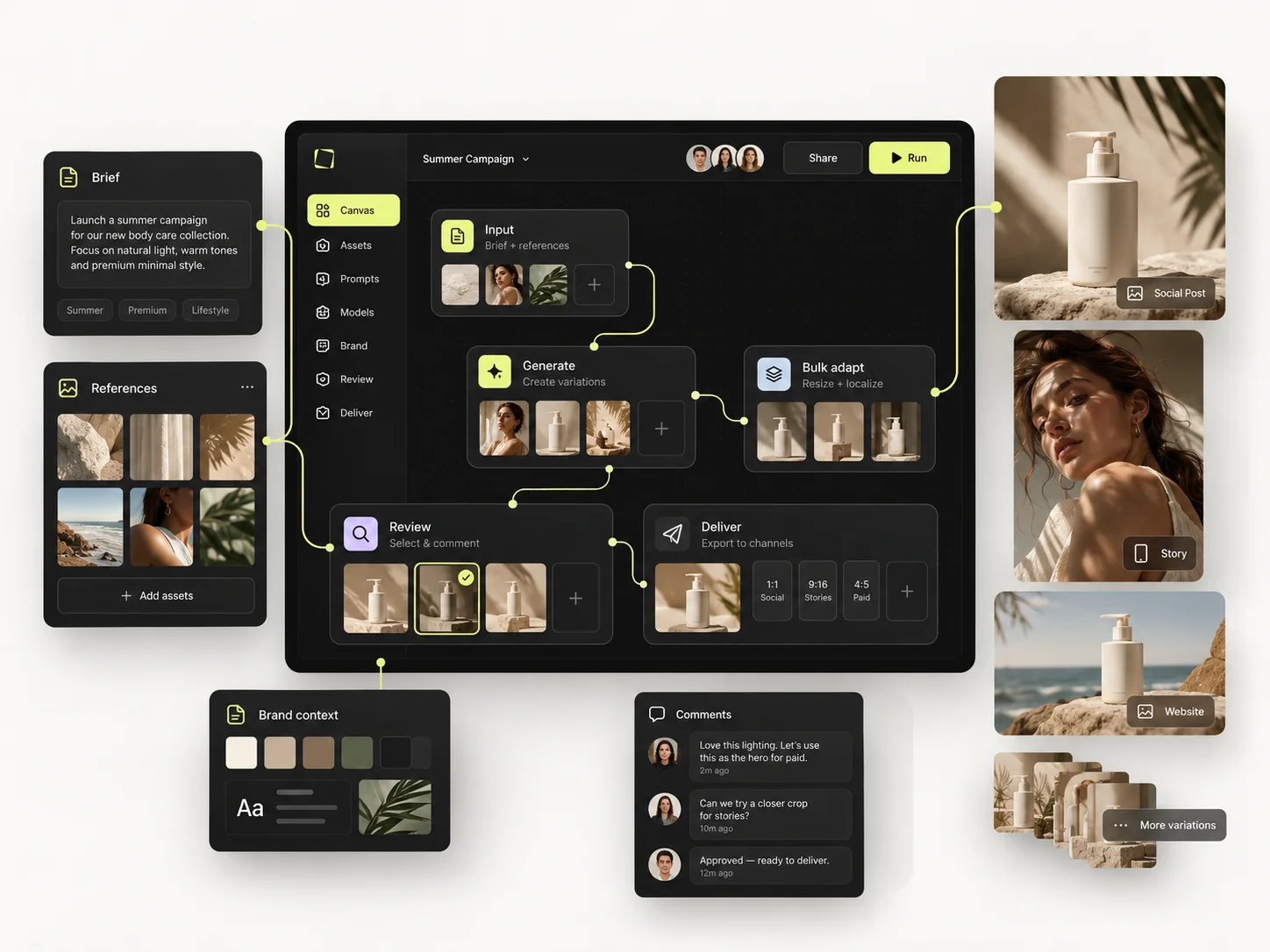
Three things this platform does not do, stated before the arguments in its favour. If one of them is what you came for, OpenArt is the better answer and this page will not change that.
Comics, panels and narrative sequences are OpenArt's field.
No shared template economy; setups live inside your team.
Characters are supported, but products and campaigns are the centre.
Where a character-and-story platform and a commercial production system actually differ.
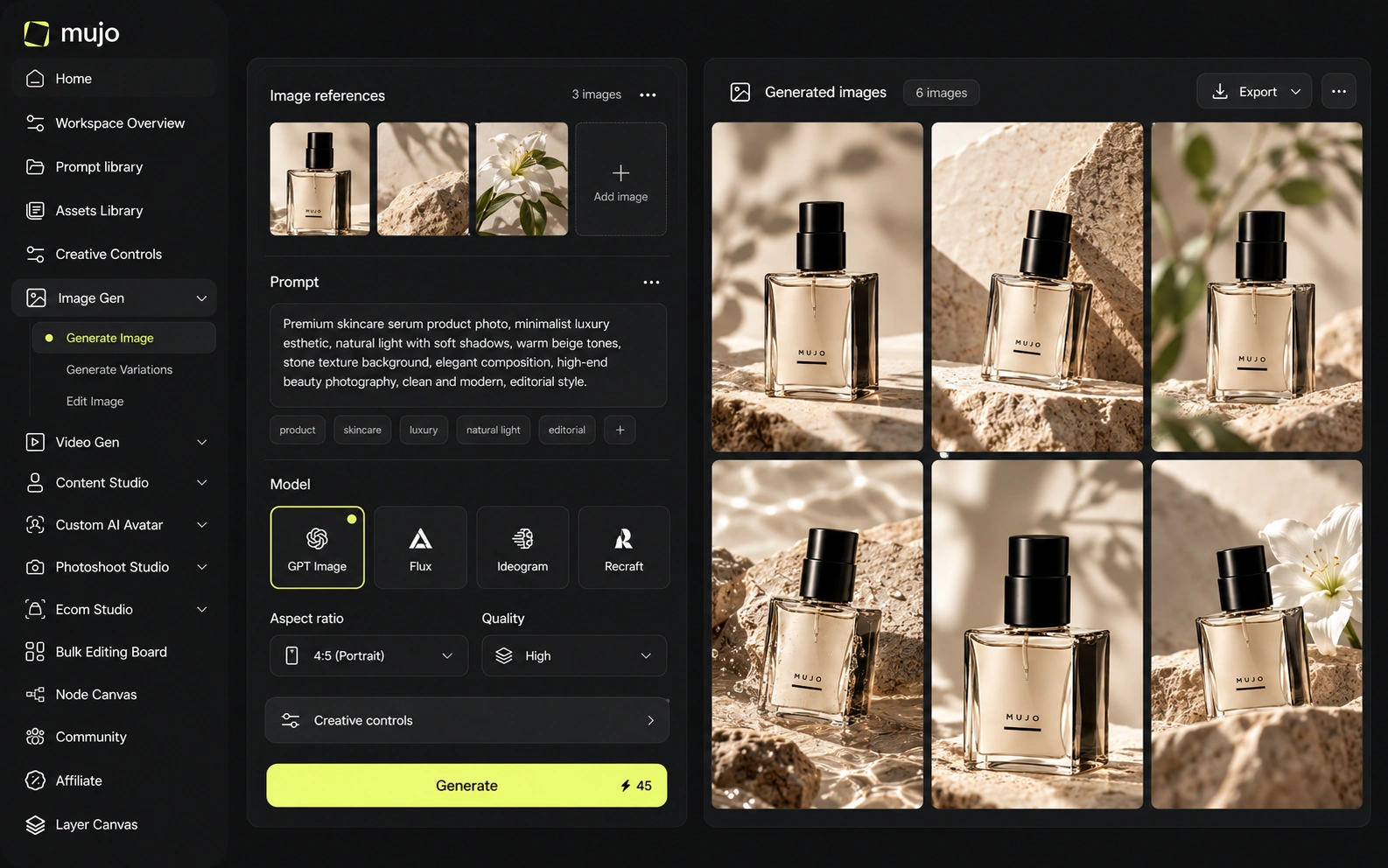
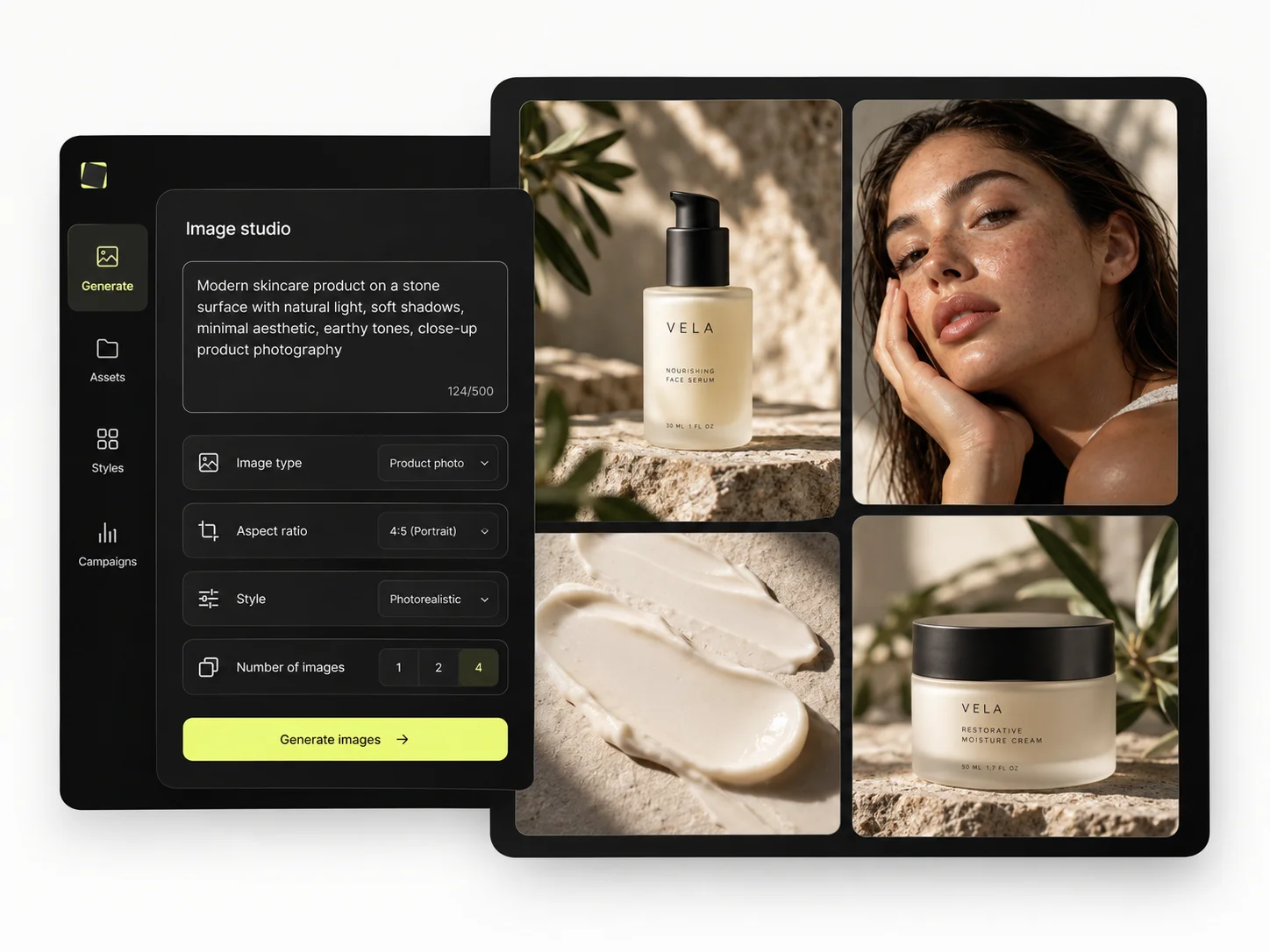
OpenArt positions itself as an all-in-one creation platform rather than a single image generator. Its current offer spans 100+ premium image/video/audio models, Director, one-click Stories, consistent characters, personalized models, editing, upscaling and parallel generation. Mujo overlaps on multi-model creation but organizes the product around repeatable creative direction and commercial content workflows.
Mujo runs on external engines — Nano Banana Lite, Nano Banana 2 and Nano Banana Pro, GPT Image 2, Midjourney, Seedream 5.0 Lite and Seedream 5.0 Pro, Grok Imagine and Kling 3.0 Image for stills, Veo 3.0 and Veo Fast, Kling 3.0, Seedance 2.5 and Seedance 2.0 for motion — with Creative Controls, a shared Prompt Library, references, an Asset Library and a Node Editor around them. OpenArt's structure is narrative: characters that persist, stories that continue, templates others have shared. A character who survives twelve panels and a campaign that survives four quarters are both consistency problems. They need different machinery.
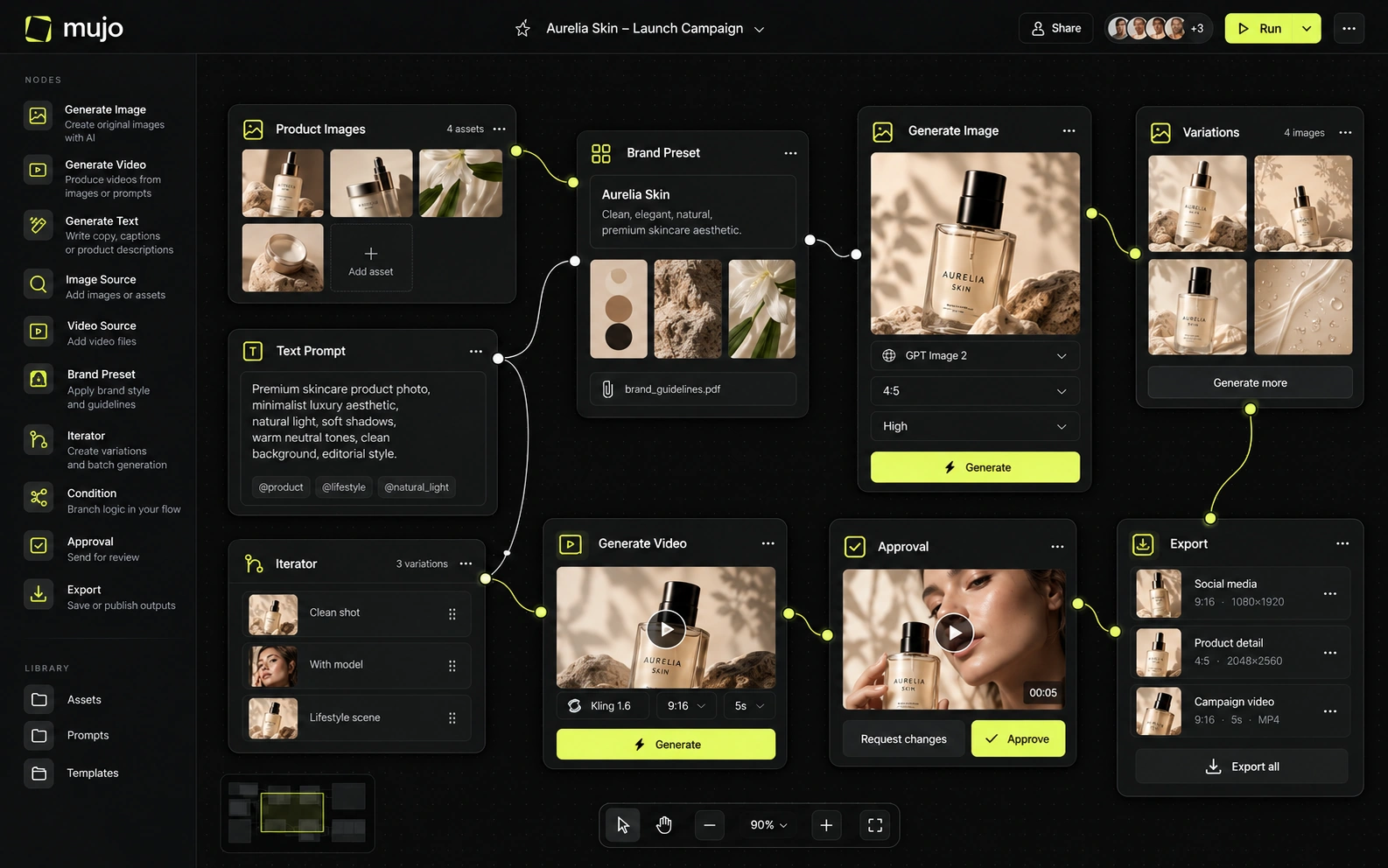
OpenArt's catalog is much broader numerically than Mujo's public model workspaces. Higher plans add more credits, concurrency and selected unlimited access. Mujo's narrower model set can be an advantage for standardized teams because fewer choices need to be documented and governed. OpenArt wins discovery and breadth; Mujo wins curation around repeatable jobs.
Both give access to several engines, so the interesting question is what that access is organised around. In Mujo it is a brief: the same prompt, references and controls run against different models so you can choose. In OpenArt it is a character or a story that has to hold together. Ask separately which engines you need and what happens to the work when one is replaced. A character-first tool answers the second through its own abstractions.
OpenArt's control story centers on Director, consistent-character systems, personalized models and editing. That is especially useful for narrative continuity. Mujo's Creative Creative Controls and the Prompt Library focus on art direction—camera, lighting, pose, expression, location, style and prompt logic—so the same commercial direction can be repeated without necessarily creating a character or training a model.
OpenArt's controls serve narrative consistency: character references, style locks, sequence tools. Mujo's Creative Controls serve commercial repeatability — lighting, pose, expression, camera angle, location and style as named parameters that apply to a product rather than a person. The two overlap on people and diverge everywhere else. If the recurring subject is a cast, OpenArt has the better vocabulary. If it is a catalogue, Mujo does.
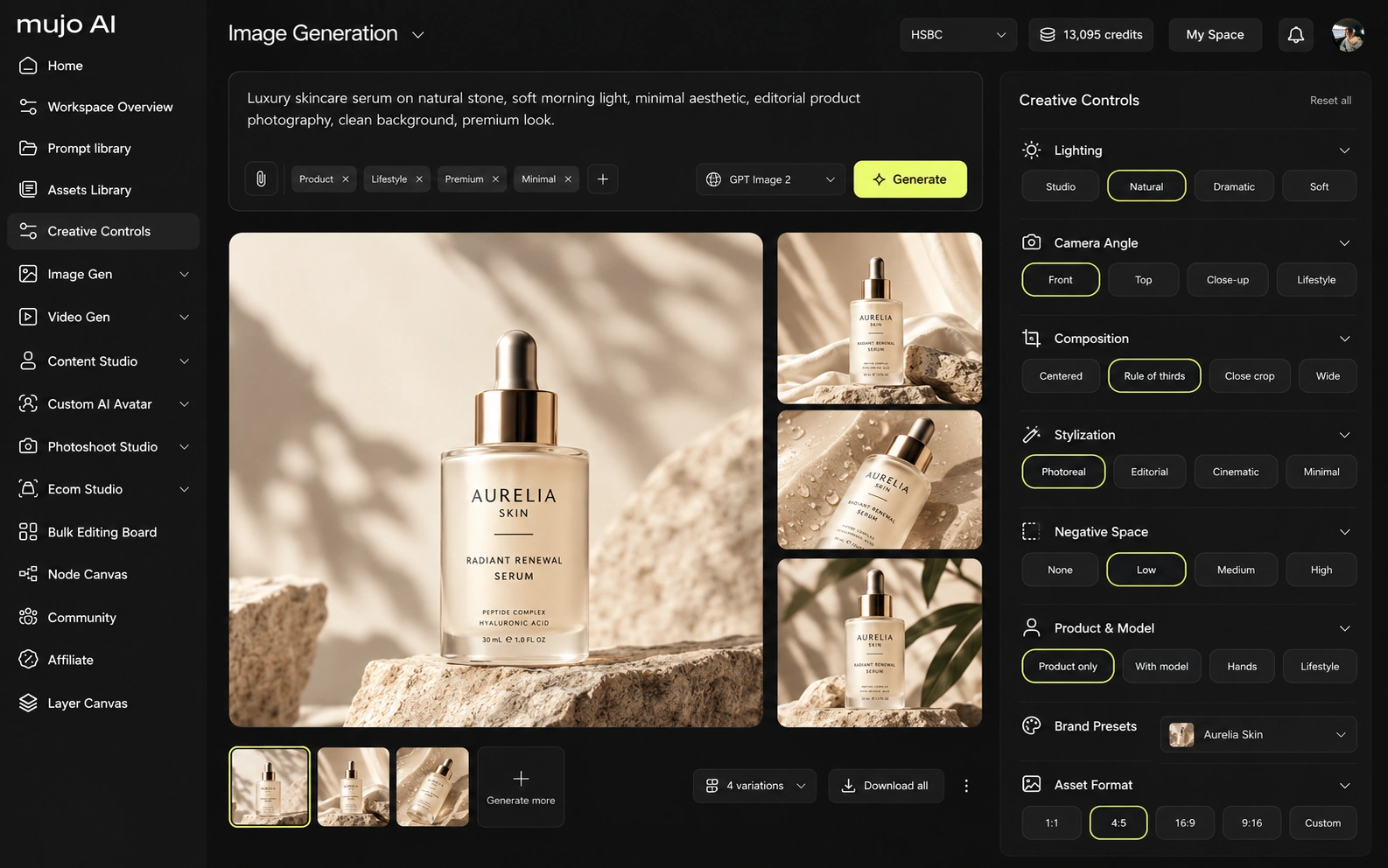
OpenArt and Mujo both participate in the fast-moving multi-model video market, but they use video differently. OpenArt's signature features include Director, one-click Stories, consistent characters and personalized models, in addition to generation/editing. Mujo's signature features are Creative Controls, Prompt Library, product/listing workflows, photoshoots, portfolio publishing and reusable workflow logic. OpenArt is more entertainment/story-creation oriented; Mujo is more marketing-operation oriented.
Video in Mujo runs on several engines beside the image workspace, so an approved product frame becomes a vertical ad in one setup. OpenArt's motion work follows its narrative logic, which suits storytelling more than campaign cutdowns.
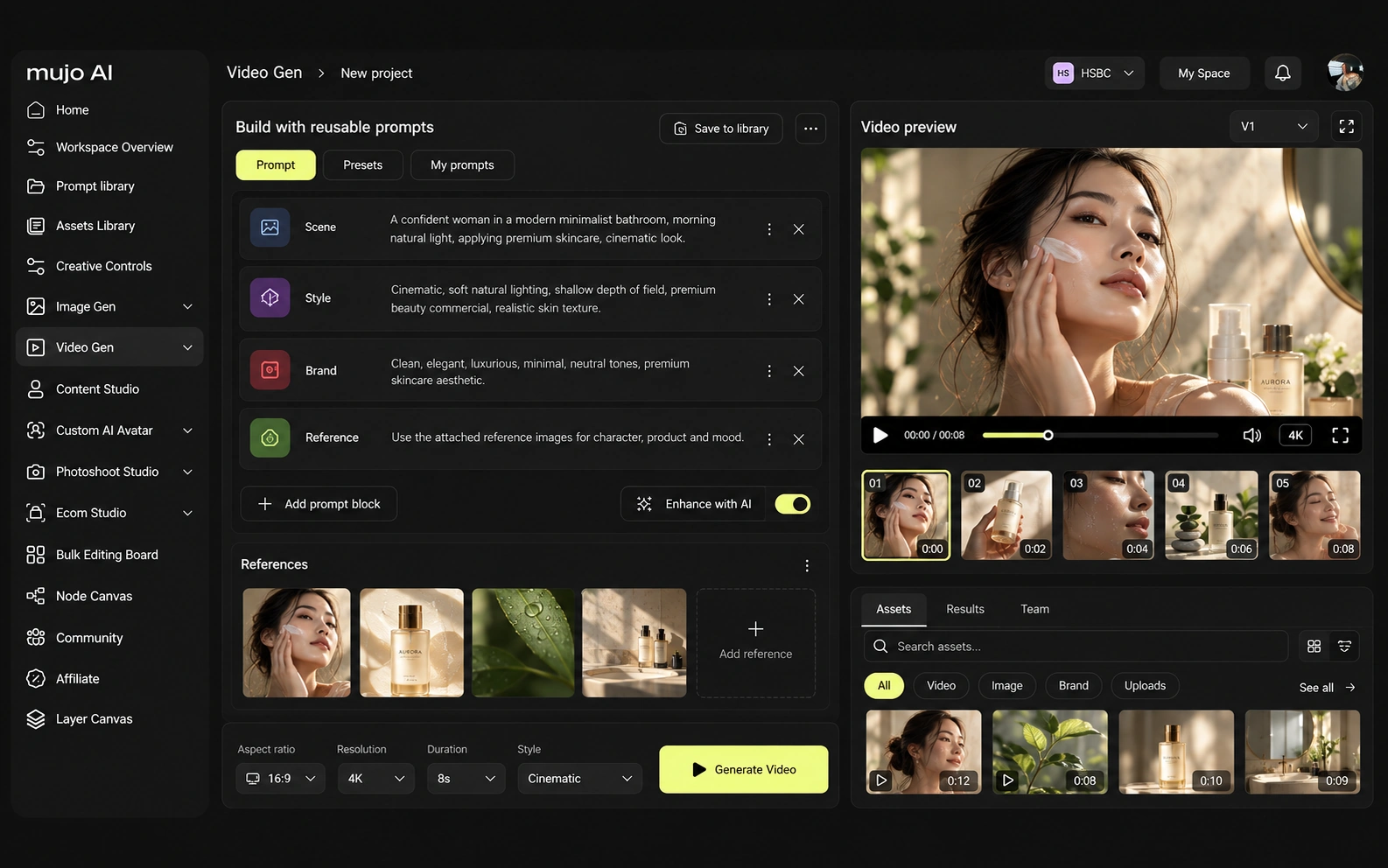
Consistency is four problems: the same person, product, look or process. OpenArt is unusually good at the first. Mujo is built for the fourth, and handles the second through saved product references.
What Mujo saves is the route: references, Creative Controls parameters, saved prompts, saved AI characters, model choice, history, reusable flows. Reopening it gives you the method, not just the result. For OpenArt, the consistency model is different. OpenArt's control story centers on Director, consistent-character systems, personalized models and editing. That is especially useful for narrative continuity. Mujo's Creative Creative Controls and the Prompt Library focus on art direction—camera, lighting, pose, expression, location, style and prompt logic—so the same commercial direction can be repeated without necessarily creating a character or training a model. If the thing that recurs is a cast across episodes, a character-first tool is the natural home. If it is a product line across seasons, the workflow layer is.
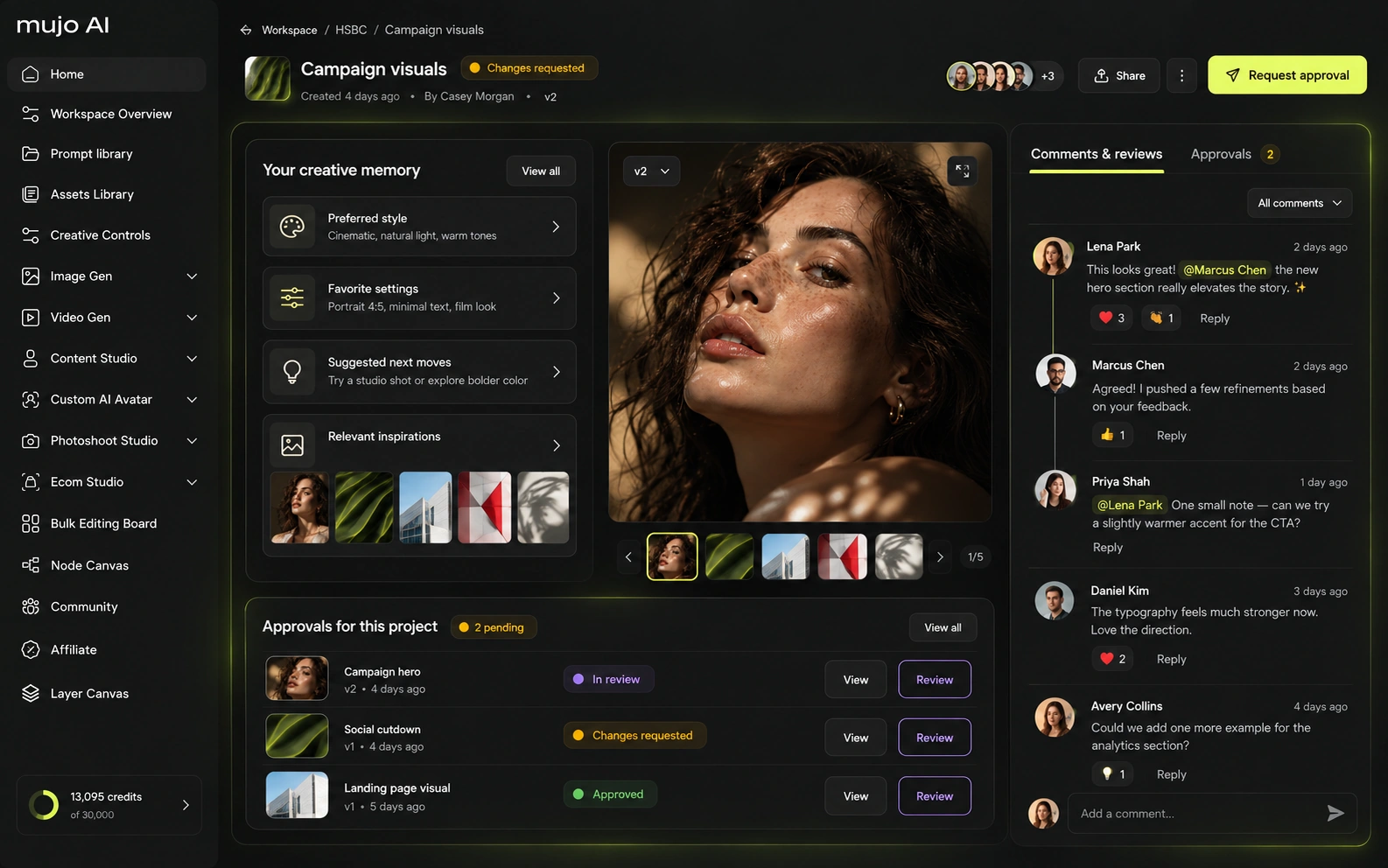
How each platform fits commercial production that repeats
OpenArt can create product visuals and brand assets, but its strongest differentiation is not e-commerce. Mujo's the e-commerce use cases and listing tools give it a clearer product-content path. Conversely, a brand developing recurring mascots, story episodes or narrative characters may prefer OpenArt's character and story systems.
Mujo's commercial surface is built as use cases: Product Photos, Listing Images, Product Catalog Production, AI Photoshoots, Campaign Creatives, Creative Variations, Social Media Content and Social Video Ads, with background removal and a shared Prompt Library underneath.
Product inputs, listing crops, campaign directions and social cuts share a setup. That loop is commercial rather than narrative, which is the honest line between the two platforms.
The product shot, its listing crops, its ad variants and its social cuts come out of the same approved direction. Volume is what makes commercial work expensive, not generation speed — and it is the part a OpenArt comparison usually leaves out.
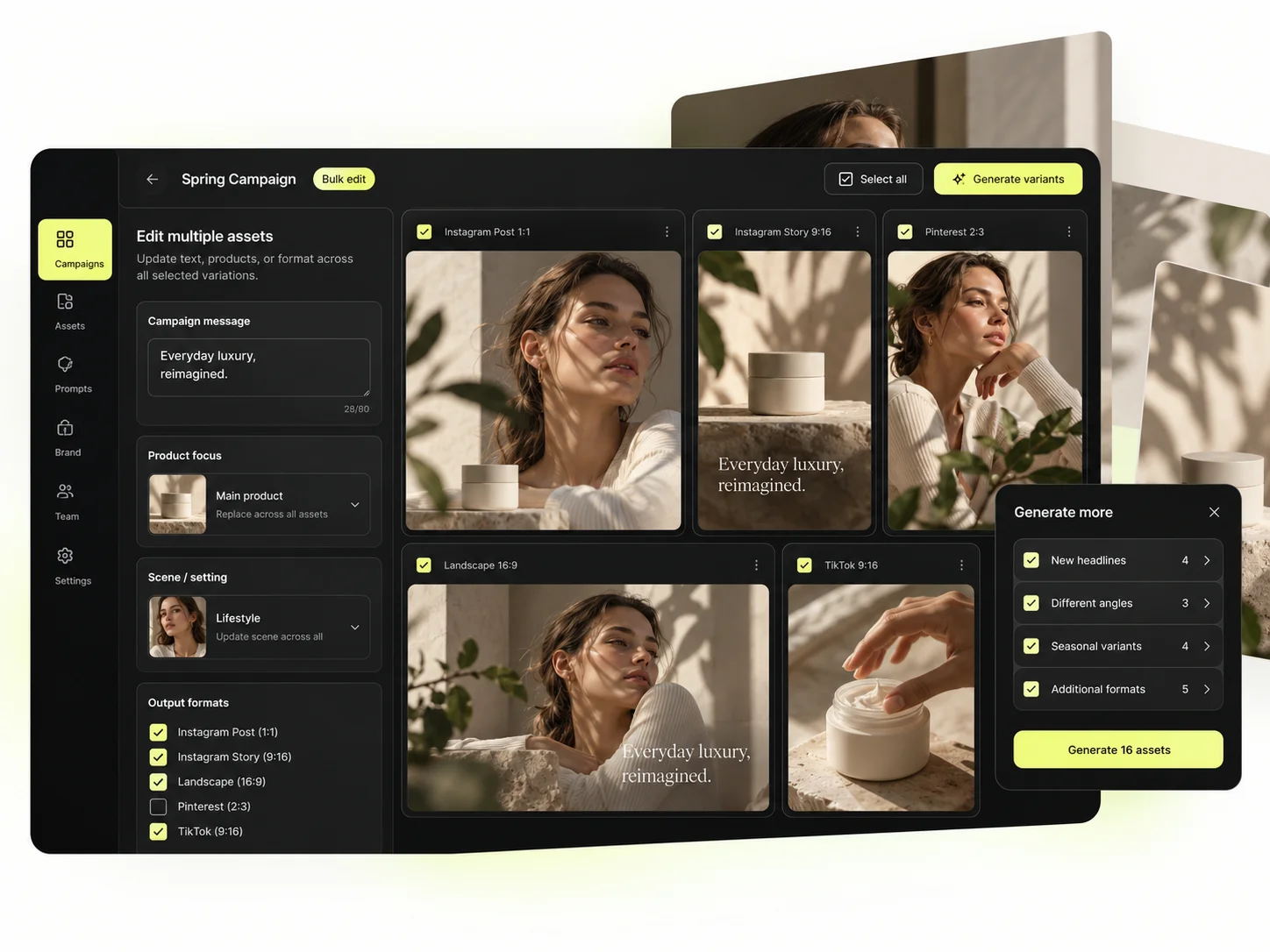
Prompts are production assets in Mujo: refined with structured controls, compared across models, saved to the Prompt Library. Selected workflows can be published — see Creative Portfolio Examples — which is a different kind of sharing than a community template feed. OpenArt takes a different route. In the same product-launch test, OpenArt can generate a large set of images and videos quickly and may be especially efficient if a recurring character is part of the campaign. Mujo makes the campaign's non-character logic easier to preserve: references, controls, prompts, Prompt Library and product-specific workflows can become a repeatable recipe. The more the job resembles a story, the more OpenArt's differentiated features matter; the more it resembles a repeatable marketing content operation, the more Mujo's structure matters.
Saved setups live in the Prompt Library where the next person can find them, instead of in the generation history of whoever happened to get it right. Whatever you keep from a OpenArt session, it is usually the output rather than the reasoning behind it.
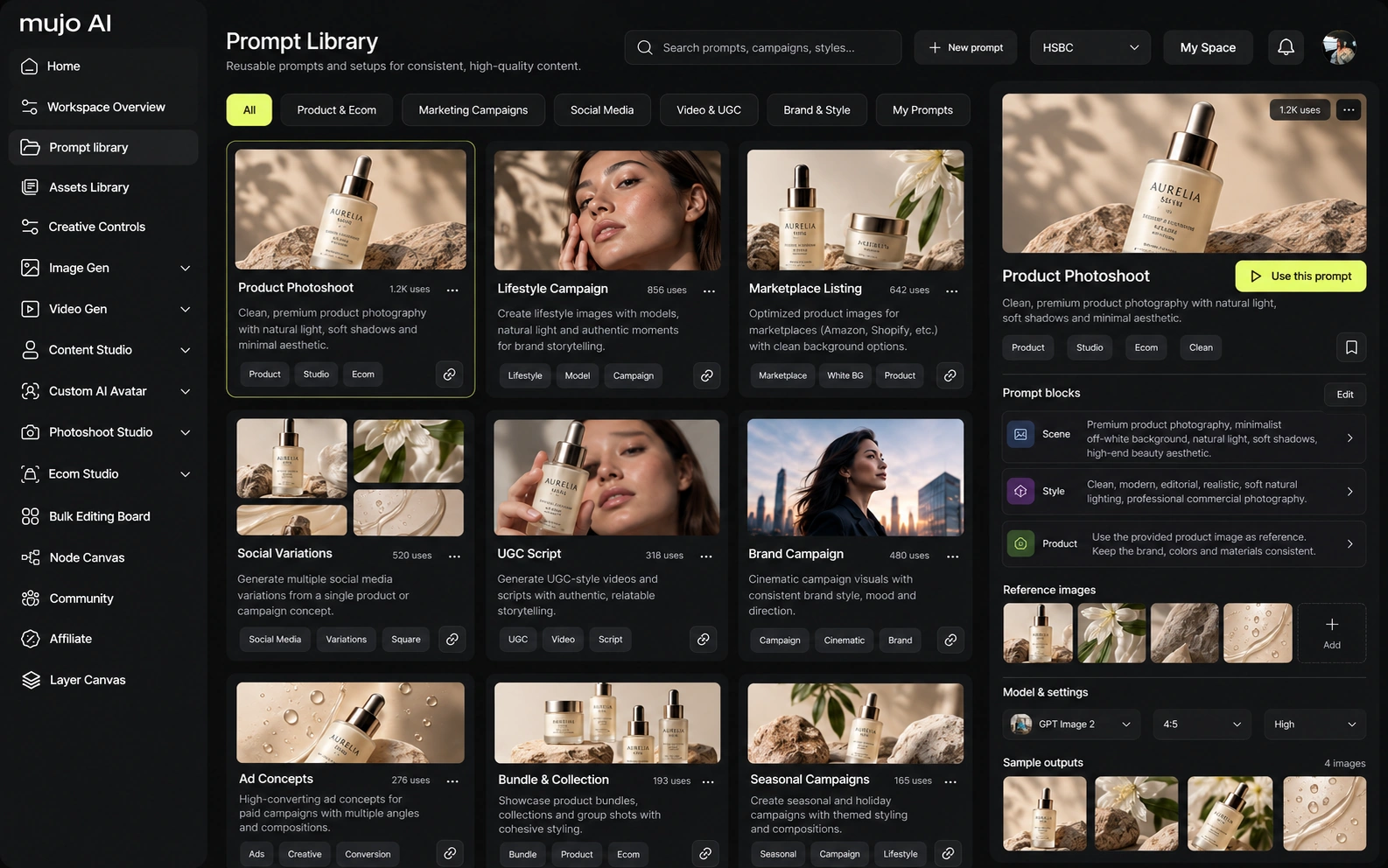
The Bulk production table is what a campaign needs and a story does not. Rows are assets, columns are the variables, and one approved direction runs down a product list rather than a cast of characters.
Per-asset work scales linearly: forty products means forty sessions. A saved direction run in bulk does not. That is the line where a OpenArt workflow and a Mujo workflow stop costing the same.
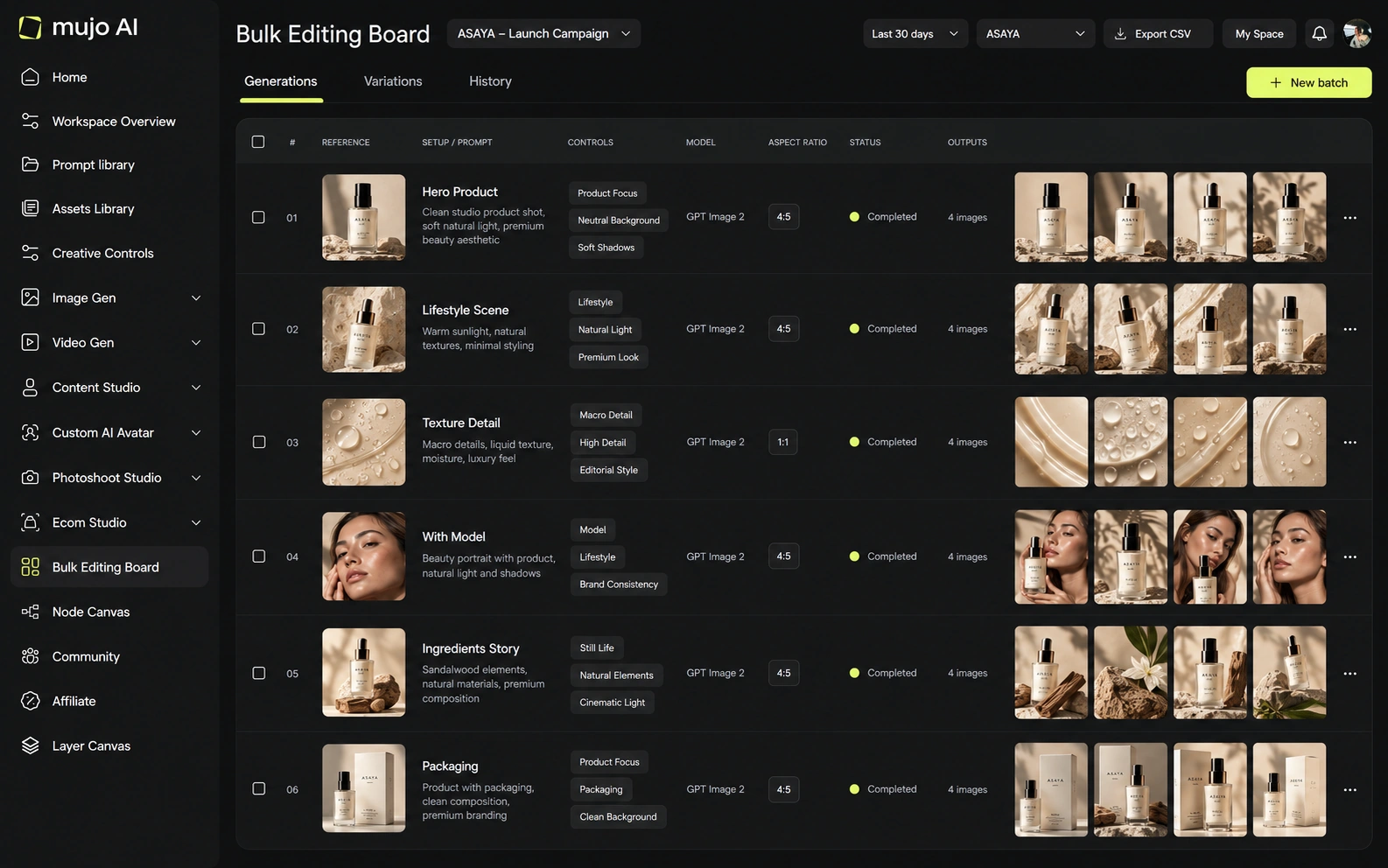
The brief that distinguishes them: one product image in, a hero visual, three square social variants and one vertical motion ad out, then the same direction on a second SKU a week later. It is a commercial brief, not a narrative one — worth noticing before comparing scores.
Start from one source product image and one launch brief.
Produce the hero visual, three square cuts and a vertical motion ad.
Save the direction: prompts, references, controls and the model behind them.
Rerun it on a second SKU from the saved setup.
OpenArt clears the first round comfortably, as does almost anything else worth evaluating. The second round is where the difference appears, and it is the round nobody gets to during a two-week trial.
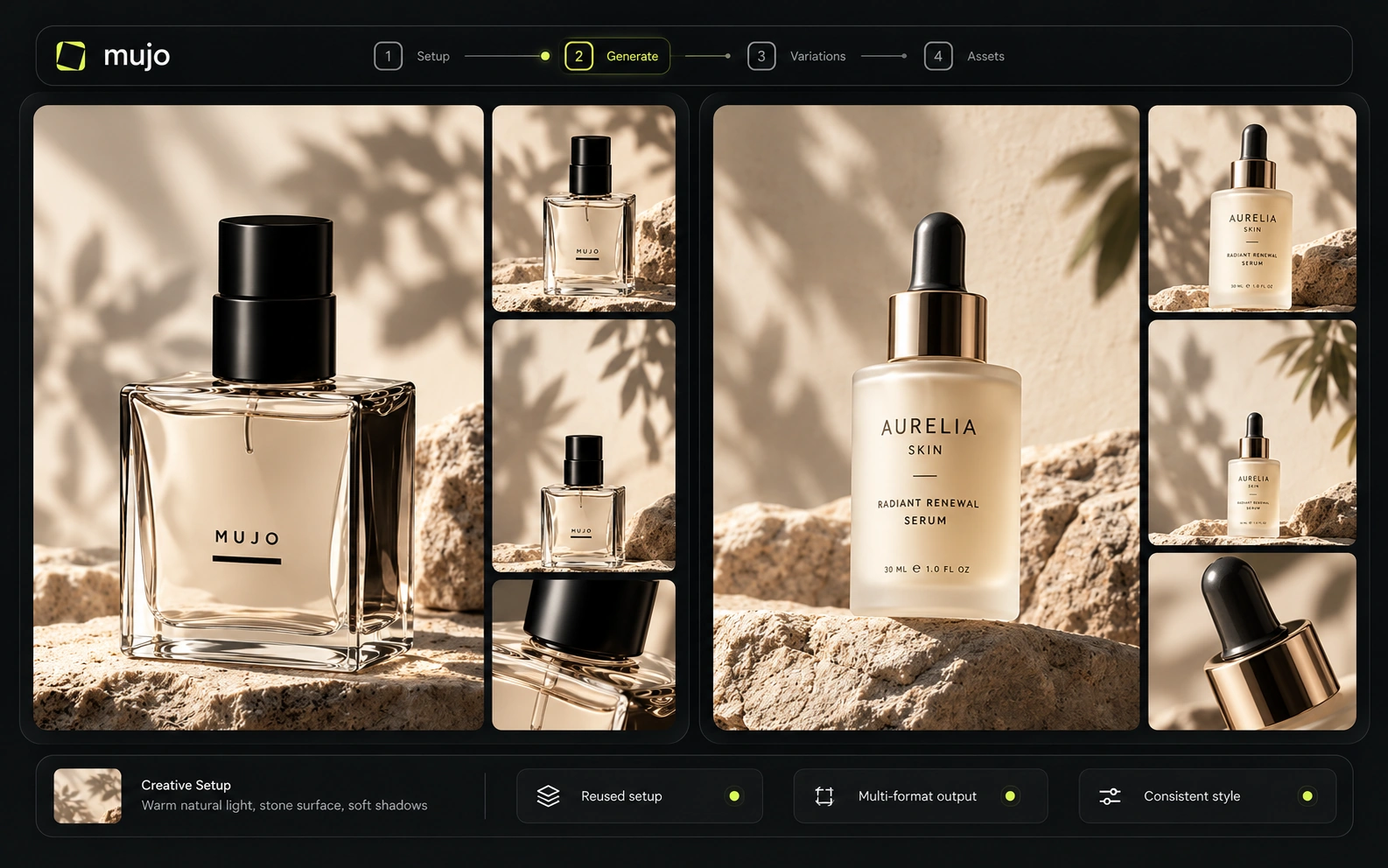
OpenArt emphasizes creator productivity, parallel generation and an MCP surface in current plans. Mujo's enterprise offering is more explicitly described around team workflows, brand context, review logic and asset management. Teams evaluating OpenArt for organization-wide production should verify current workspace/permission features against their specific collaboration requirements.
Mujo Enterprise covers Node Editor flows, brand context, shared prompt and asset libraries, approval traceability, onboarding, admin and security review. OpenArt's sharing model is community-shaped, which is a genuine strength for creators and a different thing from team governance. If an API matters, verify models, concurrency and pricing on both sides. If the work happens in the interface, compare what a shared setup carries.

OpenArt's base credits reset each month. Current official materials say failed generations are refunded and an Extra Credit Pack costs $15 for roughly 5,000 credits, with extra credits carrying over. Annual billing reduces plan prices. Wonder may include selected unlimited model access. Compare actual generation costs at the model level because credit consumption differs significantly by model and media type.
4,000 credits
12,000 credits
24,000 credits
106,000 credits; selected unlimited modes
40 credits for 7 days; no card
Plans Start $9, Basic $19, Pro $34, Creator $84, Business $121 (5 seats); 200-credit packs from $2.60 with no use-by deadline
Mujo's plans run from $9 to $121 a month, with up to 40% off on annual billing. Pay-as-you-go packs start at 200 credits for $2.60, credits carry no use-by deadline, and new accounts start with 20 free. Compare only at matched model, resolution and output count.
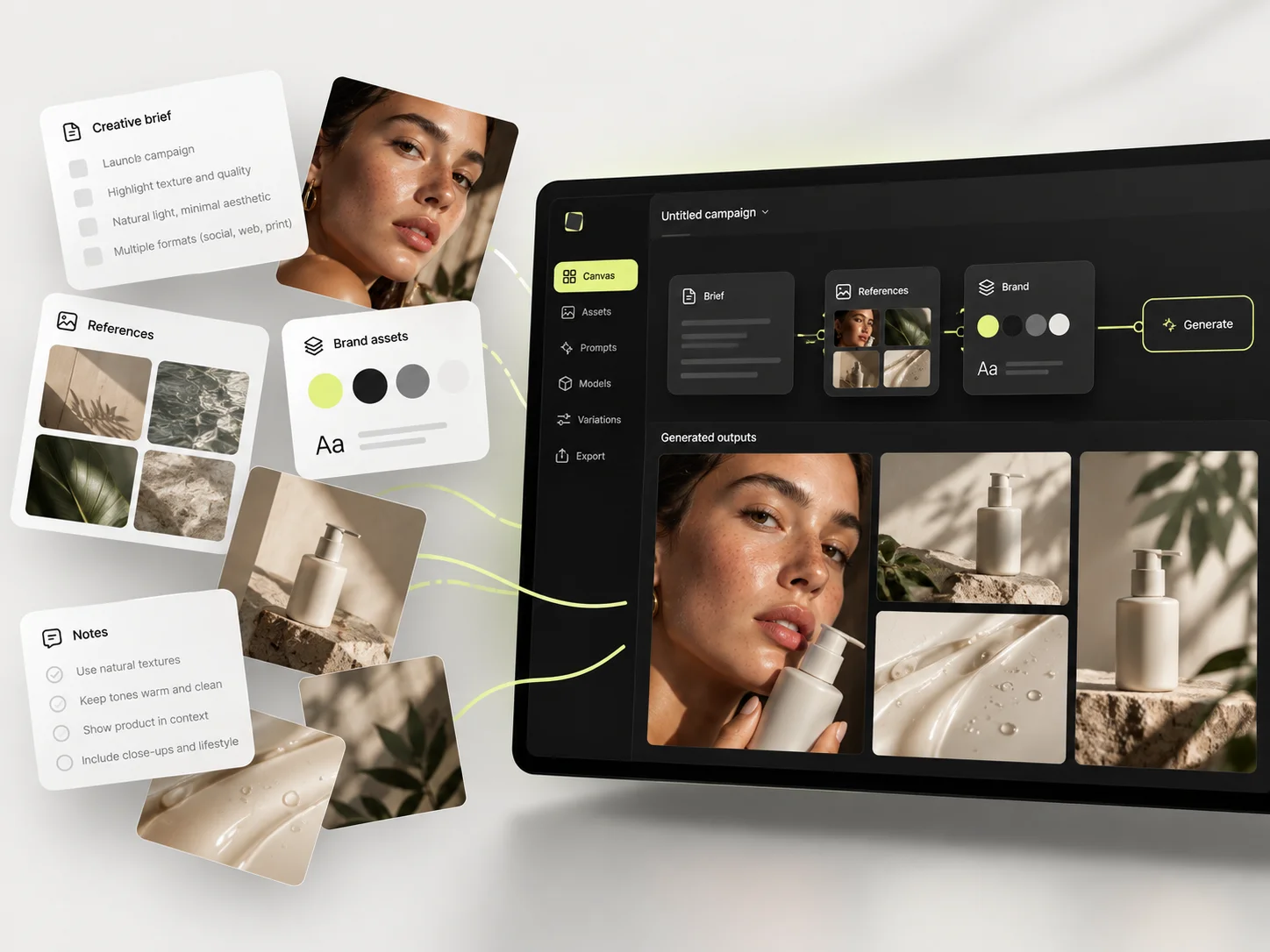
OpenArt's paid tiers include commercial rights. Mujo also supports commercial use and user ownership of outputs. For branded characters or client work, teams should still review model-specific restrictions, publicity rights and IP risk rather than treating platform-level commercial rights as a guarantee of non-infringement.
Specifically, on Mujo's side: users keep ownership of what they upload and of AI-generated outputs and may use those outputs commercially, subject to applicable law and third-party rights; inputs and outputs are not used to train foundation models without opt-in, and the enterprise terms extend that to the third-party models in the stack. Commercial-use permission is not rights clearance. Trademark, publicity rights and model-provider terms still apply, so client work needs human review before it ships.
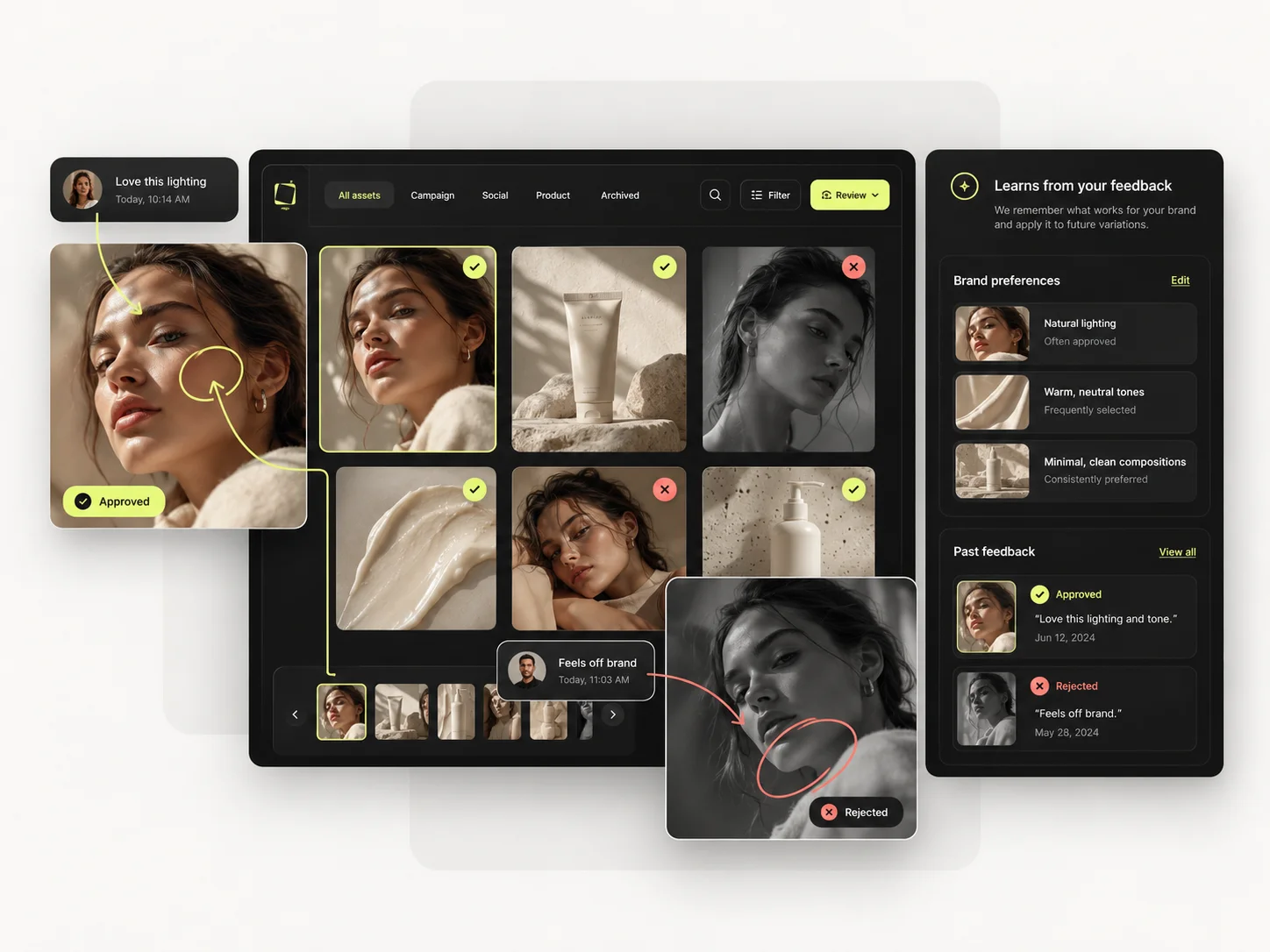
What OpenArt does better, and what Mujo does better. A comparison page that only fills in one side is not a comparison.

Worth reading before a trial rather than after one.
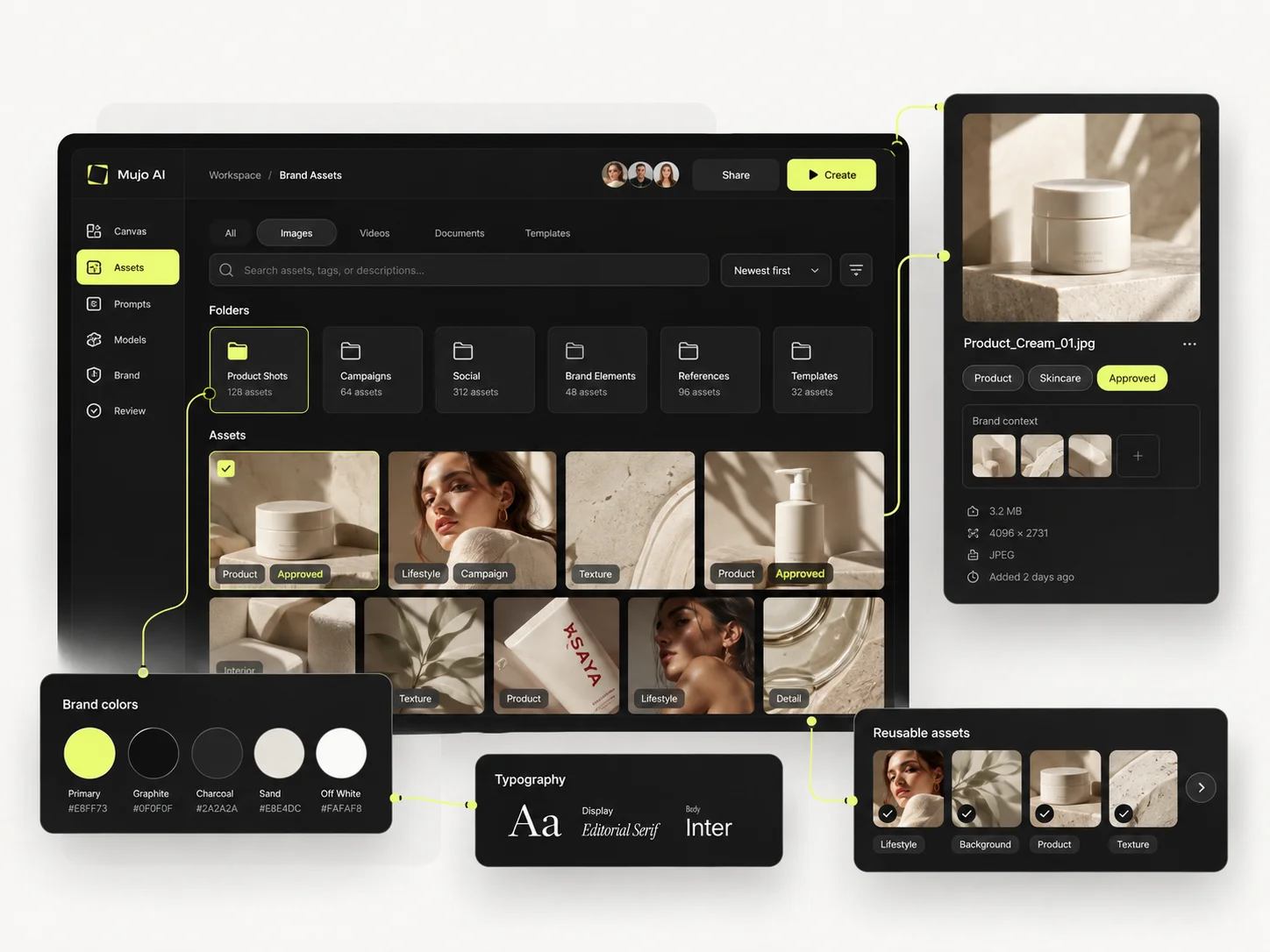
OpenArt and Mujo are both multi-model platforms, but they optimize for different recurring objects. OpenArt is especially good at recurring characters and stories. Mujo is designed around recurring creative systems—product directions, prompts, references, controls and campaign formats. That distinction is more useful than counting models.
Choose OpenArt when stories, recurring characters, personalized models and broad creative experimentation are central.
Choose Mujo when product, campaign and social workflows need to be repeated consistently across many assets and models.
Where both appear, it is usually OpenArt for the cast and narrative assets and Mujo for the commercial output around a launch. The two rarely fight over the same task.
If the recurring subject is a character, buy the tool built around characters. If it is a product campaign, buy the one built around repeating a campaign.
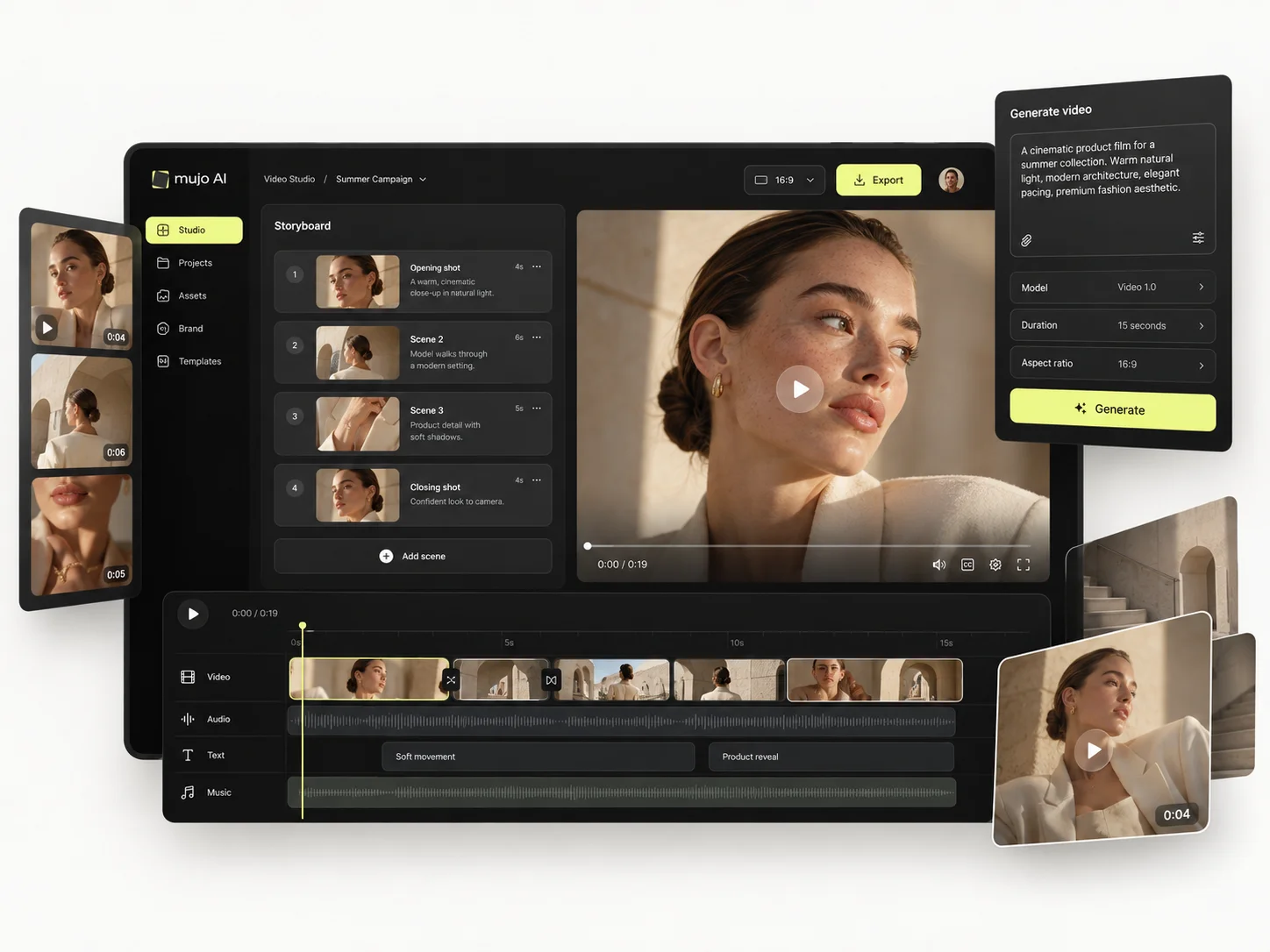
Short answers about OpenArt, about Mujo, and about the parts that are easy to get wrong.
Current official materials describe a 7-day, 40-credit trial rather than a permanent free usage tier.
Director is OpenArt's higher-level creation workflow for guiding scenes and visual storytelling.
OpenArt has more dedicated character and story features. Mujo can use references and structured controls but is not primarily a character-story platform.
Base subscription credits reset monthly. OpenArt's extra-credit packs have different carryover behavior.
Mujo is more purpose-built around product galleries, listings and reusable marketing content systems.
A comparison against OpenArt stays abstract until you look at the work it is about. These are the production workflows Mujo is built around, plus the neighbouring comparisons if you are still shortlisting.
Produce editorial and studio photoshoots without booking one.
One idea rendered as a month of posts, stories and formats.
Plan the shots before generating the video.
A model aggregator against a production system.
The single-model aesthetic engine, compared on workflow.
The video suite, compared as a production system.
If the creative is settled and the work is now producing it across a catalogue, that is the half Mujo handles. 20 free credits. Run one approved direction across a product list.