Amazon SEO is not Google SEO inside Amazon. Amazon search is built to surface products shoppers are most likely to buy right now. That is why ranking is never only about keywords. It is relevance plus performance: do shoppers click, do they convert, do they keep buying, and do returns stay low.
This guide is a practical Amazon SEO playbook you can use whether you sell one hero product or hundreds of SKUs.
How Amazon SEO Really Works
Think of Amazon SEO as two connected systems.
Indexing
Can Amazon understand and file your product for a query? You get indexed through category, attributes, title, bullets, description, and backend search terms.
Ranking
Once indexed, will Amazon show you on page one? Ranking is heavily influenced by performance signals: click-through rate, conversion rate, sales velocity, recent momentum, price competitiveness, availability, delivery promise, and customer satisfaction.
A simple mental model that keeps you focused:
Keywords help you get discovered. Listing quality helps you get chosen. Being chosen helps you rank.
Ranking Factors That Matter Most in Practice
Relevance signals: what you sell
- product type clarity in title and category
- attribute completeness: brand, material, compatibility, included components
- keyword coverage across title, bullets, description, and backend terms
- variation structure: parent and child setup, correct theme
- browse placement: correct product type and filters
Performance signals: how shoppers react
- CTR from search results: main image, title, price, rating
- conversion rate on the detail page: gallery, bullets, A+ content, trust
- sales velocity and consistency
- availability and fulfillment
- customer satisfaction: rating, reviews, return reasons, and Q&A
Important: you cannot SEO your way around a weak offer. But you can dramatically improve a good offer by removing friction caused by unclear images, vague bullets, confusing variants, missing proof, and poor expectation setting.
Step 1. Keyword Research for Amazon That Doesn’t Waste Time
On Amazon, keyword research is not an academic exercise. The purpose is to match buyer language and intent.
Build your keyword set in four buckets:
- Primary term: the exact product type shoppers search
- Attribute terms: material, compatibility, count, fit language
- Use-case terms: where it is used, who it is for, problem to outcome
- Synonyms and alternates: common variations of the same idea
Fast sources that reflect buyer intent:
- Amazon autocomplete suggestions
- competitor listings that consistently rank
- your PPC search term report
- customer reviews and Q&A
Create a simple keyword map so you do not overstuff one field and ignore another.
Keyword placement map
| Field | What it’s best for | What to avoid |
|---|---|---|
| Title | Primary term + top differentiator + essential attribute | Long strings of repeated keywords |
| Bullets | Benefits + secondary terms + objections | Generic hype and empty adjectives |
| Description | Story, clarity, use cases, reassurance | Copy-pasting bullets and keyword blocks |
| Backend search terms | Synonyms and alternate phrasing | Duplicating visible words |
| A+ Content | Visual storytelling, comparison, credibility | Tiny unreadable text inside images |
Backend search terms tip: treat backend terms like coverage. Add synonyms and alternate phrasing, but do not repeat what is already in visible copy. Keep it clean so your team can maintain it later.
Step 2. Get the Category, Attributes, and Variations Right
Category and product type
If you list in the wrong category, you can lose relevance and filters, and you can attract the wrong traffic that does not convert. Poor conversion slows ranking growth even if you are indexed.
Attributes
Attributes feed filters and relevance. Fill every attribute that is accurate and available. Material, color, item form, compatibility, included components, special features. Think of attributes as structured keywords Amazon trusts more than creative copy.
Variations
Variations can help conversion when they reduce choice friction. They can also hurt when they mix unrelated items or confuse shoppers. Keep the variation theme consistent and shopper-friendly.
Quick variation sanity checks:
- would a shopper expect these options on one page?
- do images clearly distinguish each variant?
- does the parent title still make sense for every child?
Step 3. Title Optimization That Balances SEO and Clicks
Your title is both a relevance signal and a CTR lever. A keyword-stuffed title may get indexed, but it can kill clicks because it looks spammy on mobile.
A title should do three jobs:
- confirm product type instantly
- surface the main differentiator that justifies the click
- reduce uncertainty through compatibility, count, or key use
A dependable title formula:
Brand + Primary Product Term + Key Differentiator + Essential Attribute or Compatibility + Variant
Before:
BEST Premium Wireless Earbuds Bluetooth Headphones NEW Model Noise Canceling Sports Gym iPhone Android
After:
BrandName Wireless Earbuds, Bluetooth Noise Cancelling, Secure Fit for Workouts, iPhone & Android
Why the improved version is stronger:
- product term appears early
- benefits and compatibility are clear
- it reads like a product, not a banner ad
Step 4. Bullet Points That Convert and Support Indexing
Bullets are your decision engine. Most shoppers skim bullets before they scroll.
Write bullets like this:
Benefit first → Proof second → Context last
A strong set of bullets usually covers:
- what problem it solves
- what makes it different
- how it is used
- what is included
- who it is for or when it works best
Before:
- High quality materials
- Great value
- Best performance
- Perfect gift
- Customer satisfaction guaranteed
After:
- Stable connection on the go: Bluetooth pairing stays reliable for commuting and workouts
- Comfort that lasts: secure-fit design helps reduce ear fatigue during long use
- Clear calls and audio: tuned drivers deliver balanced sound for music and voice
- What you get: earbuds + charging case + tips
- Made for daily life: sweat-resistant build for gym sessions and outdoor walks
What changed:
- each bullet answers a buyer question
- keywords appear naturally inside meaning
- the listing becomes proof-based, not promise-based
Step 5. Description and A+ Content That Remove Objections
A description still matters, but A+ content often lifts conversion because it shows and proves, not just tells.
A practical A+ layout that works in many categories:
- Hero module: who it is for + the main outcome
- Benefit modules: 3–5 benefits with visual proof
- Detail proof: close-ups, materials, key parts, what’s included
- Comparison chart: help shoppers choose the right version fast
- Brand trust: care instructions, support information, reassurance
Best practices for A+ content:
- keep text readable on mobile
- do not hide critical information in tiny image text
- use consistent visuals across modules
- use comparison charts when variants confuse shoppers
Step 6. Images as an Amazon SEO Lever
Images do not rank like keywords, but they drive the signals that rank: CTR and conversion. Your main image is your first SEO test. Your gallery is your conversion engine.
Recommended Amazon gallery set, 7–9 images:
- main image: clean and instantly readable
- angle set: 2–3 angles that add new information
- key benefit visual: show the outcome
- detail proof: texture, parts, build quality
- in use: product doing the job
- scale context: size confidence
- what’s included: no surprises
- comparison: variants or use cases
- steps: only if setup is required
Gallery planning table: slot → what to show → buyer question
| Slot | What to show | Buyer question it answers |
|---|---|---|
| 1 Main image | Product on clean background, accurate color | What is it? |
| 2 Angles | Front, back, side angles that add new info | What does it look like? |
| 3 Benefit visual | One clear result, not a list | Why should I care? |
| 4 Detail proof | Texture, parts, build quality | Is it good quality? |
| 5 In use | Product in action, obvious scenario | How will I use it? |
| 6 Scale | In hand, on body, or room reference | Is the size right? |
| 7 Included | Everything included, neatly laid out | What exactly do I get? |
| 8 Comparison | Variant differences, basic vs pro | Which option is right? |
| 9 Steps | 3–5 setup steps if needed | Is it complicated? |
Before: main image + 6 nearly identical angles
After: main image → angles → benefit → detail → in use → scale → included → comparison → steps
Step 7. The Hidden SEO: Price, Stock, Reviews, and Returns
Price and perceived value
If you are priced far above the click set with no visible proof, CTR drops. If you are priced low but look cheap, conversion drops. Visual proof protects perceived value.
Stock and delivery promise
Out-of-stock breaks sales velocity. Slow delivery hurts conversion. If you can improve fulfillment, do it. If you cannot, reduce uncertainty with stronger listing clarity.
Reviews, rating, and expectations
You do not control reviews directly, but you can reduce negative review reasons by setting expectations clearly:
- show scale clearly
- show what’s included
- show texture and materials honestly
- show how it is used
Returns
Returns are a margin problem and a signal that expectations were wrong. Fixing images and bullets often reduces the most common return reasons.
Before / After: One Listing, Two Outcomes
Here is a realistic before pattern:
- title is long and keyword-heavy
- bullets are vague and hype-heavy
- gallery is angles-only
- no included frame, no scale, no proof
After optimization, the listing feels different:
- title reads like a product and matches intent
- bullets answer objections
- gallery becomes a funnel
- A+ content explains and compares variants
- shoppers decide faster and feel safer buying
Micro before-and-after snippets you can reuse
Title
Before: Best Premium Kitchen Knife Set Sharp Steel Professional Chef Cooking Gift
After: BrandName Kitchen Knife Set, Stainless Steel, Sharp Edge, Includes Chef Knife + Utility Knife
Bullet
Before: Perfect for any kitchen
After: Everyday prep made easier: balanced handle helps control slicing and chopping
Gallery order
Before: angles, angles, angles
After: main → benefit → detail proof → in use → scale → included → comparison
The Amazon SEO Checklist
Keyword coverage
- primary term appears naturally in title
- secondary terms appear across bullets without repetition
- backend terms include synonyms you did not use visibly
Title
- product type is clear in the first words
- differentiator is visible without scrolling
- reads well on mobile
Bullets
- one idea per bullet
- benefit first, proof second
- includes what’s included
- removes key objections for your category
Images
- main image wins the click
- gallery answers questions in funnel order
- includes scale and included components
- has at least one strong detail-proof image
A+ content
- modules are readable on mobile
- include comparison chart if variants exist
- add credibility and proof, not fluff
Operations
- stock is stable
- pricing matches the promise your visuals make
- return reasons are addressed by images and bullets
How Mujo AI Helps You Build SEO-Friendly Amazon Visuals Fast
Amazon SEO is not only copy. Visuals are often the bottleneck because producing a consistent, conversion-focused gallery for every SKU is expensive and slow.
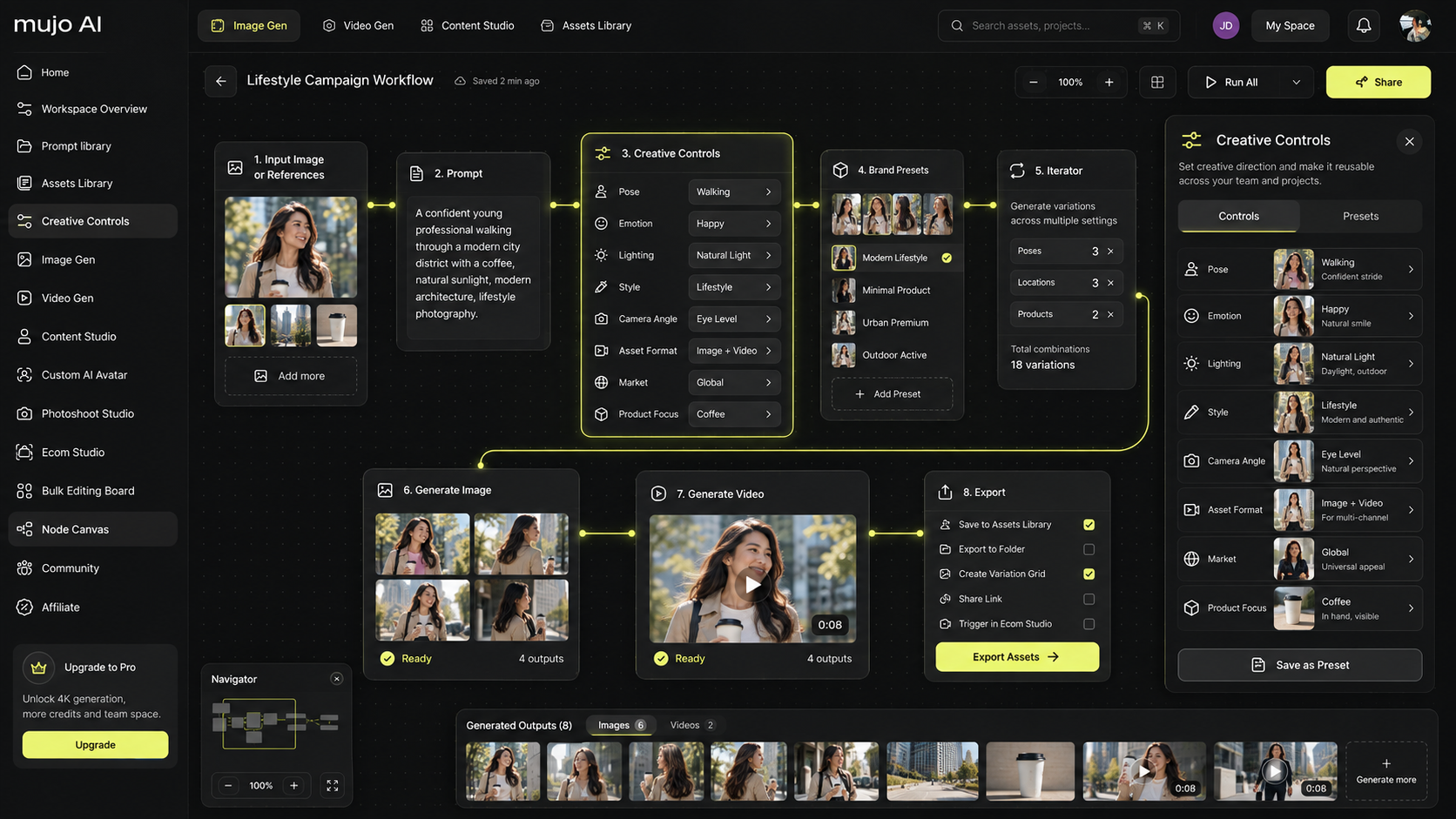
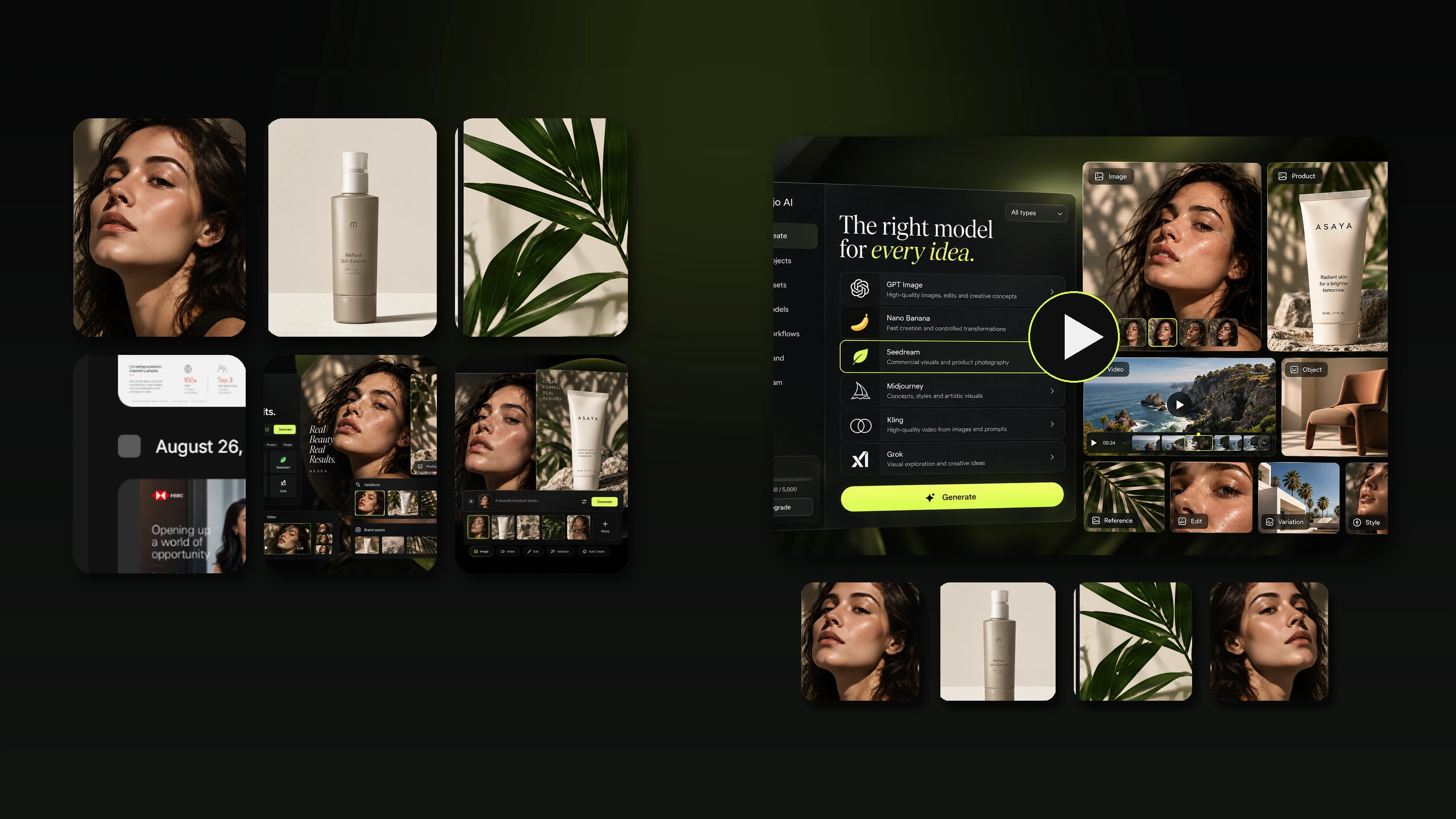
Mujo AI helps you turn a product photo into a structured set of Amazon-ready listing visuals built around the exact frames that drive CTR and conversion.
A practical Mujo workflow for Amazon SEO:
- Start with one solid product photo
- Generate the core gallery frames: main image, angles, benefit, detail proof, in-use, scale, included
- Keep variants consistent so your brand looks reliable across colorways and packs
- Build A+ modules from the same visual system so the page feels cohesive
- Export a complete gallery-as-funnel set that is ready to publish
What this changes in practice:
- faster launch and iteration without waiting for a full shoot cycle
- higher consistency across SKUs, which shoppers trust
- better mobile readability because frames communicate quickly
- more proof per scroll, less doubt, and higher conversion
Metrics to Track After You Optimize
If you want Amazon SEO improvements to stick, measure what changes.
Core metrics:
- CTR from search results
- conversion rate on the detail page
- unit session percentage
- organic keyword coverage
- return reasons and top negative review themes
A simple optimization loop:
- Improve the main image and first three gallery frames
- Rewrite bullets for clarity and objections
- Add included and scale frames
- Build a comparison chart if variants confuse shoppers
- Re-check performance and iterate
Mini FAQ
Do keywords still matter on Amazon?
Yes. Keywords are how you get indexed and matched. But performance often decides how high you rank once indexed.
What is the fastest Amazon SEO win?
Upgrade the main image and rebuild the gallery into a funnel. Then fix title clarity and bullet usefulness.
Do I need A+ content to rank?
You can rank without it, but in competitive categories A+ often helps conversion by reducing doubt and making the brand feel more credible.
What should I do if returns are high?
Add scale and what’s-included images, tighten bullets to set expectations, and make materials and texture look honest and clear.