How to Create High-Converting AI Video Ads
A practical guide to creating AI video ads that communicate quickly, test better, and support campaign performance
How to Create
Build AI video creatives for TikTok, Reels, Shorts, paid social, and performance campaigns
High-converting AI video ads are built around speed, clarity, and creative testing. A strong video ad needs to grab attention in the first seconds, show the product or message clearly, communicate value quickly, and give the viewer a reason to keep watching or click. With Mujo AI, creators and marketing teams can generate video ad concepts from prompts, product images, campaign ideas, or visual references. This makes it easier to test UGC-style ads, product demos, social video ads, lifestyle clips, product reveals, and short-form campaign concepts before investing in full production. This guide explains how to create AI video ads that are more useful for performance marketing: how to structure the ad idea, what to include in the prompt, how to use product images, how to test creative angles, and how to turn one concept into multiple ad variations.
Create AI Video Ads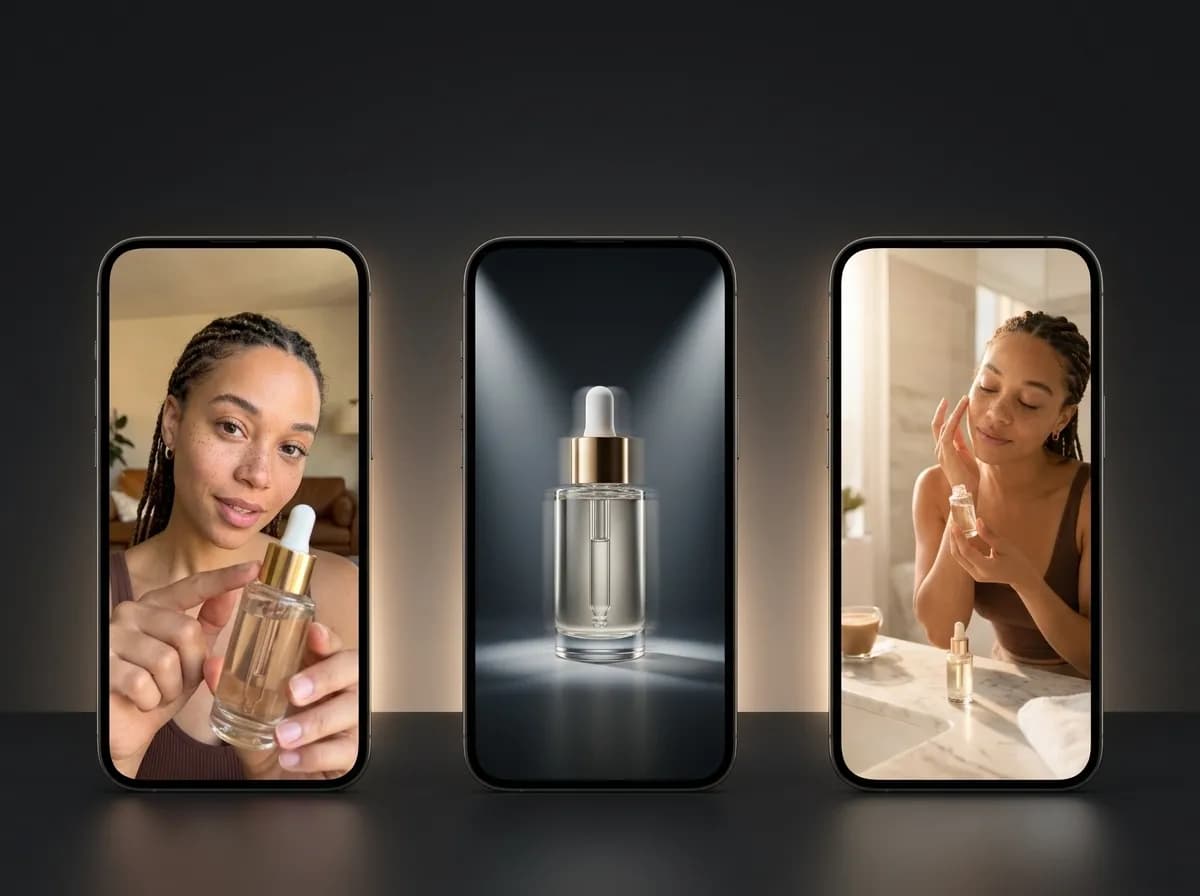
What makes an AI video ad high-converting?
A strong video ad is not just visually impressive — it is clear, fast, and built around a specific action
A high-converting AI video ad does three things quickly: it captures attention, makes the product or offer easy to understand, and gives the viewer a reason to act. Beautiful visuals alone are not enough. The ad needs a clear hook, a focused message, a visible product or benefit, and a format that matches the platform where it will run. For short-form platforms like TikTok, Instagram Reels, YouTube Shorts, and paid social, the first seconds matter most. Viewers decide almost immediately whether to keep watching. This means the video should not open slowly, hide the product, or wait too long to explain the value. AI video generation works best when the prompt is written like a short creative brief. Instead of asking for a generic ad, define the product, audience, hook, scene, motion, visual style, and intended platform. This gives the model stronger direction and makes the final output easier to evaluate for campaign use.
Explore Social Video AdsCore principles of high-converting AI video ads
The creative elements that make AI video ads easier to test and improve
Explore UGC-Style CreativesFast hook
Open with a visual or action that makes the viewer understand why they should keep watching.
Clear product context
Show what the product is, how it is used, or what problem it solves as early as possible.
One main message
Keep the ad focused on one benefit, one product angle, or one viewer problem.
Platform-native format
Shape the creative for TikTok, Reels, Shorts, UGC-style ads, or paid social placements.
How to create high-converting AI video ads
A practical workflow for turning ideas, product images, and prompts into ad concepts
Start with one ad goal
Define whether the ad should drive awareness, clicks, product understanding, launch interest, retargeting, or direct conversion.
Choose the creative angle
Pick one clear angle: product demo, problem-solution, UGC-style testimonial, unboxing, lifestyle use case, comparison, or product reveal.
Write the video prompt like a creative brief
Include the product, hook, scene, action, camera movement, lighting, platform format, and final viewer takeaway.
Generate several variations
Create multiple versions with different hooks, pacing, scenes, product focus, or creator-style setups.
Review for clarity and conversion
Check whether the product is visible, the message is clear, and the video communicates value in the first few seconds.
Save the strongest workflow
Reuse the best prompt structure, product reference, and ad format across future campaigns and creative tests.
Types of AI video ads you can create
Different ad formats work for different campaign goals
High-converting AI video ads usually start with a specific format. Instead of generating a generic video ad, choose the structure that best matches your product, audience, and campaign goal.
Explore Image to VideoUGC-style video ads
Creator-style videos that feel native to social platforms and focus on product experience, reaction, or demonstration.
Product demo ads
Short videos that show how the product works, how it is used, or what makes it useful.
Problem-solution ads
Videos that open with a pain point and quickly show how the product helps solve it.
Product reveal ads
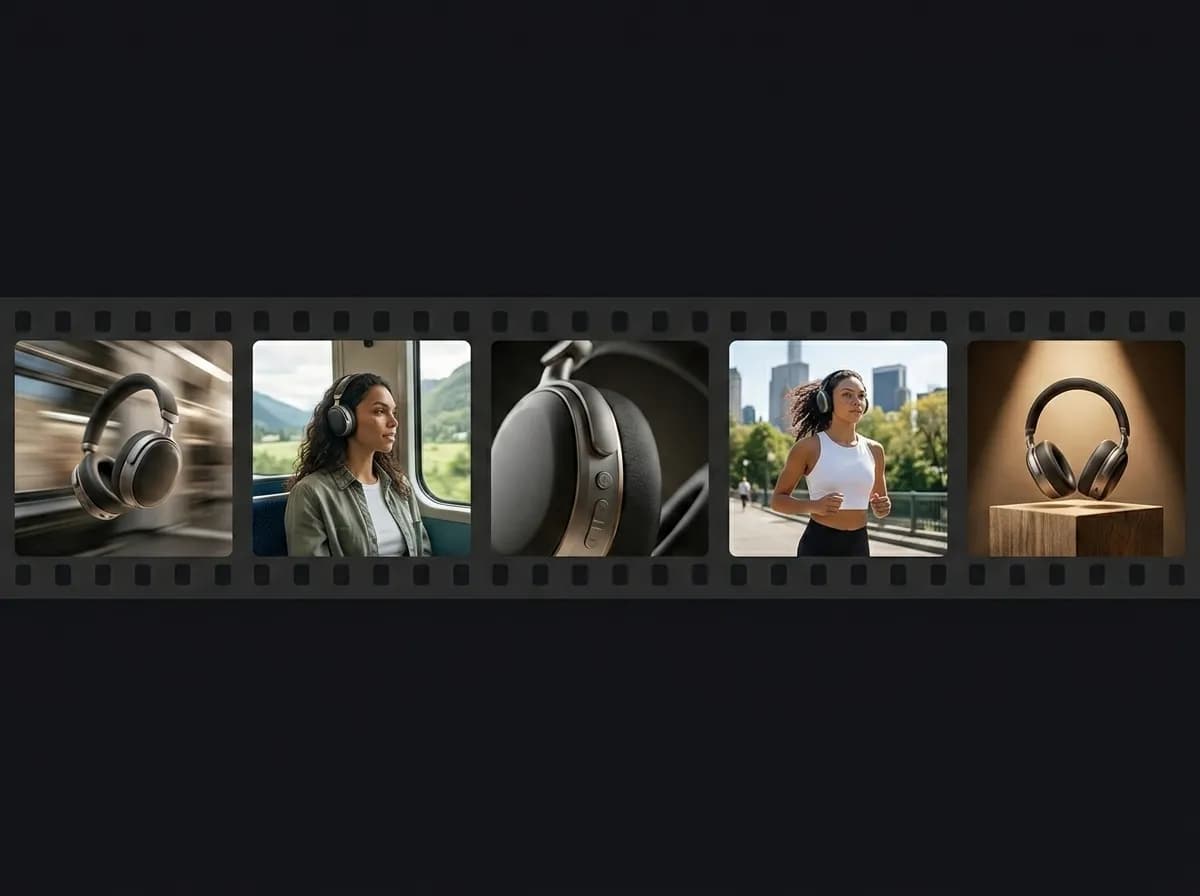
Cinematic or social-first videos that reveal the product with camera movement, lighting, and visual focus.
Lifestyle video ads
Ads that place the product inside daily routines, home scenes, beauty setups, desk setups, travel, or creator contexts.
Feature-focused ads
Videos that highlight one clear product benefit, material, texture, function, or selling point.
Prompt structure for high-converting AI video ads
Write prompts that tell the model what should happen and why it matters
A strong AI video ad prompt should not only describe visuals. It should define the ad angle, product role, platform format, first-second hook, and what the viewer should understand by the end of the clip.
Read Text-to-Video Prompt GuideInclude these in your prompt
Product: what the product is and which details must stay visible
Audience: who the ad is for and what problem or desire matters
Hook: what should grab attention in the first few seconds
Ad angle: demo, UGC-style, problem-solution, reveal, lifestyle, or comparison
Scene: where the video happens and what context supports the message
Action: what moves, what the person does, or how the product appears
Platform format: TikTok ad, Instagram Reel, YouTube Short, or paid social creative
Avoid these mistakes
Trying to communicate too many benefits in one short video
Opening with a slow scene that hides the product or offer
Using vague instructions like make it high-converting without an ad angle
Ignoring the first-second hook
Changing the product identity too much from the reference image
Adding too many scenes, camera moves, or actions into one short clip
AI video ads vs traditional ad production
Use AI to test more creative directions before production gets expensive
Traditional video ad production can be powerful, but early creative testing is often slow. AI video generation helps teams explore more hooks, scenes, and ad formats before committing to full production or media spend.
Turn Product Photos Into Video AdsWith Mujo AI video workflows
Generate multiple video ad concepts from one product idea
Test different hooks and ad angles faster
Create UGC-style, product demo, lifestyle, and reveal formats
Use product photos as references for image-to-video ads
Build repeatable creative testing workflows
Scale video concept generation across campaigns
With traditional production only
Spend more time planning each concept before seeing it
Produce fewer variations because every ad requires more work
Test fewer hooks before budget is spent
Repeat filming or editing for each new direction
Move slower when campaigns need more creative volume
Depend heavily on manual production capacity
Use product photos to create AI video ads
Image-to-video workflows help preserve product identity while adding motion
Product photos are one of the best starting points for AI video ads because they give the model a visual reference. This is useful when the product itself needs to stay recognizable: packaging, shape, color, material, scale, and key details matter. With image-to-video workflows, a product photo can become a short product demo, reveal, UGC-style clip, lifestyle video, or paid social creative. Instead of describing the entire product from scratch, the image anchors the visual identity while the prompt defines motion, scene, and ad angle. This makes product-photo-to-video workflows especially useful for ecommerce brands, DTC teams, Shopify stores, Amazon sellers, and marketers who already have product images but need more video creatives for TikTok, Reels, Shorts, and paid social.
Explore Image to VideoHigh-converting AI video ad workflow
Workflow stage | What to define | Why it matters |
|---|---|---|
Ad goal | Awareness, click, product education, launch, retargeting, or conversion | Keeps the creative focused on a measurable purpose |
Hook | The first visual action or message in the opening seconds | Determines whether viewers stop scrolling |
Product role | How the product appears, moves, or is used | Makes the offer easier to understand |
Scene context | Lifestyle, studio, creator, home, desk, beauty, travel, or product environment | Helps the viewer understand where the product fits |
Motion | Camera movement, hand interaction, reveal, demo, or product action | Turns a static concept into a video ad |
Creative variation | Different angles, hooks, formats, and scenes | Creates more testing opportunities |
When to use this workflow
You need more AI video ad variations for paid social or product launches.
You want to test UGC-style, demo, lifestyle, and reveal formats before full production.
You have product images or campaign ideas and need short-form video concepts quickly.
AI video ads work best when they are treated as testable creative systems. The goal is to generate more useful concepts, compare them faster, and identify the strongest ad angles.
Example prompts for AI video ads
Use these prompt structures for different performance creative formats
These examples show how to turn a product, hook, and scene into a clearer AI video ad prompt.
Explore Text to VideoUGC-style product demo
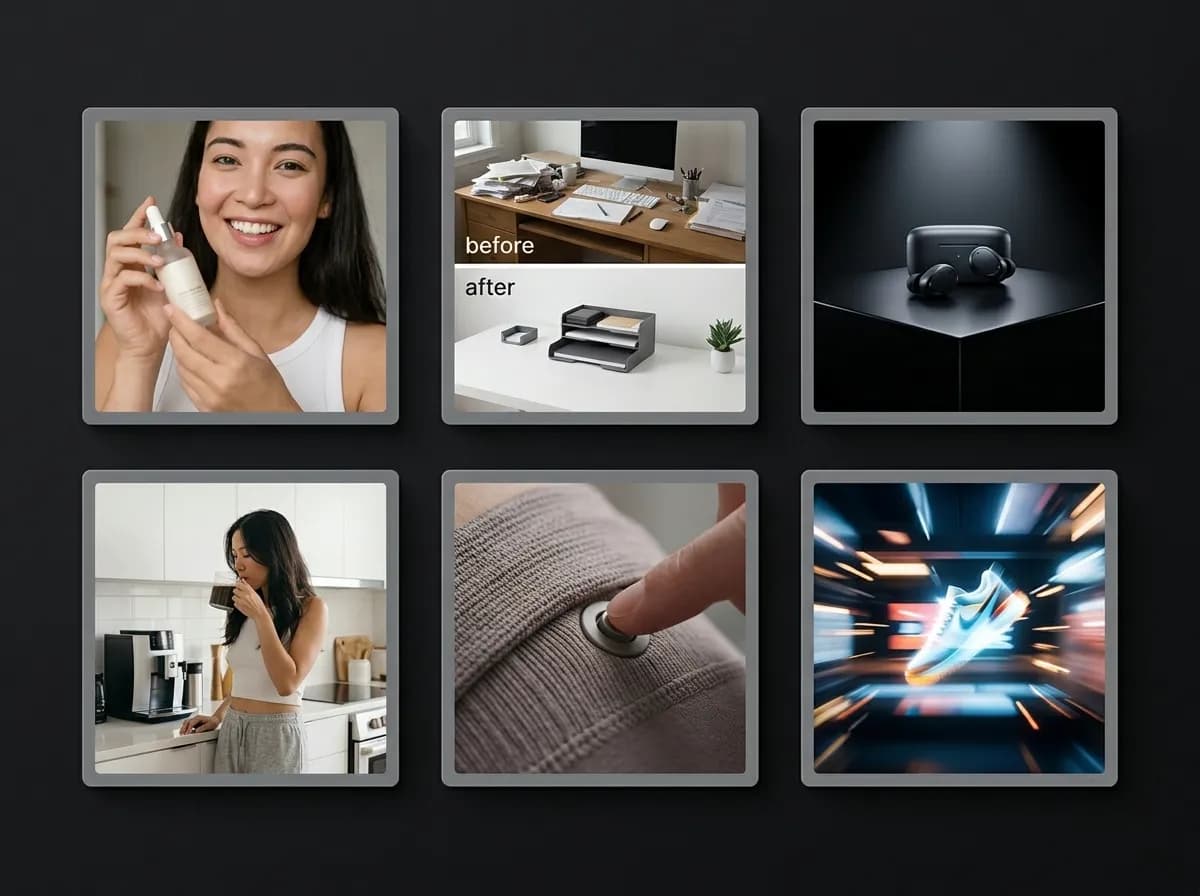
A creator holds the product close to camera, shows the packaging, then demonstrates the main benefit in a casual bathroom setup. Natural handheld phone-style video, bright morning light, social-first TikTok ad format, clear product visibility.
Problem-solution ad
Open with a messy desk and a frustrated person, then reveal the product organizing the space. Quick visual hook, smooth camera movement, clean final setup, short-form paid social ad style.
Cinematic product reveal
A premium product sits on a reflective surface in a dark studio. Slow camera push-in, soft rim light, subtle mist, clean reveal motion, luxury commercial video style.
Lifestyle Reels ad
A product appears naturally inside a morning routine scene. Warm natural light, gentle handheld movement, close-up details, calm lifestyle mood, Instagram Reels ad format.
Feature-focused video
Show the product close-up while the camera moves across the key feature. Clear lighting, product remains sharp, minimal background, ecommerce video ad style.
Product launch teaser
Fast cuts of a new product reveal, close-up texture, packaging detail, and final hero shot. Energetic pacing, social-first hook, campaign launch style.
Best practices for AI video ads
How to make generated video creatives clearer and more useful for campaigns
AI video ads become more effective when every creative direction is built around one clear testable idea. Avoid trying to make one video do everything.
Explore UGC-Style Video CreativesDo this
Start with one campaign goal
Make the product or message clear early
Write a specific first-second hook
Use one main benefit per video
Generate several versions of the same angle
Review outputs for product accuracy and message clarity
Save the strongest prompt structure for reuse
Avoid this
Trying to show too many features at once
Waiting too long to reveal the product
Using vague prompts without a platform format
Adding unrelated scenes into one short ad
Ignoring whether the product stayed accurate
Treating every generation as a final ad instead of a testable concept